

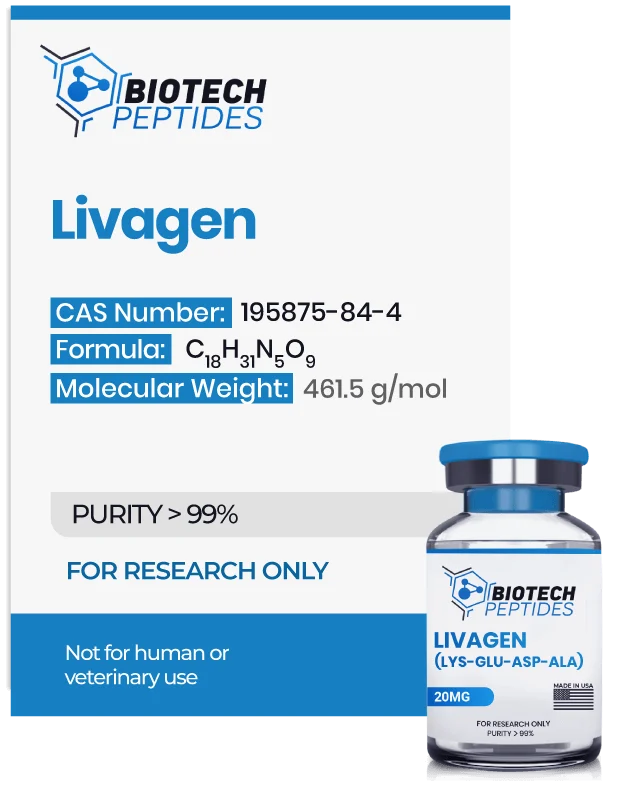
Livagen (20mg)
$62.00
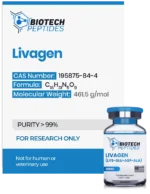
Livagen (20mg) is a synthetic tetrapeptide bioregulator consisting of the amino-acid sequence Lys-Glu-Asp-Ala (KEDA). It has been investigated in scientific research involving chromatin organisation, ribosomal gene activity and lymphocyte biology.
Livagen is associated with research by Khavinson and colleagues examining chromatin changes in cultured lymphocytes from older individuals. These findings provide a reference for laboratory investigations into peptide interactions and gene regulation.
Product information:
- Product name: Livagen
- Listed quantity: 20mg
- Peptide length: 4 amino acids
- Sequence: Lys-Glu-Asp-Ala (KEDA)
- Molecular formula: C₁₈H₃₁N₅O₉
- Molecular weight: Approximately 461.5 g/mol
- Reference PubChem CID: 87919683
Explore our research peptides for sale for additional laboratory research materials.
For laboratory and analytical research only. Not for human or animal consumption, personal administration, medical treatment, diagnosis, or veterinary application.
Livagen (20mg) – KEDA Tetrapeptide
Livagen (20mg) is a synthetic tetrapeptide bioregulator consisting of the amino-acid sequence Lys-Glu-Asp-Ala (KEDA). It has been investigated in scientific research involving chromatin organisation, ribosomal gene activity and cellular processes in lymphocytes.
Livagen is associated with the peptide research of Khavinson and colleagues, particularly investigations into chromatin structure and gene expression in lymphocytes obtained from older individuals.
Listed by Biotech Peptides for laboratory and analytical research, Livagen provides a reference compound for investigations involving short synthetic peptides, chromatin organisation and cellular gene regulation.
What Is Livagen Peptide?
Livagen is a synthetic four-amino-acid peptide consisting of:
- Lysine (Lys)
- Glutamic acid (Glu)
- Aspartic acid (Asp)
- Alanine (Ala)
Its sequence is commonly abbreviated as KEDA.
Livagen is classified among the short peptide bioregulators associated with the research programme of Professor Vladimir Khavinson and colleagues.
It is sometimes discussed alongside other short research peptides, including Epitalon. However, Livagen and Epitalon are different compounds with different amino-acid sequences and molecular structures.
Livagen’s published research background is particularly associated with chromatin organisation and lymphocyte biology.
Livagen and Chromatin Research
Chromatin is the material formed by DNA and associated proteins within the cell nucleus. It organises genetic material and influences how DNA is packaged and accessed by cellular machinery.
Chromatin can exist in relatively condensed or less condensed states. These structural differences are associated with the accessibility of particular genomic regions and the regulation of gene activity.
Researchers have investigated Livagen in relation to chromatin organisation, particularly changes in lymphocytes obtained from older individuals.
In a 2002 study published in the Bulletin of Experimental Biology and Medicine, Khavinson and colleagues examined the effects of Livagen on:
- Ribosomal gene activity.
- Pericentromeric structural heterochromatin.
- Facultative heterochromatin.
- Chromatin condensation in lymphocytes.
The researchers reported that Livagen induced ribosomal gene activation, decondensation of pericentromeric heterochromatin and changes associated with the release of genes previously repressed through age-related chromatin condensation.
These observations provide a scientific basis for investigating Livagen in experimental studies involving chromatin structure and gene regulation.
Importantly, the research concerns experimental cellular findings. It does not establish that Livagen reverses biological ageing or produces clinical benefits.
Scientific reference: Khavinson et al. (2002) – Effects of Livagen peptide on chromatin activation in lymphocytes from old people.
Livagen and Lymphocyte Research
Lymphocytes are a group of white blood cells involved in the immune system. They include T lymphocytes and B lymphocytes, which participate in different aspects of immune function.
Researchers have investigated Livagen in relation to chromatin organisation and gene activity in lymphocytes.
The 2002 study examined lymphocytes from older individuals and reported changes in ribosomal gene activity and chromatin structure following experimental exposure to Livagen.
Ribosomal genes provide the genetic information needed for the production of ribosomal RNA, an essential component of cellular protein synthesis machinery.
The study’s findings are relevant to laboratory investigations examining relationships between chromatin organisation, ribosomal gene activity and cellular function.
They should not be interpreted as proof that Livagen rejuvenates immune cells, increases immune protection or produces equivalent effects in living individuals.
Livagen and Age-Related Chromatin Changes
Chromatin structure can change with age. Research has examined how differences in chromatin condensation and chromosome organisation relate to gene activity in older cells.
A 2004 publication by Khavinson, Lezhava and Malinin examined the effects of several short synthetic peptides, including Livagen, on lymphocyte chromatin from individuals aged 75–88.
The researchers investigated:
- Ribosomal gene activity.
- Condensation of chromatin.
- Structural heterochromatin.
- Changes in chromosome regions.
- Differences in gene repression and chromatin organisation.
The study reported that the investigated peptides, including Livagen, were associated with activation of ribosomal genes and changes in chromatin condensation under the experimental conditions.
Livagen was also associated with changes in the pericentromeric chromatin of chromosomes 1 and 9 in the reported experiments.
These results contribute to the research background of Livagen as a short peptide studied in relation to age-associated chromatin changes.
However, experimental changes in cultured cells do not demonstrate increased lifespan, reversal of ageing or clinical effectiveness.
Scientific reference: Khavinson, Lezhava and Malinin (2004) – Effects of short peptides on lymphocyte chromatin in senile subjects.
Livagen and Chromosome Organisation
Chromosomes contain DNA organised with structural proteins into chromatin.
One area of investigation in Livagen research involves heterochromatin, a relatively condensed form of chromatin that can influence genomic accessibility.
The pericentromeric regions of chromosomes are particularly relevant to studies of structural heterochromatin.
A 2007 publication examined the activation of pericentromeric and telomeric heterochromatin in cultured lymphocytes from older individuals.
The researchers reported that Livagen could induce changes associated with deheterochromatinisation in cultured lymphocytes.
The study also examined the effects of cobalt ions, which produced additional chromosomal changes under the experimental conditions.
These findings provide further research context for studying Livagen and chromatin organisation. They should not be interpreted as evidence of improved chromosome function or protection against age-related disease.
Scientific reference: Activation of pericentromeric and telomeric heterochromatin in cultured lymphocytes from old individuals (2007).
Livagen (20mg) – Reference Specifications
The following table summarises the recognised chemical reference information for Livagen.
| Characteristic | Reference information |
|---|---|
| Product name | Livagen |
| Listed quantity | 20mg |
| Compound classification | Synthetic tetrapeptide |
| Peptide sequence | Lys-Glu-Asp-Ala |
| Sequence abbreviation | KEDA |
| Amino-acid length | 4 |
| Molecular formula | C₁₈H₃₁N₅O₉ |
| Molecular weight | Approximately 461.5 g/mol |
| PubChem CID | 87919683 |
| Research area | Chromatin and lymphocyte research |
Understanding the Livagen Peptide Structure
Livagen consists of four amino acids connected through peptide bonds.
Its sequence can be represented as K-E-D-A:
- K represents lysine.
- E represents glutamic acid.
- D represents aspartic acid.
- A represents alanine.
The molecular formula and molecular weight describe the recognised reference structure of the KEDA tetrapeptide.
These values are chemical reference information and do not independently establish the identity, purity, salt form or analytical characteristics of the supplied product batch.
The listed 20mg quantity represents the product’s stated listing quantity and should not be interpreted as an independently verified assay result.
Chemical reference: PubChem – Livagen, CID 87919683.
Buy Livagen Peptide from Biotech Peptides
Biotech Peptides lists Livagen (20mg) within its research peptide collection.
Researchers looking to buy peptides can review the listed compound identity, reference specifications and available analytical documentation when comparing laboratory materials.
Our research peptides for sale include additional compounds for laboratory and analytical research.
When comparing cheap peptides and other research materials from different suppliers, consider the chemical specifications and available batch documentation rather than relying on price alone. A lower listed price does not establish compound identity, purity or analytical quality.
For additional information, review our shipping policy and Research Use Only notice.
Documentation and Batch Verification
Reference chemical information provides a starting point for identifying Livagen, but it does not independently establish the characteristics of an individual product batch.
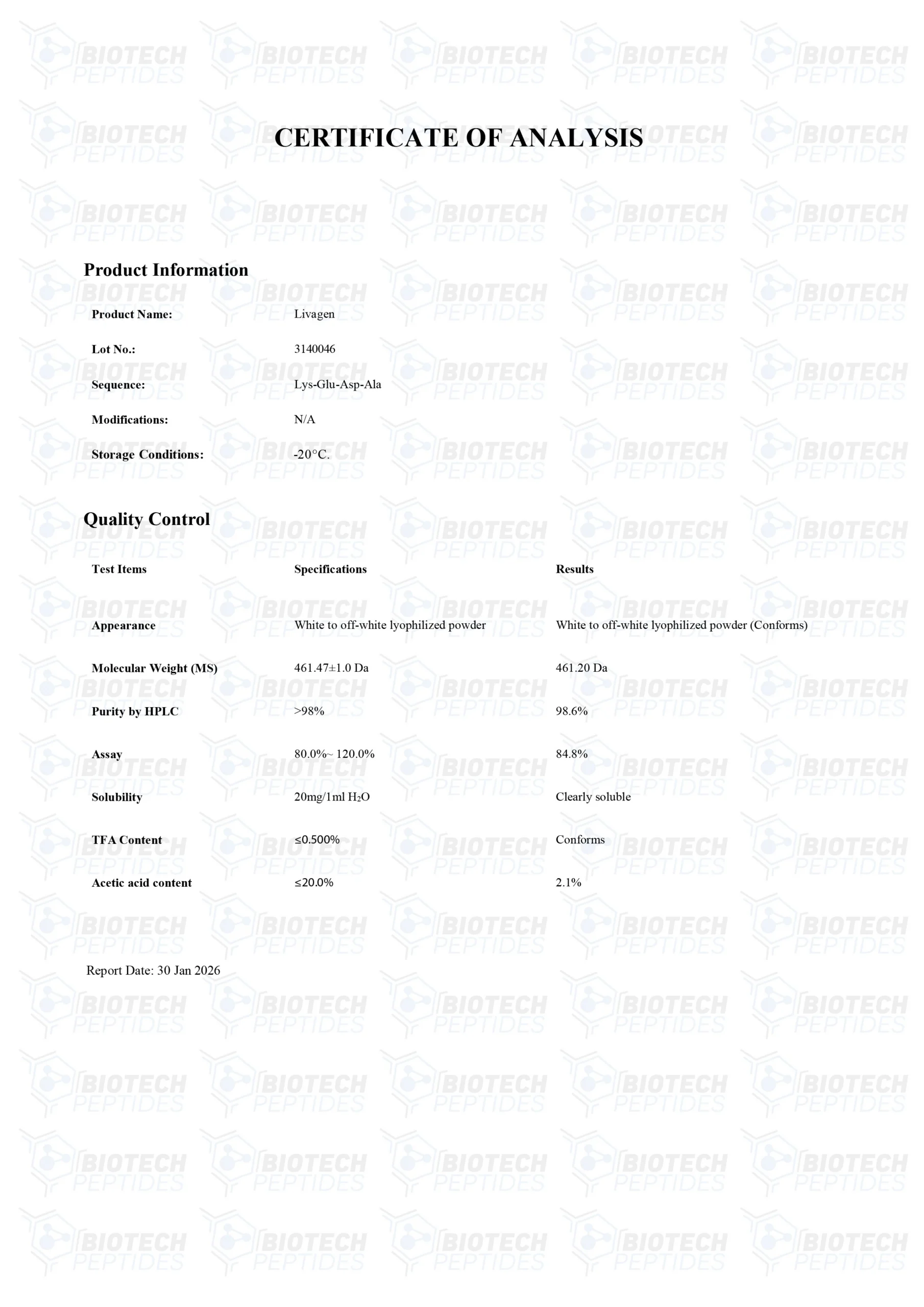
For batch-specific identity, purity and analytical information, consult the documentation associated with the relevant lot.
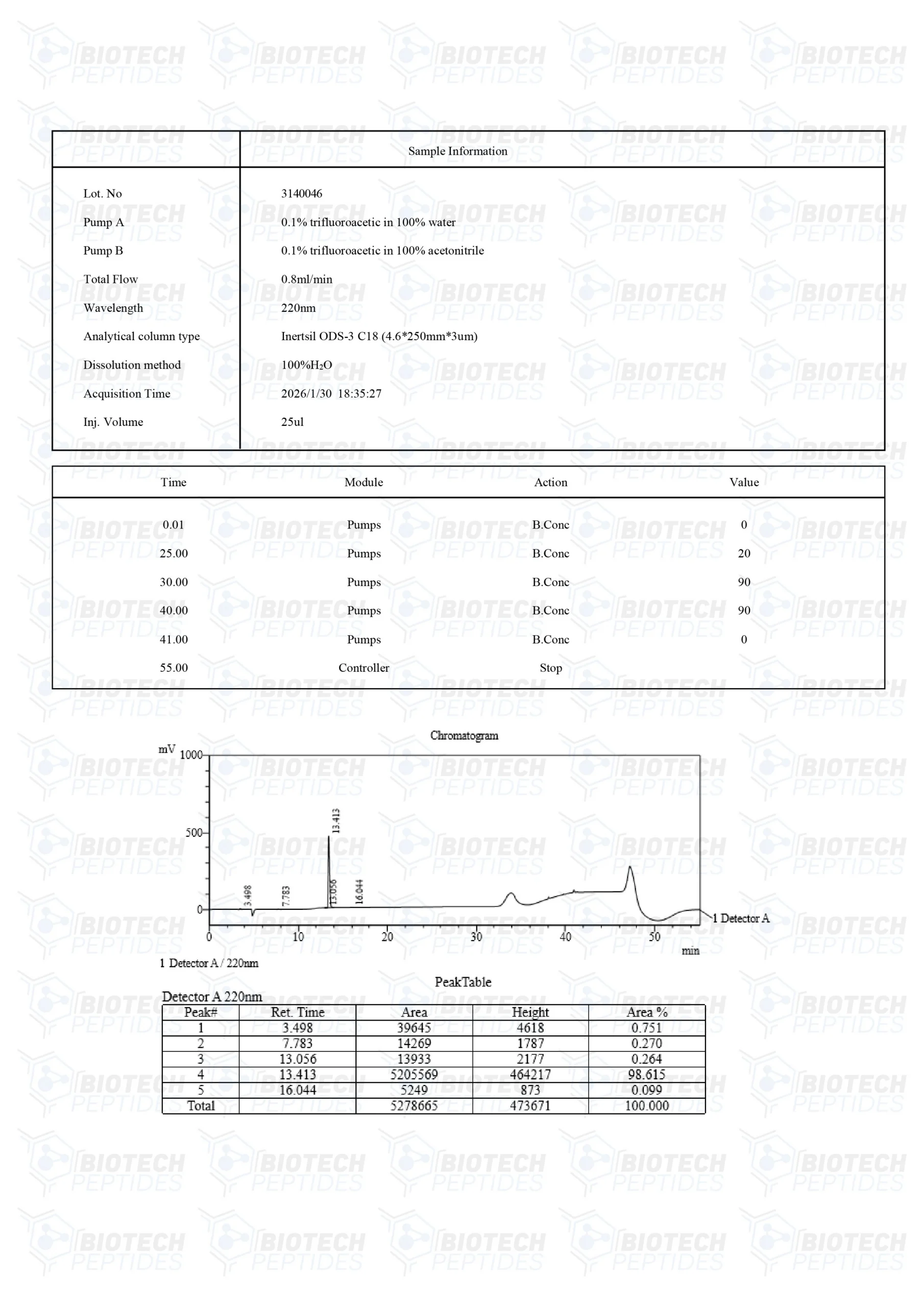
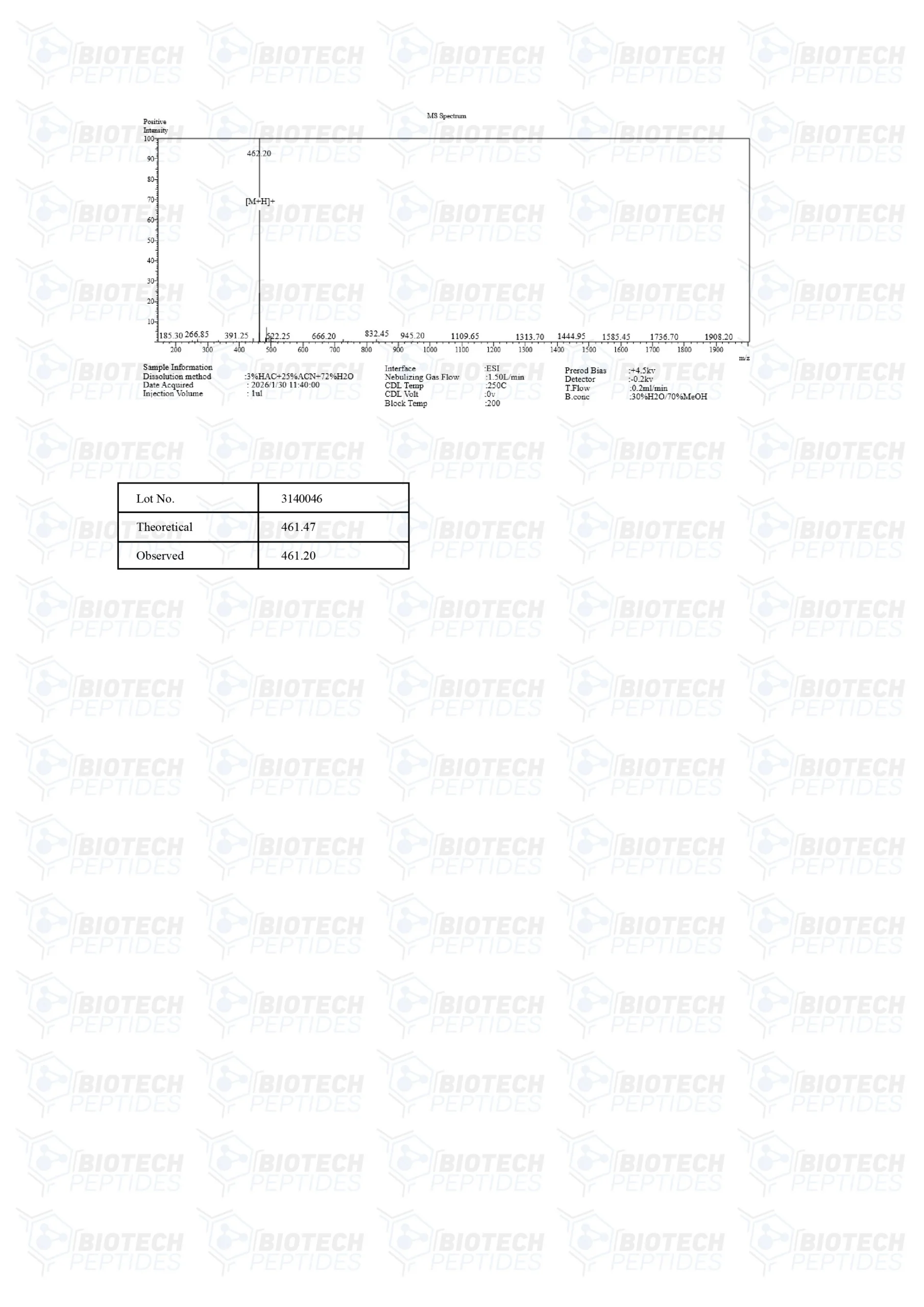
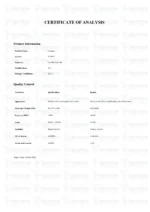
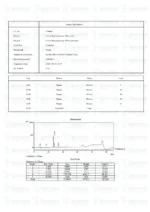
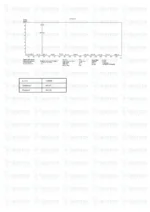
Where available, a Certificate of Analysis (COA) and supporting analytical results may provide information about:
- Product and batch identification.
- Analytical methods used.
- Reported analytical results.
- Measured purity or assay information, where available.
Researchers should distinguish general chemical reference information from manufacturer specifications and batch-specific analytical results.
A COA should be interpreted according to the tests and results actually reported.
Frequently Asked Questions
What is Livagen peptide?
Livagen is a synthetic tetrapeptide consisting of Lys-Glu-Asp-Ala (KEDA). It is associated with research involving chromatin organisation and gene activity in lymphocytes.
What is the amino-acid sequence of Livagen?
The reference sequence is Lys-Glu-Asp-Ala, abbreviated as KEDA. It contains four amino acids: lysine, glutamic acid, aspartic acid and alanine.
What is the molecular weight of Livagen?
The reference molecular weight of Livagen is approximately 461.5 g/mol, according to its PubChem chemical record.
What is the relationship between Livagen and Epitalon?
Livagen and Epitalon are different synthetic peptides associated with Khavinson’s peptide bioregulator research. They have different amino-acid sequences, molecular formulas and molecular weights.
What research has been conducted on Livagen?
Published research has investigated Livagen in relation to chromatin organisation, ribosomal gene activity and lymphocyte biology. Several studies examined cultured lymphocytes obtained from older individuals.
What is chromatin decondensation?
Chromatin decondensation refers to a reduction in the compactness of chromatin. It can influence how accessible particular DNA regions are to cellular machinery involved in gene regulation.
Is Livagen supported by human clinical research?
The principal research discussed here involves experimental lymphocyte studies, including cultured cells from human donors. These experiments do not constitute clinical trials demonstrating therapeutic or anti-ageing benefits.
Is batch-specific documentation available?
The availability of batch-specific documentation should be confirmed for the relevant product lot. Where a Certificate of Analysis is available, it can provide additional information about the analytical characteristics reported for that batch.
Research Use Only
Livagen (20mg) is listed by Biotech Peptides for laboratory and analytical research purposes.
For laboratory and analytical research only. Not for human or animal consumption, personal administration, medical treatment, diagnosis, or veterinary application.
Researchers should review the relevant product information, available documentation and applicable handling requirements before selecting any material for laboratory work.
| Brand | Biotech Peptides |
|---|
Related products
Mod GRF 1-29 (CJC-1295 NO DAC) (5mg)
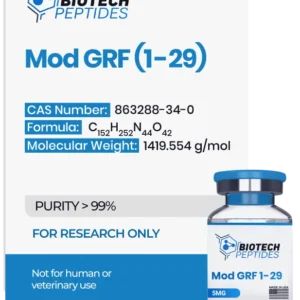
Mod GRF 1-29 (CJC-1295 NO DAC) (5mg) is offered by Biotech Peptides for laboratory and analytical research. Mod GRF 1-29 is a synthetic 29-residue GHRH analogue studied in relation to growth hormone-releasing hormone receptor signaling and somatotroph cell function. 1056
-
Product: Mod GRF 1-29
-
Alternative name: CJC-1295 without DAC
-
Listed quantity: 5 mg
-
Reference molecular formula: C₁₅₂H₂₅₂N₄₄O₄₂
-
Intended use: Laboratory and analytical research only
Review the manufacturer specifications and applicable analytical documentation before selecting material for your protocol.
For research use only. Not for human consumption.
Nonapeptide-1 (200mg)
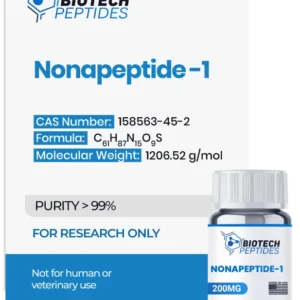
- Product: Nonapeptide-1
- Alternative name: Melanostatine-5
- Listed quantity: 200mg
- Peptide length: 9 amino acids
- Reference sequence: Met-Pro-D-Phe-Arg-D-Trp-Phe-Lys-Pro-Val-NH₂
- CAS number: 158563-45-2
Pal-GHK (Palmitoyl Tripeptide-1) (200mg) | Biotech Peptides
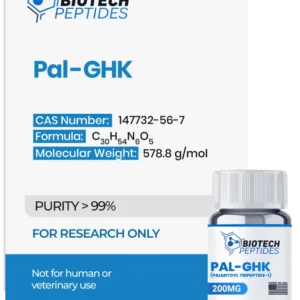
Pal-GHK (Palmitoyl Tripeptide-1) (200mg) is a synthetic, lipid-modified tripeptide listed for laboratory and analytical research involving peptide chemistry and skin-related research models.
Also known as Palmitoyl-Gly-His-Lys, Pal-GHK consists of a palmitoyl group attached to the N-terminus of the GHK tripeptide sequence. It has been investigated in research involving extracellular matrix components and topical cosmetic formulations. Reference molecular information:- Listed quantity: 200mg
- Peptide sequence: Gly-His-Lys (GHK)
- N-terminal modification: Palmitoyl group
- Molecular formula: C₃₀H₅₄N₆O₅
- Molecular weight: 578.8 g/mol
- CAS number: 147732-56-7
- Common name: Palmitoyl Tripeptide-1
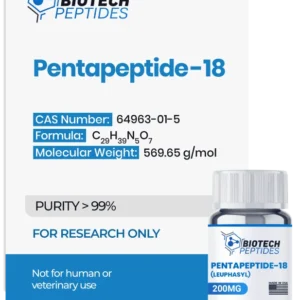
Pentapeptide-18 (Leuphasyl) (200mg) | Biotech Peptides
Pentapeptide-18 (Leuphasyl) (200mg) is a synthetic pentapeptide listed for laboratory and analytical research involving peptide structure and cosmetic-science research models.
Pentapeptide-18 is also known as Leuphasyl and is structurally related to leucine-enkephalin, with a D-alanine residue at position two. Its research background includes investigations into neurotransmitter signaling and topical cosmetic formulations. Reference molecular information:- Listed quantity: 200mg
- Sequence: H-Tyr-D-Ala-Gly-Phe-Leu-OH
- Molecular formula: C₂₉H₃₉N₅O₇
- Molecular weight: Approximately 569.6 g/mol
- CAS number: 64963-01-5
- Alternative name: Leuphasyl
Selank (10mg)
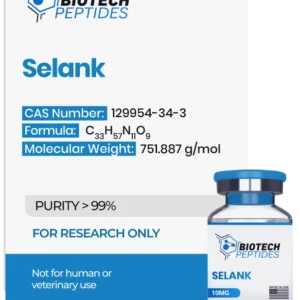
Selank (10mg) is offered by Biotech Peptides for laboratory and analytical research. Selank is a synthetic 7-residue analogue of tuftsin studied in relation to GABAergic signaling, immune modulation, and neurotrophic factor expression. 1166
-
Product: Selank
-
Full name: Tuftsin-Pro-Gly-Pro
-
Listed quantity: 10 mg
-
Reference molecular formula: C₃₃H₅₇N₁₁O₉
-
Intended use: Laboratory and analytical research only
Review the manufacturer specifications and applicable analytical documentation before selecting material for your protocol.
For research use only. Not for human consumption.


TB-500 (Thymosin Beta-4) (10mg)
TB-500 (Thymosin Beta-4) (10mg) is offered by Biotech Peptides for laboratory and analytical research. TB-500 is a synthetic 43-residue peptide derived from thymosin beta-4, studied in relation to cell migration, angiogenesis, and wound-repair signaling. 1153
-
Product: TB-500
-
Full name: Thymosin Beta-4
-
Listed quantity: 10 mg
-
Reference molecular formula: C₂₁₂H₃₅₀N₅₆O₇₈S
-
Intended use: Laboratory and analytical research only
Review the manufacturer specifications and applicable analytical documentation before selecting material for your protocol.
For research use only. Not for human consumption.


Tesamorelin (5mg & 10mg)
Tesamorelin (5mg & 10mg) is offered by Biotech Peptides for laboratory and analytical research. Tesamorelin is a synthetic 44-residue GHRH analogue studied in relation to growth hormone secretion, visceral adiposity, and metabolic signaling. 1137
-
Product: Tesamorelin
-
Full name: N-(trans-3-hexenoyl)-[Tyr1]-hGRF(1-44)-NH2 acetate
-
Listed quantities: 5 mg and 10 mg
-
Reference molecular formula: C₂₂₁H₃₆₆N₇₂O₆₇S
-
Intended use: Laboratory and analytical research only
Review the manufacturer specifications and applicable analytical documentation before selecting material for your protocol.
For research use only. Not for human consumption.