

Semax (25mg)
$53.00
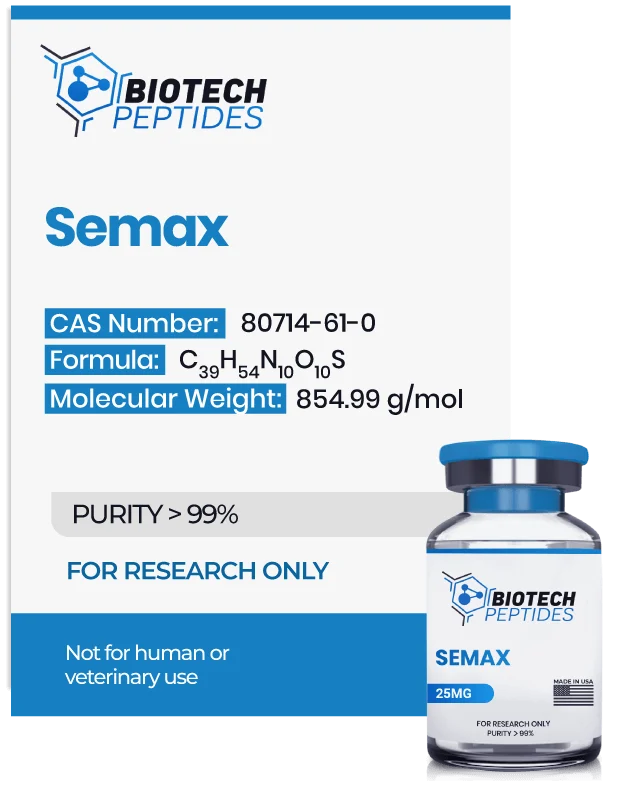
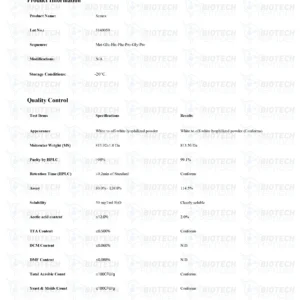
Semax (25mg) is offered by Biotech Peptides for laboratory and analytical research. Semax is a synthetic heptapeptide analogue of ACTH(4-10) studied in relation to neurotrophin gene expression and ischemic injury models. 1041
-
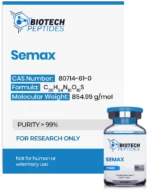
Product: Semax
-
Full name: ACTH(4-7)-Pro-Gly-Pro
-
Listed quantity: 25 mg
-
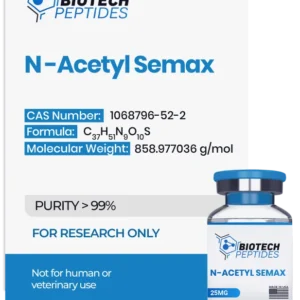
Reference molecular formula: C₃₉H₅₄N₁₀O₁₀S
-
Intended use: Laboratory and analytical research only
Review the manufacturer specifications and applicable analytical documentation before selecting material for your protocol.
For research use only. Not for human consumption.
Out of stock
Semax (25mg) for Laboratory Research
Semax (25mg) is offered by Biotech Peptides for laboratories investigating neurotrophin gene expression, ischemic injury models, and neuroprotective peptide research. Semax is a synthetic heptapeptide consisting of the amino acid sequence Met-Glu-His-Phe-Pro-Gly-Pro, derived from the N-terminal fragment of adrenocorticotropic hormone. 1041
For laboratories looking to buy Semax, this listing identifies a 25 mg quantity. Confirm the supplied material’s salt state, stereochemistry, and analytical characteristics against the requirements of the intended work.
Explore our research peptides for sale to review other laboratory-use listings.
Semax Product Information
| Property | Listing information |
|---|---|
| Product name | Semax |
| Full name | ACTH(4-7)-Pro-Gly-Pro |
| Listed quantity | 25 mg |
| Intended application | Laboratory and analytical research |
| Documentation inquiries | Include the product name and batch or lot number, where available |
The 25 mg designation describes the quantity stated for this listing. It does not independently establish net peptide content or confirm that a particular quantity-assay method has been performed.
Semax Reference Molecular Characteristics
The following characteristics describe the Semax reference structure. They are not analytical confirmation of an individual commercial batch.
| Reference characteristic | Information |
|---|---|
| Peptide length | 7 residues |
| Reference sequence | Met-Glu-His-Phe-Pro-Gly-Pro |
| Molecular formula | C₃₉H₅₄N₁₀O₁₀S |
| Approximate molecular weight | 854.99 g/mol |
| Chemical class | Synthetic heptapeptide ACTH analogue |
The sequence and molecular formula are documented in the Semax research summary and in the Semax research summary. Confirm the supplied salt state and any counterions against manufacturer specifications before using reference values in analytical calculations. 1041
Semax and Neurotrophin Gene Expression
A study of Semax and neurotrophin gene expression in rat brain reported that intranasal application of Semax increased the expression of both neurotrophin genes in rat hippocampus. The investigators also reported that BDNF gene expression increased in the brainstem and cerebellum, while NGF gene expression decreased in the frontal cortex. 1046
A separate study of Semax and BDNF gene expression in rat hippocampus, frontal cortex, and retina reported that expression of both neurotrophin genes was decreased in rat hippocampus and retina 20 minutes after Semax administration, and increased in the frontal cortex. 1045
Read the primary neurotrophin gene-expression study for the experimental design and limitations.
Semax and Ischemic Injury Research
A study of Semax and gene expression in rat brain focal ischemia reported that Semax influenced the expression of genes that promote the formation and functioning of the vascular system. The investigators reported that Semax enhanced the transcription of BDNF, TrkC, and TrkA 3 hours after occlusion, and NGF 24 hours after occlusion. 1039
A separate study of Semax and BDNF gene expression in rat hippocampus, frontal cortex, and retina reported that Semax administration resulted in rapid, long-term, and specific activation of BDNF and NGF expression changes in different rat brain departments. 1042
These findings apply to specific animal models and exposure protocols. They do not establish that a commercial Semax batch improves cognitive function, prevents stroke, or produces a cosmetic effect in humans. 1039
Research Limitations
Published Semax research examines receptor signaling, cell-based assays, and animal models. It does not establish that Semax treats stroke, cognitive impairment, anxiety, depression, or any other condition. 1039
Published research also does not verify the identity, purity, quantity, or biological activity of the commercial batch supplied with this listing.
Documentation and Batch Verification
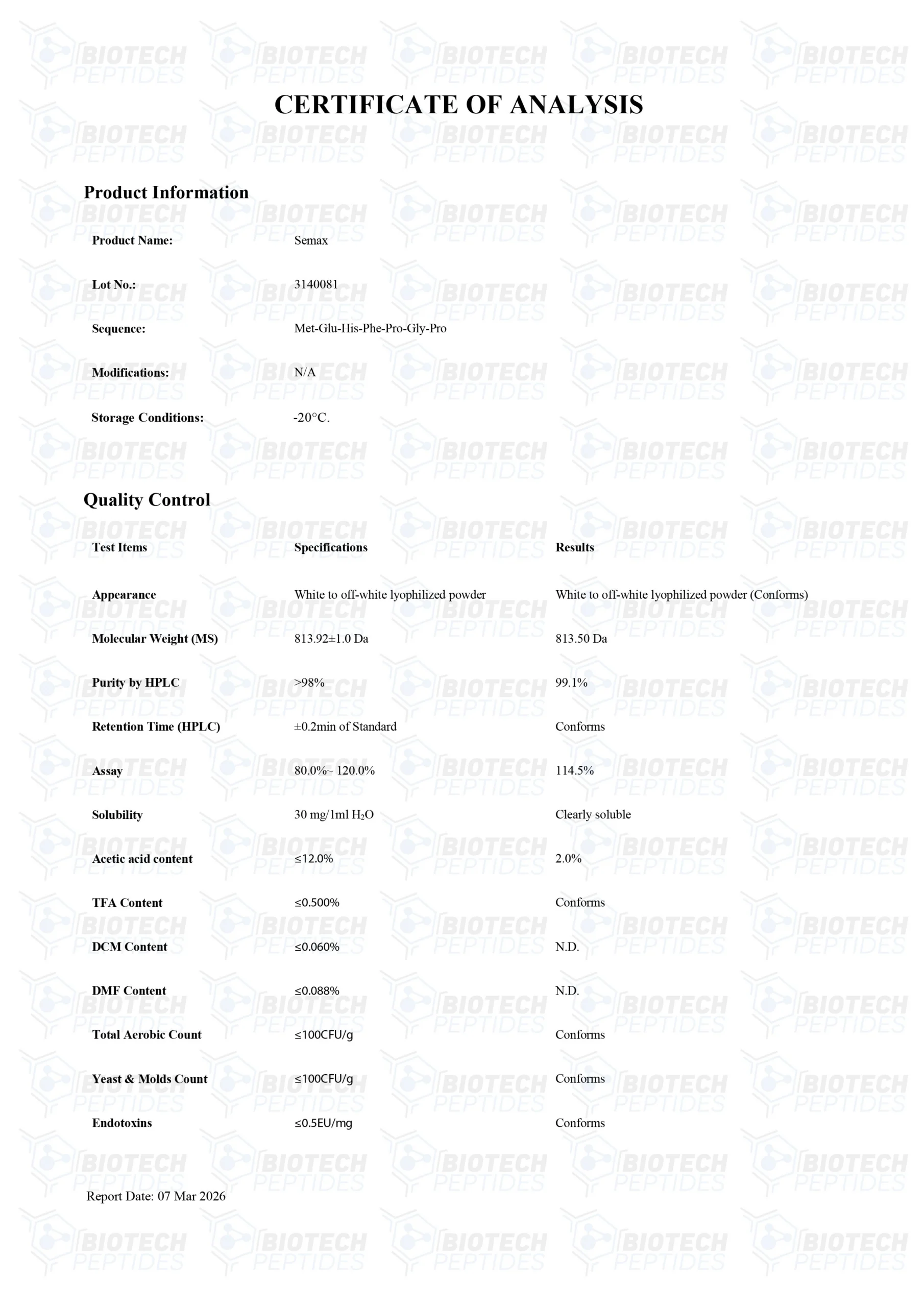
Before selecting Semax (25mg), review the information associated with the exact material being supplied. Depending on your protocol, relevant documentation may include:
-
Product name and batch or lot identifier.
-
Manufacturer specifications and chemical form.
-
Salt state and counterion information, where applicable.
-
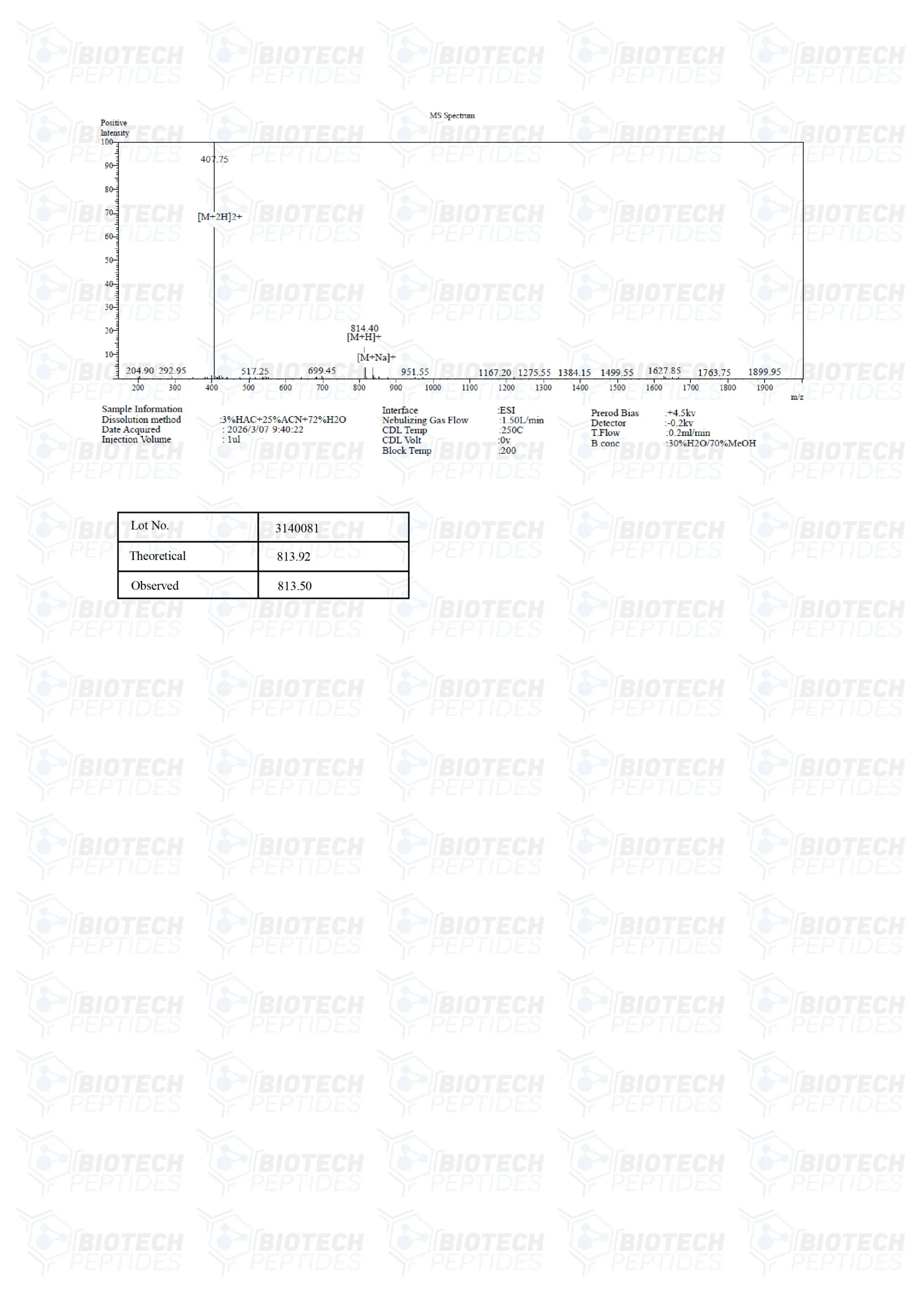
Identity-testing methods and reported results.
-
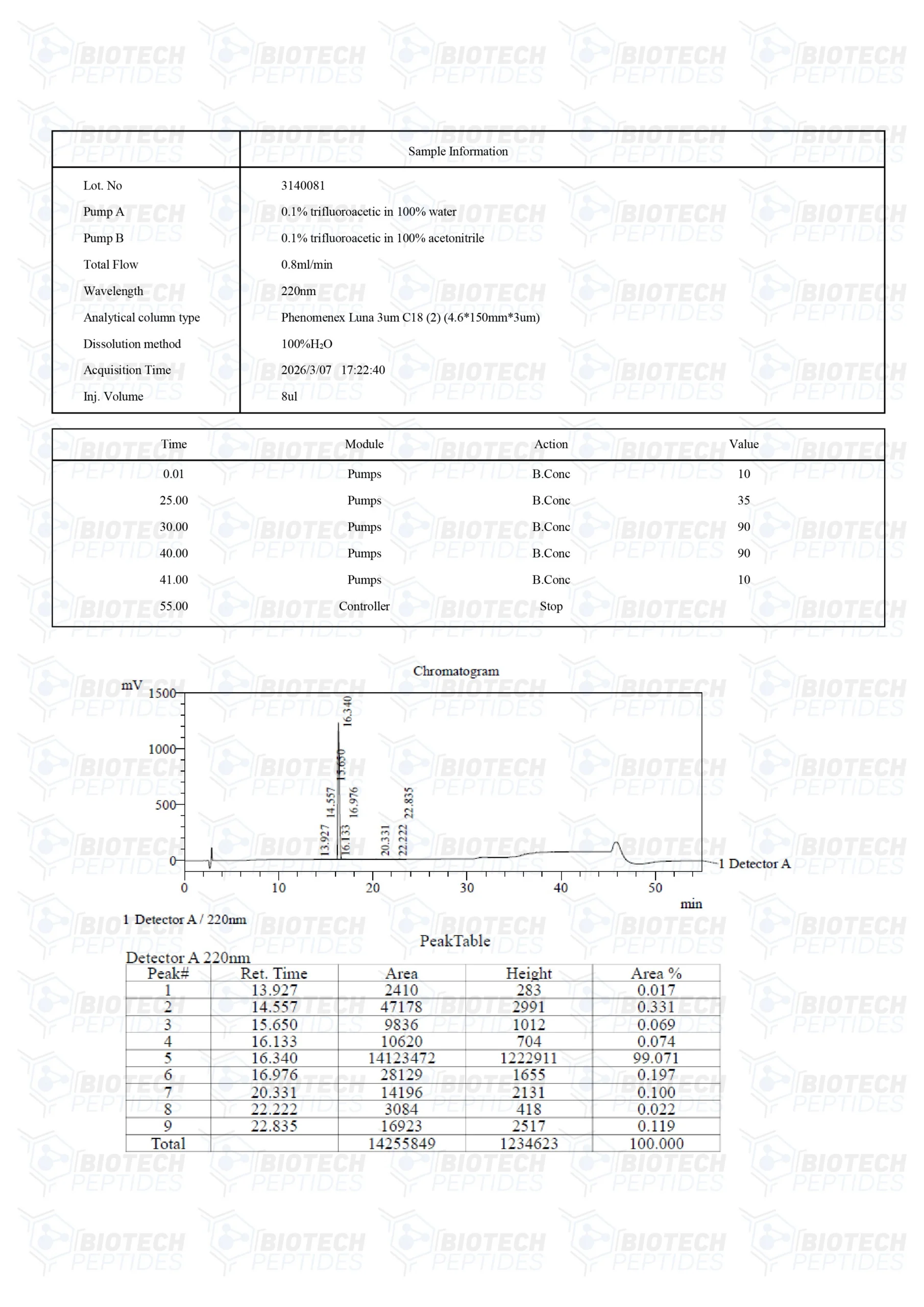
Purity-testing methods and supporting analytical data.
-
Quantity or peptide-content measurements, where required.
-
Product-specific storage and handling instructions.
Match identifiers across the label, specifications, and analytical reports. Obtain clarification if the documentation uses inconsistent names, sequences, or molecular values.
For inquiries, provide “Semax (25mg),” the batch number where available, and the specific information your laboratory requires.
Storage and Handling
Follow the product-specific instructions supplied with the material and your laboratory’s applicable procedures.
Do not transfer storage temperatures, shelf-life claims, or preparation instructions from another supplier’s formulation or a differently modified peptide. Obtain clarification if documented instructions are unavailable or unclear.
Frequently Asked Questions About Semax (25mg)
What is Semax?
Semax is a synthetic heptapeptide consisting of the amino acid sequence Met-Glu-His-Phe-Pro-Gly-Pro, derived from the N-terminal fragment of adrenocorticotropic hormone. 1041
Is Semax the same as ACTH?
No. Semax is a synthetic heptapeptide analogue of ACTH(4-10). It is not the same molecule as ACTH. 1041
Does Semax increase BDNF?
A study of Semax and neurotrophin gene expression in rat brain reported that intranasal application of Semax increased the expression of both neurotrophin genes in rat hippocampus. This does not establish that a commercial Semax batch increases BDNF in humans. 1046
What does the 25mg designation mean?
It is the quantity stated for this listing. It does not describe a concentration or independently establish net peptide content.
Does published research verify this product?
No. Publications describe the materials and conditions used by the investigators. Assess a commercial batch using relevant manufacturer specifications and analytical evidence.
Where can I find delivery information?
Review our shipping information for current order-processing and delivery terms.
Research Use Only
Semax (25mg) is sold for laboratory and analytical research only. Not for human or animal consumption, personal administration, medical treatment, diagnosis, or veterinary application.
Review our Research-Use-Only Policy before ordering.
| Brand | Biotech Peptides |
|---|
Related products
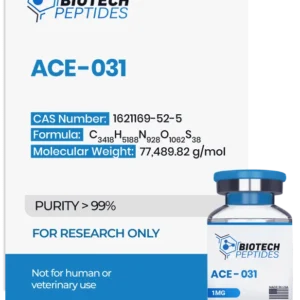
ACE-031 (1mg)
ACE-031 (1mg) is offered by Biotech Peptides for laboratory and analytical research. ACE-031 is a soluble fusion protein comprising the extracellular domain of activin receptor type IIB fused to the Fc portion of human IgG1, studied in relation to myostatin signaling and muscle-mass regulation. 1198
-
Product: ACE-031
-
Alternative name: Ramatercept
-
Listed quantity: 1 mg
-
Reference molecular weight: 77.24 kDa
-
Intended use: Laboratory and analytical research only
Review the manufacturer specifications and applicable analytical documentation before selecting material for your protocol.
For research use only. Not for human consumption.
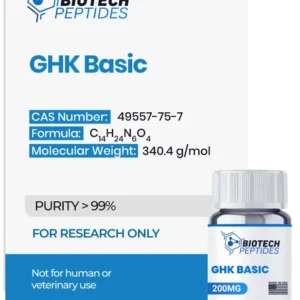
GHK Basic Tripeptide-1 (200mg) | Biotech Peptides
- Product: GHK Basic (Tripeptide-1)
- Listed quantity: 200mg
- Peptide sequence: Gly-His-Lys
- Molecular formula: C₁₄H₂₄N₆O₄
- Molecular weight: Approximately 340.38 g/mol
- CAS number: 49557-75-7
- Chemical form: Copper-free GHK reference structure
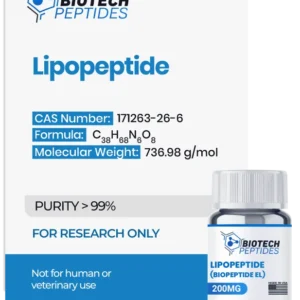
Lipopeptide (Biopeptide EL) (200mg)
- Product name: Lipopeptide (Biopeptide EL)
- Listed quantity: 200mg
- Chemical name: Palmitoyl Hexapeptide-12
- Peptide sequence: Val-Gly-Val-Ala-Pro-Gly (VGVAPG)
- Molecular formula: C₃₈H₆₈N₆O₈
- Molecular weight: Approximately 737.0 g/mol
- CAS number: 171263-26-6
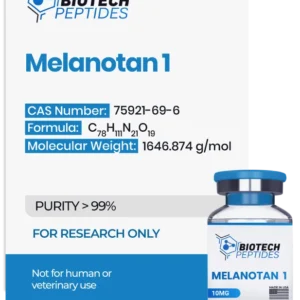
Melanotan 1 (10mg)
Melanotan 1 (10mg) is offered by Biotech Peptides for laboratory and analytical research. Also called afamelanotide, this synthetic 13-residue analogue of alpha-melanocyte-stimulating hormone has been studied in relation to melanocortin receptor signaling and melanin production.pmc.ncbi.nlm.nih+1
-
Product: Melanotan 1
-
Alternative name: Afamelanotide
-
Listed quantity: 10 mg
-
Reference molecular formula: C₇₈H₁₁₁N₂₁O₁₉
-
Intended use: Laboratory and analytical research only
Review the manufacturer specifications and applicable analytical documentation before selecting material for your protocol.
For research use only. Not for human consumption.
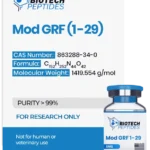
Mod GRF 1-29 (CJC-1295 NO DAC) (5mg)
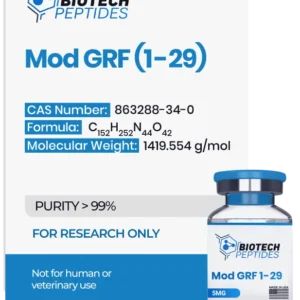
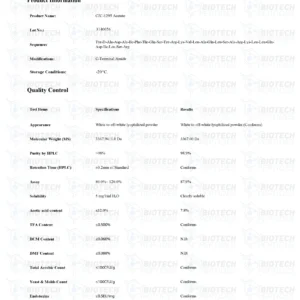
Mod GRF 1-29 (CJC-1295 NO DAC) (5mg) is offered by Biotech Peptides for laboratory and analytical research. Mod GRF 1-29 is a synthetic 29-residue GHRH analogue studied in relation to growth hormone-releasing hormone receptor signaling and somatotroph cell function. 1056
-
Product: Mod GRF 1-29
-
Alternative name: CJC-1295 without DAC
-
Listed quantity: 5 mg
-
Reference molecular formula: C₁₅₂H₂₅₂N₄₄O₄₂
-
Intended use: Laboratory and analytical research only
Review the manufacturer specifications and applicable analytical documentation before selecting material for your protocol.
For research use only. Not for human consumption.
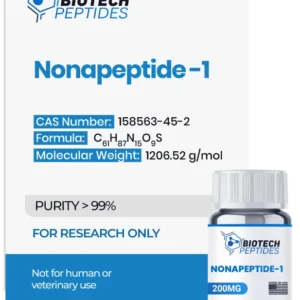
Nonapeptide-1 (200mg)
- Product: Nonapeptide-1
- Alternative name: Melanostatine-5
- Listed quantity: 200mg
- Peptide length: 9 amino acids
- Reference sequence: Met-Pro-D-Phe-Arg-D-Trp-Phe-Lys-Pro-Val-NH₂
- CAS number: 158563-45-2
PT-141 (Bremelanotide) (10mg)
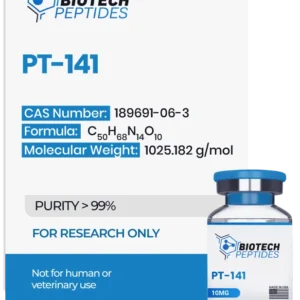
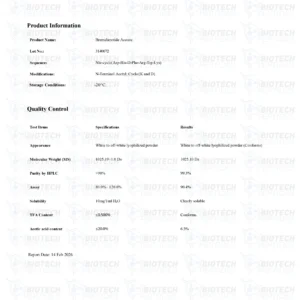
PT-141 (Bremelanotide) (10mg) is offered by Biotech Peptides for laboratory and analytical research. Also called bremelanotide, this synthetic cyclic heptapeptide is a melanocortin receptor agonist studied in relation to MC1R, MC3R, and MC4R signaling.accessdata.fda+2
-
Product: PT-141 (Bremelanotide)
-
Alternative name: Bremelanotide
-
Listed quantity: 10 mg
-
Reference molecular formula: C₅₀H₆₈N₁₄O₁₀
-
Intended use: Laboratory and analytical research only
Review the manufacturer specifications and applicable analytical documentation before selecting material for your protocol.
For research use only. Not for human consumption.