

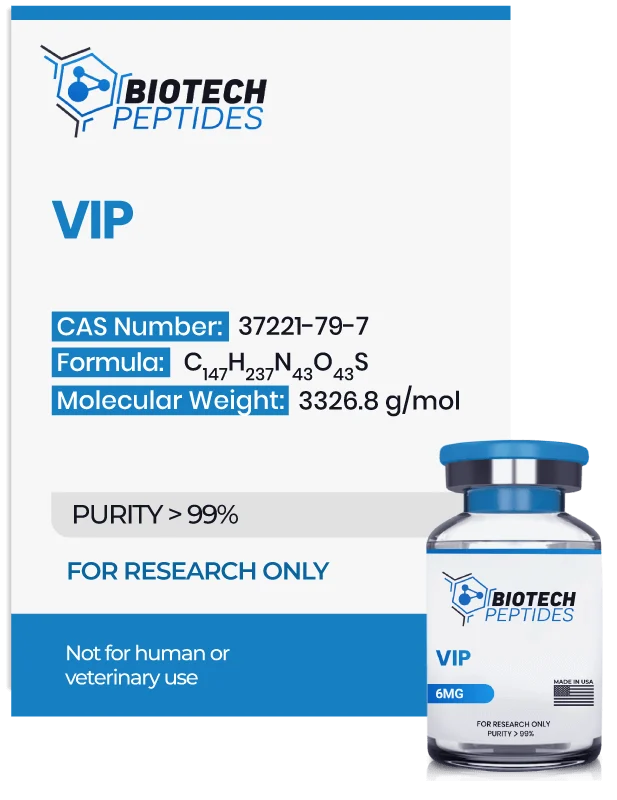
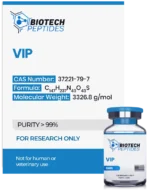

VIP (6mg)
$71.00
VIP (6mg) is offered by Biotech Peptides for laboratory and analytical research. Vasoactive intestinal peptide is a 28-amino-acid neuropeptide that has been studied in relation to VPAC1, VPAC2, and PAC1 receptor signaling.pmc.ncbi.nlm.nih+1
-
Product: Vasoactive intestinal peptide
-
Common abbreviation: VIP
-
Listed quantity: 6 mg
-
Reference sequence: HSDAVFTDNYTRLRKQMAVKKYLNSILN-NH₂
-
Intended use: Laboratory and analytical research only
Review the manufacturer specifications and applicable analytical documentation before selecting material for your protocol.
For research use only. Not for human consumption.
VIP (6mg) for Laboratory Research
VIP (6mg) is offered by Biotech Peptides for laboratories investigating neuropeptide receptor signaling, immune-cell responses, and vascular biology. Vasoactive intestinal peptide, commonly abbreviated VIP, is a 28-amino-acid peptide that binds VPAC1 and VPAC2 receptors and can also interact with PAC1.pmc.ncbi.nlm.nih+1
For laboratories looking to buy VIP, this listing identifies a 6 mg quantity. Confirm the supplied material’s sequence, terminal groups, chemical form, and analytical characteristics against the requirements of the intended work.
Explore our research peptides for sale to review other laboratory-use listings.
VIP Product Information
| Property | Listing information |
|---|---|
| Product name | Vasoactive intestinal peptide |
| Common abbreviation | VIP |
| Listed quantity | 6 mg |
| Intended application | Laboratory and analytical research |
| Documentation inquiries | Include the product name and batch or lot number, where available |
The 6 mg designation describes the quantity stated for this listing. It does not independently establish net peptide content or confirm that a particular quantity-assay method has been performed.
VIP Reference Molecular Characteristics
The following characteristics describe the unmodified human VIP reference structure. They are not analytical confirmation of an individual commercial batch.
| Reference characteristic | Information |
|---|---|
| Peptide length | 28 amino acids |
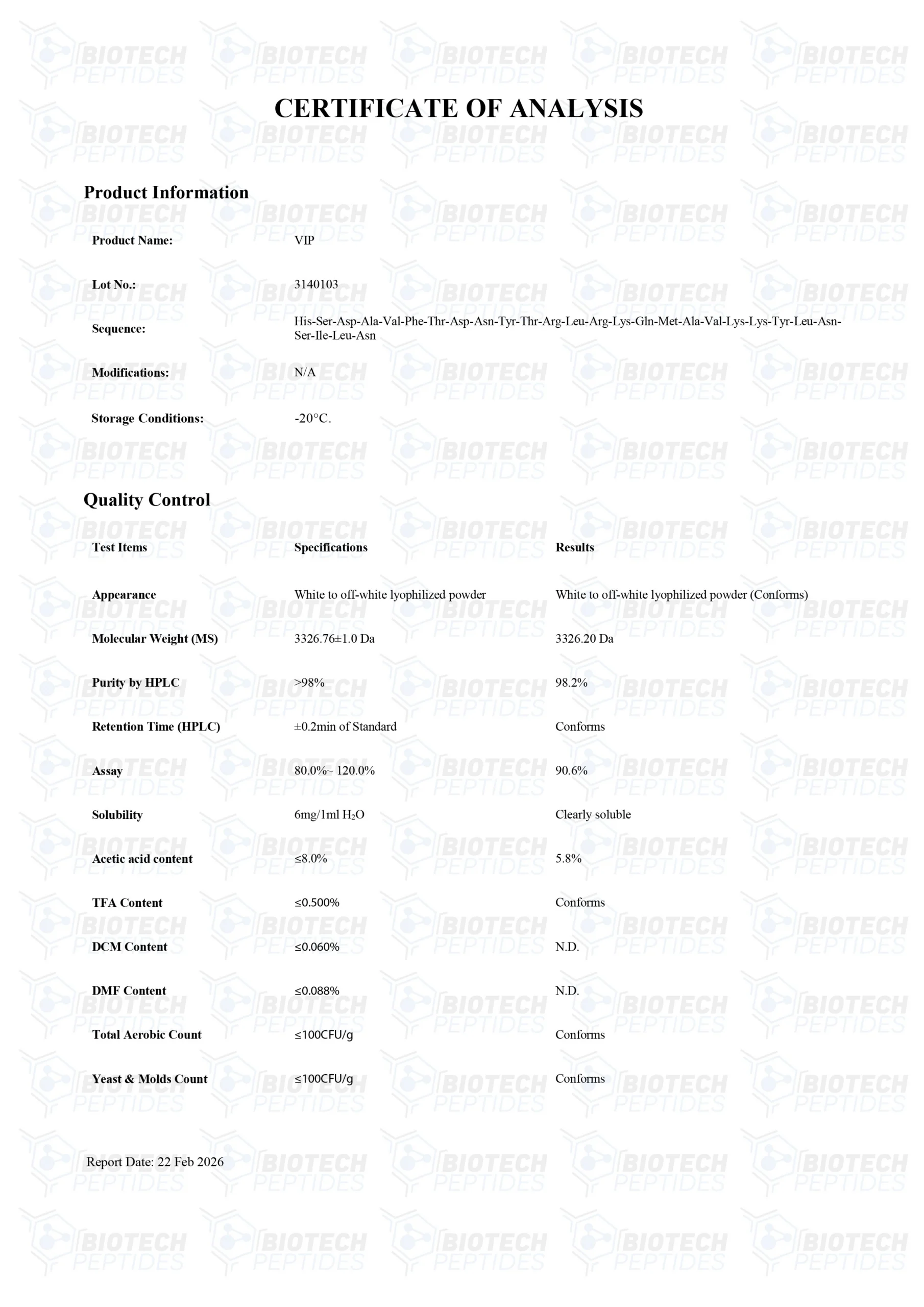
| Amino-acid sequence | His-Ser-Asp-Ala-Val-Phe-Thr-Asp-Asn-Tyr-Thr-Arg-Leu-Arg-Lys-Gln-Met-Ala-Val-Lys-Lys-Tyr-Leu-Asn-Ser-Ile-Leu-Asn-NH₂ |
| One-letter sequence | HSDAVFTDNYTRLRKQMAVKKYLNSILN-NH₂ |
| C-terminal group | Amide |
| Molecular formula | C₁₄₇H₂₃₇N₄₃O₄₃S |
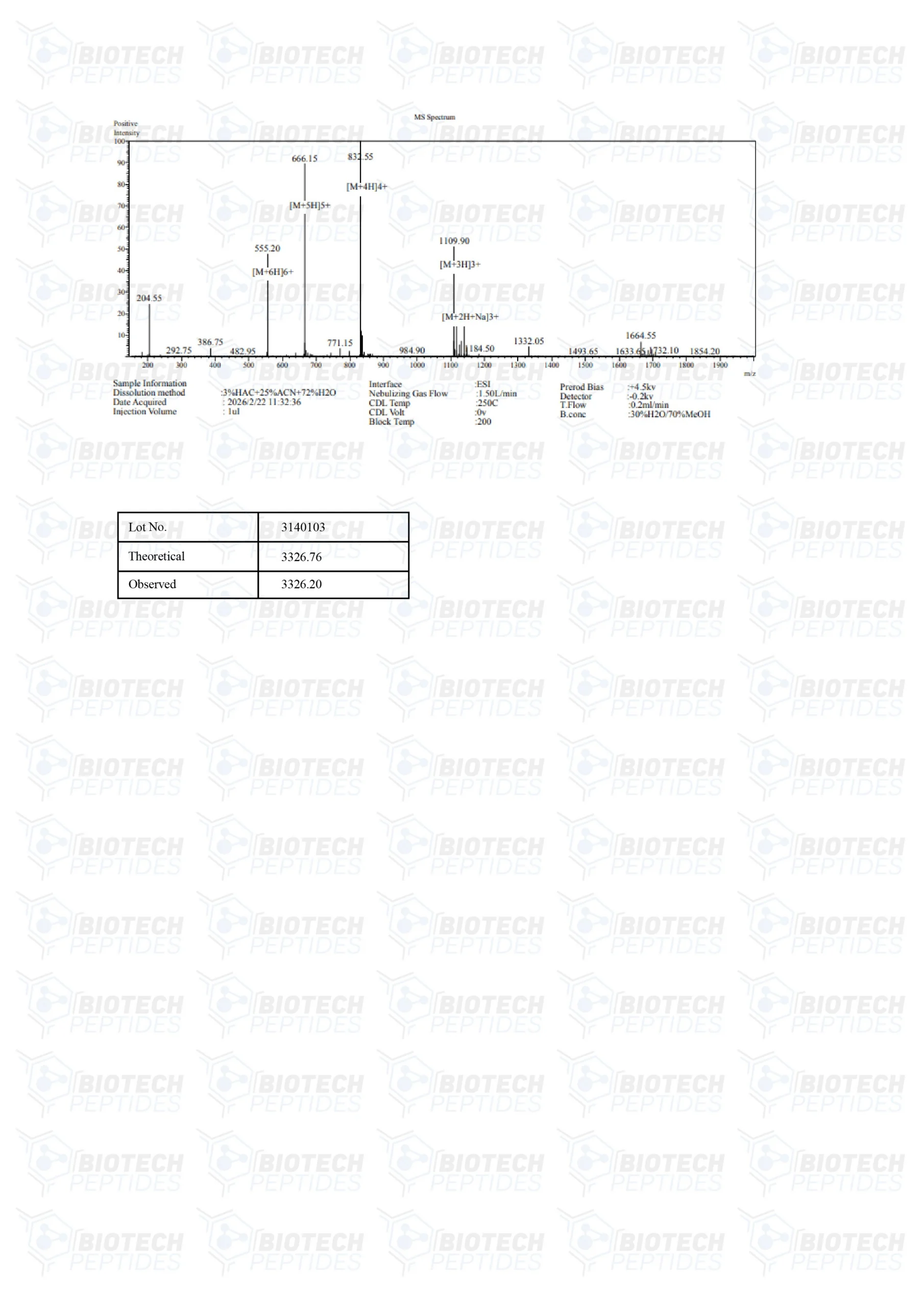
| Approximate molecular weight | 3,326.8 g/mol |
| PubChem compound identifier | 16132300 |
The sequence, molecular formula, molecular weight, and C-terminal amidation are documented in the VIP reference record. Confirm the supplied chemical form and any counterions against manufacturer specifications before using reference values in analytical calculations.learntopeptide
VIP and Receptor Signaling Research
VIP primarily signals through VPAC1 and VPAC2, two class B G protein-coupled receptors. These receptors also bind pituitary adenylate cyclase-activating polypeptide, or PACAP. PAC1 is primarily a PACAP-preferring receptor and has lower affinity for VIP.pubmed.ncbi.nlm.nih+1
Activation of VPAC1 and VPAC2 is principally associated with Gs coupling, adenylyl cyclase activation, and increased intracellular cyclic AMP. Additional signaling through phospholipase C, calcium signaling, ERK, Akt, and CREB has also been described in receptor-specific contexts.pmc.ncbi.nlm.nih+1
Read the review of VIP and PACAP receptor signaling for the molecular mechanisms and receptor distinctions.
Pulmonary Vascular Research
Research in VIP-deficient mice has reported spontaneous pulmonary hypertension, pulmonary vascular remodeling, and lung inflammation. Gene-expression analysis in these animals identified altered expression of genes associated with vascular smooth-muscle proliferation, antiproliferative signaling, and inflammation.
A related study reported that VIP inhibited NFAT nuclear translocation in primary human pulmonary artery smooth-muscle cells and described VIP as an endogenous inhibitor of NFATc3 activity. The investigators interpreted this as a potential mechanism relevant to pulmonary vascular remodeling and inflammation.pubmed.ncbi.nlm.nih+1
These findings describe experimental animal and cell models. They do not establish that VIP treats pulmonary hypertension, pulmonary fibrosis, asthma, or any other respiratory condition in humans.
Read the primary study of VIP-deficient mice for the model and findings.
Immune-Cell Research
VIP has been studied in relation to dendritic cells, T-cell polarization, regulatory T cells, and cytokine signaling. Reviews describe VIP as capable of influencing immune responses through VPAC receptors expressed on immune cells.
The direction and magnitude of these effects depend on the cell type, activation state, receptor expression, and experimental conditions. An observation involving dendritic cells or a particular cytokine pathway does not establish that VIP suppresses inflammation, improves immune tolerance, or prevents transplant rejection in humans.pmc.ncbi.nlm.nih+1
Neurobiology Research
VIP has been studied as a neuropeptide with roles in synaptic transmission and neuronal signaling. A study of hippocampal CA1 pyramidal cells reported that VIP enhanced synaptic transmission through VPAC1 and VPAC2 receptor activation.
Research discussing neuroprotection, microglial activity, amyloid-beta clearance, or neurotrophic factors should be treated as model-specific. Such findings do not establish that VIP treats neurodegenerative disease, protects the brain, or improves cognition in humans.pmc.ncbi.nlm.nih+1
Research Limitations
Published VIP research examines receptor signaling, vascular biology, immune-cell function, and experimental disease models. It does not establish that VIP treats inflammatory bowel disease, pulmonary fibrosis, pulmonary hypertension, neurodegenerative disease, cardiac fibrosis, or any other condition.pubmed.ncbi.nlm.nih+2
Published research also does not verify the identity, purity, quantity, or biological activity of the commercial batch supplied with this listing.
Documentation and Batch Verification
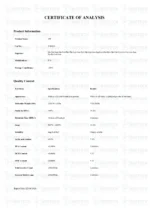
Before selecting VIP (6mg), review the information associated with the exact material being supplied. Depending on your protocol, relevant documentation may include:
-
Product name and batch or lot identifier.
-
Manufacturer specifications and chemical form.
-
Complete sequence and terminal-group information.
-
Counterion information, where applicable.
-
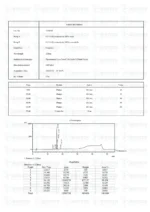
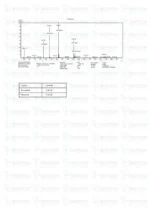
Identity-testing methods and reported results.
-
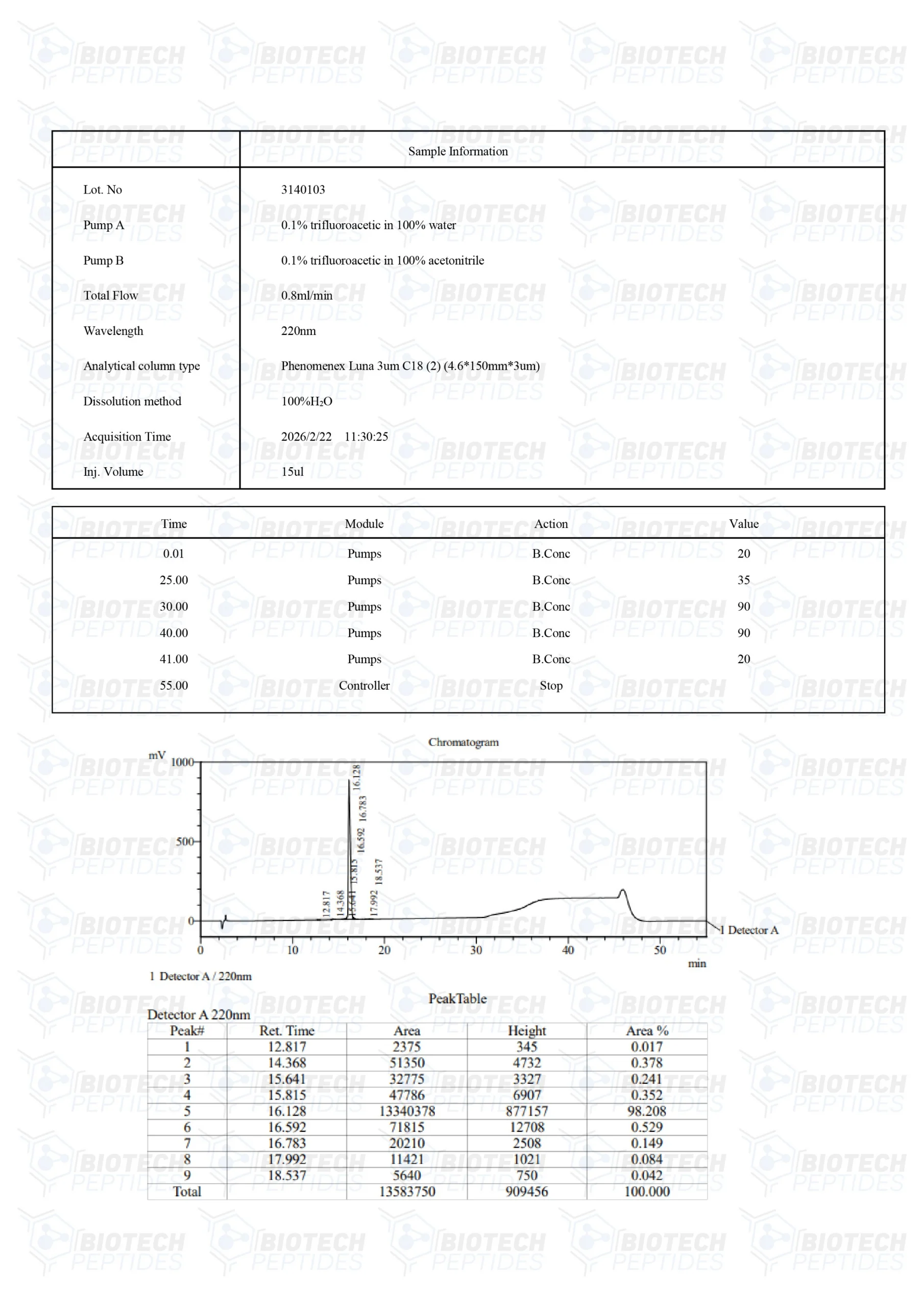
Purity-testing methods and supporting analytical data.
-
Quantity or peptide-content measurements, where required.
-
Product-specific storage and handling instructions.
Match identifiers across the label, specifications, and analytical reports. Obtain clarification if the documentation uses inconsistent names, sequences, or molecular values.
For inquiries, provide “VIP (6mg),” the batch number where available, and the specific information your laboratory requires.
Storage and Handling
Follow the product-specific instructions supplied with the material and your laboratory’s applicable procedures.
Do not transfer storage temperatures, shelf-life claims, or preparation instructions from another supplier’s formulation or a modified VIP analogue. Obtain clarification if documented instructions are unavailable or unclear.
Frequently Asked Questions About VIP (6mg)
What is VIP?
VIP is vasoactive intestinal peptide, a 28-amino-acid neuropeptide. It has been studied in relation to VPAC1, VPAC2, and PAC1 receptor signaling.pmc.ncbi.nlm.nih+1
Is VIP the same as PACAP?
No. VIP and PACAP are related neuropeptides that share VPAC1 and VPAC2 receptors, but PAC1 is primarily a PACAP-preferring receptor.pubmed.ncbi.nlm.nih+1
Does VIP always reduce inflammation?
No. VIP has been studied as an immune modulator, but its effects depend on the cell type, receptor expression, activation state, and experimental conditions.pmc.ncbi.nlm.nih+1
What does the 6mg designation mean?
It is the quantity stated for this listing. It does not describe a concentration or independently establish net peptide content.
Does published research verify this product?
No. Publications describe the materials and conditions used by the investigators. Assess a commercial batch using relevant manufacturer specifications and analytical evidence.
Where can I find delivery information?
Review our shipping information for current order-processing and delivery terms.
Research Use Only
VIP (6mg) is sold for laboratory and analytical research only. Not for human or animal consumption, personal administration, medical treatment, diagnosis, or veterinary application.
Review our Research-Use-Only Policy before ordering.
| Brand | Biotech Peptides |
|---|
Related products


ACE-031 (1mg)
ACE-031 (1mg) is offered by Biotech Peptides for laboratory and analytical research. ACE-031 is a soluble fusion protein comprising the extracellular domain of activin receptor type IIB fused to the Fc portion of human IgG1, studied in relation to myostatin signaling and muscle-mass regulation. 1198
-
Product: ACE-031
-
Alternative name: Ramatercept
-
Listed quantity: 1 mg
-
Reference molecular weight: 77.24 kDa
-
Intended use: Laboratory and analytical research only
Review the manufacturer specifications and applicable analytical documentation before selecting material for your protocol.
For research use only. Not for human consumption.
FOXO4-DRI (Proxofim) (10mg)
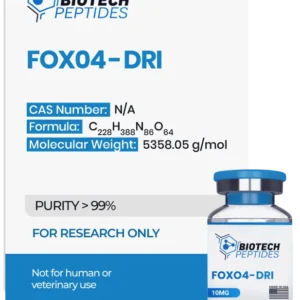
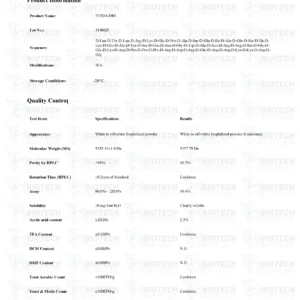
FOXO4-DRI (Proxofim) (10mg) is offered by Biotech Peptides for laboratory and analytical research. FOXO4-DRI is a synthetic D-retro-inverso peptide, also called Proxofim, studied in relation to FOXO4-p53 signaling and senescent-cell apoptosis. 1241
-
Product: FOXO4-DRI
-
Alternative name: Proxofim
-
Listed quantity: 10 mg
-
Reference molecular formula: C₂₂₈H₃₈₈N₈₆O₆₄
-
Intended use: Laboratory and analytical research only
Review the manufacturer specifications and applicable analytical documentation before selecting material for your protocol.
For research use only. Not for human consumption.
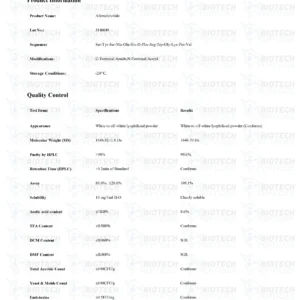
Melanotan 1 (10mg)
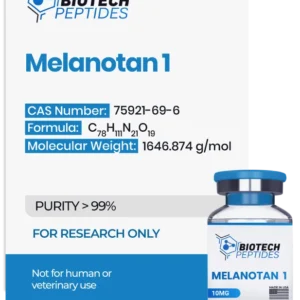
Melanotan 1 (10mg) is offered by Biotech Peptides for laboratory and analytical research. Also called afamelanotide, this synthetic 13-residue analogue of alpha-melanocyte-stimulating hormone has been studied in relation to melanocortin receptor signaling and melanin production.pmc.ncbi.nlm.nih+1
-
Product: Melanotan 1
-
Alternative name: Afamelanotide
-
Listed quantity: 10 mg
-
Reference molecular formula: C₇₈H₁₁₁N₂₁O₁₉
-
Intended use: Laboratory and analytical research only
Review the manufacturer specifications and applicable analytical documentation before selecting material for your protocol.
For research use only. Not for human consumption.


MGF (Mechano-Growth Factor) (5mg)
MGF (Mechano-Growth Factor) (5mg) is offered by Biotech Peptides for laboratory and analytical research. MGF is a synthetic 24-residue peptide derived from the E-domain of IGF-1Ec, studied in relation to muscle-cell proliferation, tissue-repair signaling, and cardiac ischemia models. 1065
-
Product: MGF
-
Full name: Mechano-Growth Factor
-
Listed quantity: 5 mg
-
Reference molecular formula: C₁₂₄H₂₀₄N₄₂O₄₁S
-
Intended use: Laboratory and analytical research only
Review the manufacturer specifications and applicable analytical documentation before selecting material for your protocol.
For research use only. Not for human consumption.
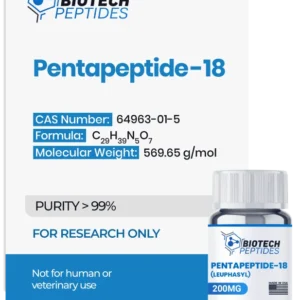
Pentapeptide-18 (Leuphasyl) (200mg) | Biotech Peptides
Pentapeptide-18 (Leuphasyl) (200mg) is a synthetic pentapeptide listed for laboratory and analytical research involving peptide structure and cosmetic-science research models.
Pentapeptide-18 is also known as Leuphasyl and is structurally related to leucine-enkephalin, with a D-alanine residue at position two. Its research background includes investigations into neurotransmitter signaling and topical cosmetic formulations. Reference molecular information:- Listed quantity: 200mg
- Sequence: H-Tyr-D-Ala-Gly-Phe-Leu-OH
- Molecular formula: C₂₉H₃₉N₅O₇
- Molecular weight: Approximately 569.6 g/mol
- CAS number: 64963-01-5
- Alternative name: Leuphasyl
Selank (10mg)
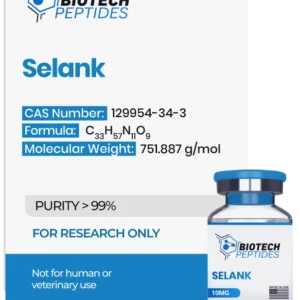
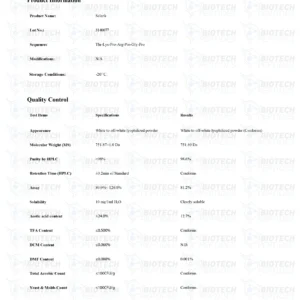
Selank (10mg) is offered by Biotech Peptides for laboratory and analytical research. Selank is a synthetic 7-residue analogue of tuftsin studied in relation to GABAergic signaling, immune modulation, and neurotrophic factor expression. 1166
-
Product: Selank
-
Full name: Tuftsin-Pro-Gly-Pro
-
Listed quantity: 10 mg
-
Reference molecular formula: C₃₃H₅₇N₁₁O₉
-
Intended use: Laboratory and analytical research only
Review the manufacturer specifications and applicable analytical documentation before selecting material for your protocol.
For research use only. Not for human consumption.


TB-500 (Thymosin Beta-4) (10mg)
TB-500 (Thymosin Beta-4) (10mg) is offered by Biotech Peptides for laboratory and analytical research. TB-500 is a synthetic 43-residue peptide derived from thymosin beta-4, studied in relation to cell migration, angiogenesis, and wound-repair signaling. 1153
-
Product: TB-500
-
Full name: Thymosin Beta-4
-
Listed quantity: 10 mg
-
Reference molecular formula: C₂₁₂H₃₅₀N₅₆O₇₈S
-
Intended use: Laboratory and analytical research only
Review the manufacturer specifications and applicable analytical documentation before selecting material for your protocol.
For research use only. Not for human consumption.
Thymalin (25mg)
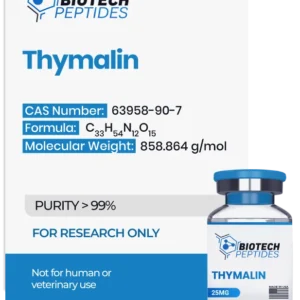
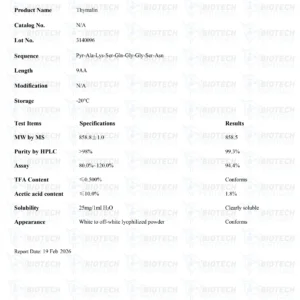
Thymalin (25mg) is offered by Biotech Peptides for laboratory and analytical research. Thymalin is a synthetic 9-residue peptide, also called thymulin, studied in relation to immune modulation, cytokine signaling, and neuroendocrine pathways. 1226
-
Product: Thymalin
-
Alternative name: Thymulin
-
Listed quantity: 25 mg
-
Reference molecular formula: C₃₃H₅₄N₁₂O₁₅
-
Intended use: Laboratory and analytical research only
Review the manufacturer specifications and applicable analytical documentation before selecting material for your protocol.
For research use only. Not for human consumption.