

MGF (Mechano-Growth Factor) (5mg)
$59.00
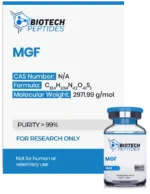
MGF (Mechano-Growth Factor) (5mg) is offered by Biotech Peptides for laboratory and analytical research. MGF is a synthetic 24-residue peptide derived from the E-domain of IGF-1Ec, studied in relation to muscle-cell proliferation, tissue-repair signaling, and cardiac ischemia models. 1065
-
Product: MGF
-
Full name: Mechano-Growth Factor
-
Listed quantity: 5 mg
-
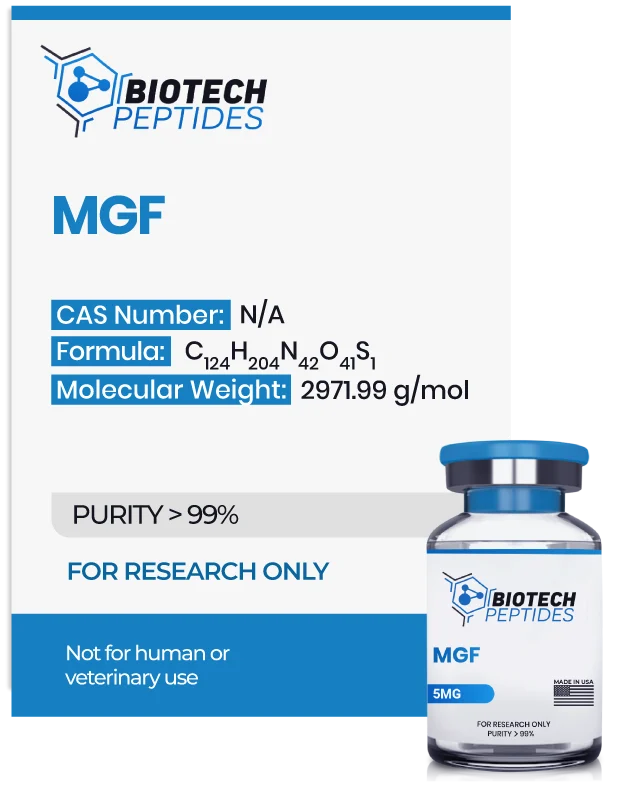
Reference molecular formula: C₁₂₄H₂₀₄N₄₂O₄₁S
-
Intended use: Laboratory and analytical research only
Review the manufacturer specifications and applicable analytical documentation before selecting material for your protocol.
For research use only. Not for human consumption.
MGF (Mechano-Growth Factor) (5mg) for Laboratory Research
MGF (Mechano-Growth Factor) (5mg) is offered by Biotech Peptides for laboratories investigating muscle-cell proliferation, tissue-repair signaling, and IGF-1Ec-related pathways. MGF is a synthetic 24-residue peptide derived from the E-domain of IGF-1Ec. 1065
For laboratories looking to buy MGF, this listing identifies a 5 mg quantity. Confirm the supplied material’s salt state, stereochemistry, and analytical characteristics against the requirements of the intended work.
Explore our research peptides for sale to review other laboratory-use listings.
MGF Product Information
| Property | Listing information |
|---|---|
| Product name | MGF |
| Full name | Mechano-Growth Factor |
| Listed quantity | 5 mg |
| Intended application | Laboratory and analytical research |
| Documentation inquiries | Include the product name and batch or lot number, where available |
The 5 mg designation describes the quantity stated for this listing. It does not independently establish net peptide content or confirm that a particular quantity-assay method has been performed.
MGF Reference Molecular Characteristics
The following characteristics describe the MGF reference structure. They are not analytical confirmation of an individual commercial batch.
| Reference characteristic | Information |
|---|---|
| Peptide length | 24 residues |
| Reference sequence | YQPPSTNKNTKSQRRKGSTFEERK |
| Molecular formula | C₁₂₄H₂₀₄N₄₂O₄₁S |
| Approximate molecular weight | 2971.99 g/mol |
| Chemical class | Synthetic peptide derived from IGF-1Ec E-domain |
The sequence and molecular formula are documented in the MGF research summary and in the MGF research summary. Confirm the supplied salt state and any counterions against manufacturer specifications before using reference values in analytical calculations. 1067
MGF and Skeletal Muscle Research
A review of IGF-1Ec/MGF describes MGF as a C-terminal peptide derived from the Ec fragment with a physiological function distinct from IGF-1. The same review notes that MGF has been shown to activate satellite cells and prevent them from fusing with muscle fibers until they adopt a myogenic program.
A separate review of mechano growth factor describes MGF as a putative product of IGF-1 gene expression involved in tissue repair and regeneration. The same review notes that MGF is expressed in specific tissues in response to different, often pathological stimuli. 1001
Read the review of IGF-1Ec/MGF for the molecular mechanisms and evidence limitations.
Cardiac-Tissue Research
A study using peptide-eluting polymeric microstructures delivered a synthetic 24-amino-acid peptide analog corresponding to the unique carboxyl-terminal sequence of human MGF to mice after myocardial infarction. The investigators reported that systemic delivery of the MGF E-domain peptide during MI resulted in preservation of cardiac function, inhibition of myocyte apoptosis, and prevention of pathologic remodeling. 1007
A separate study in sheep with microsphere-induced infarcts reported that the MGF E-domain preserved cardiac function and resulted in 35% less compromised cardiac muscle than controls. The investigators also reported that immunostaining of cleaved caspase 3 was absent in MGF E-domain-treated hearts, suggesting that MGF E domain reduced infarct expansion. 1065
These findings apply to specific animal models and delivery protocols. They do not establish that a commercial MGF batch improves cardiac function, reduces apoptosis, or produces a cosmetic effect in humans. 1007
Research Limitations
Published MGF research examines cell-based assays, rodent models, and limited tissue-repair contexts. It does not establish that MGF improves muscle recovery, enhances athletic performance, treats cardiac disease, or treats any condition. 1007
Published research also does not verify the identity, purity, quantity, or biological activity of the commercial batch supplied with this listing.
Documentation and Batch Verification
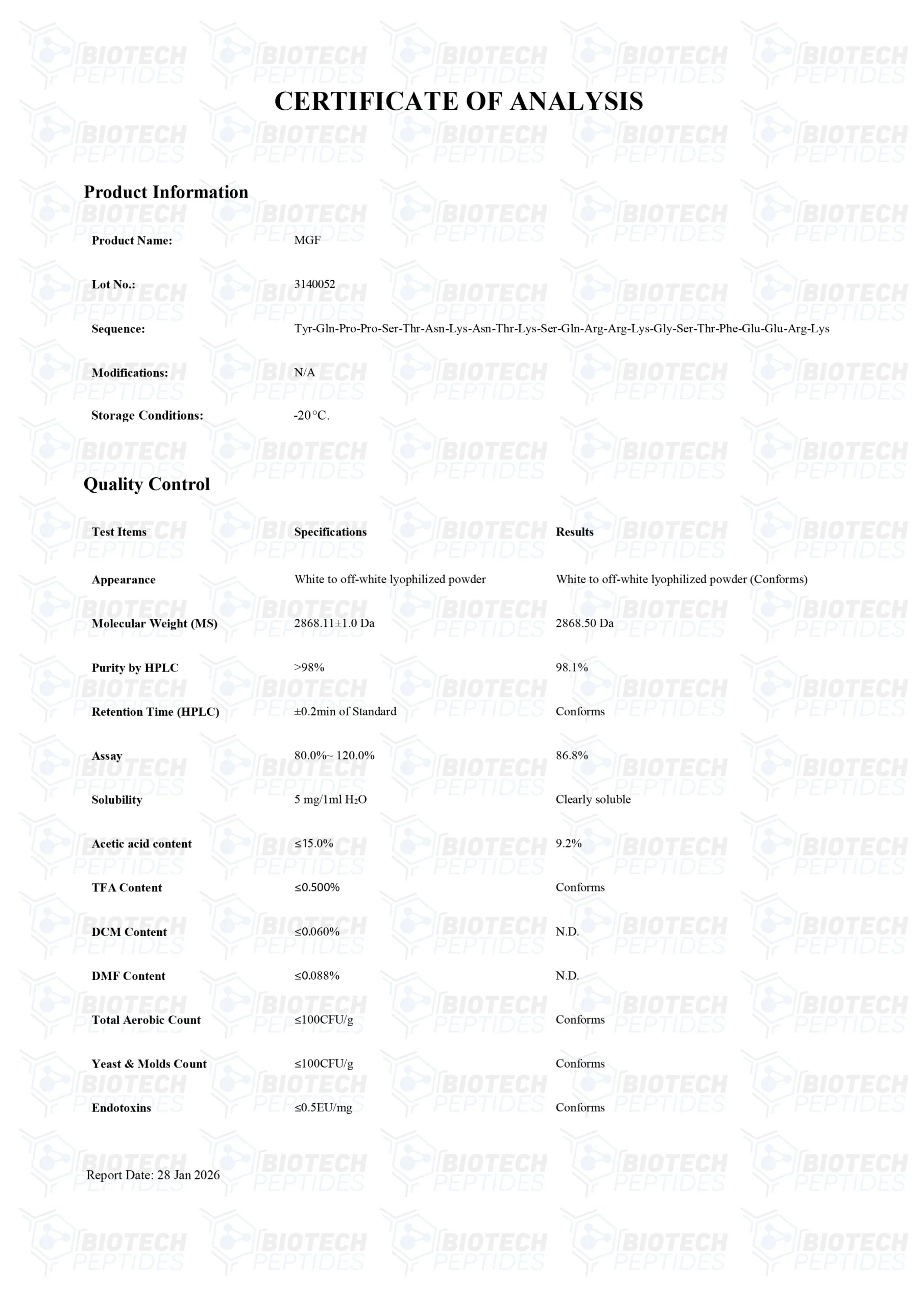
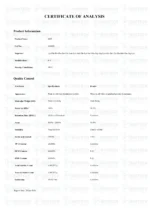
Before selecting MGF (Mechano-Growth Factor) (5mg), review the information associated with the exact material being supplied. Depending on your protocol, relevant documentation may include:
-
Product name and batch or lot identifier.
-
Manufacturer specifications and chemical form.
-
Salt state and counterion information, where applicable.
-
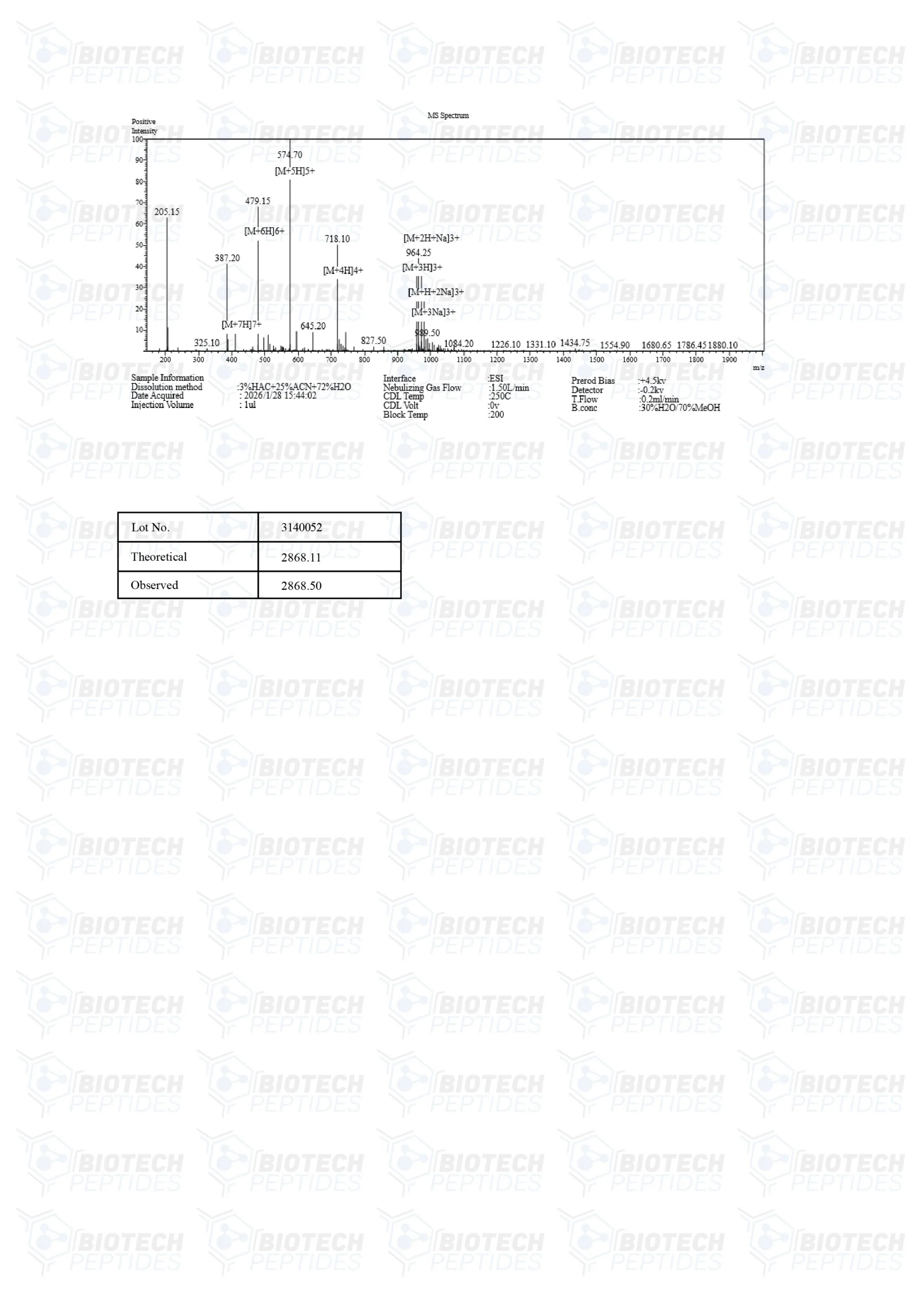
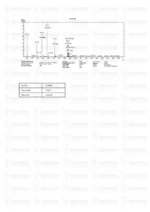
Identity-testing methods and reported results.
-
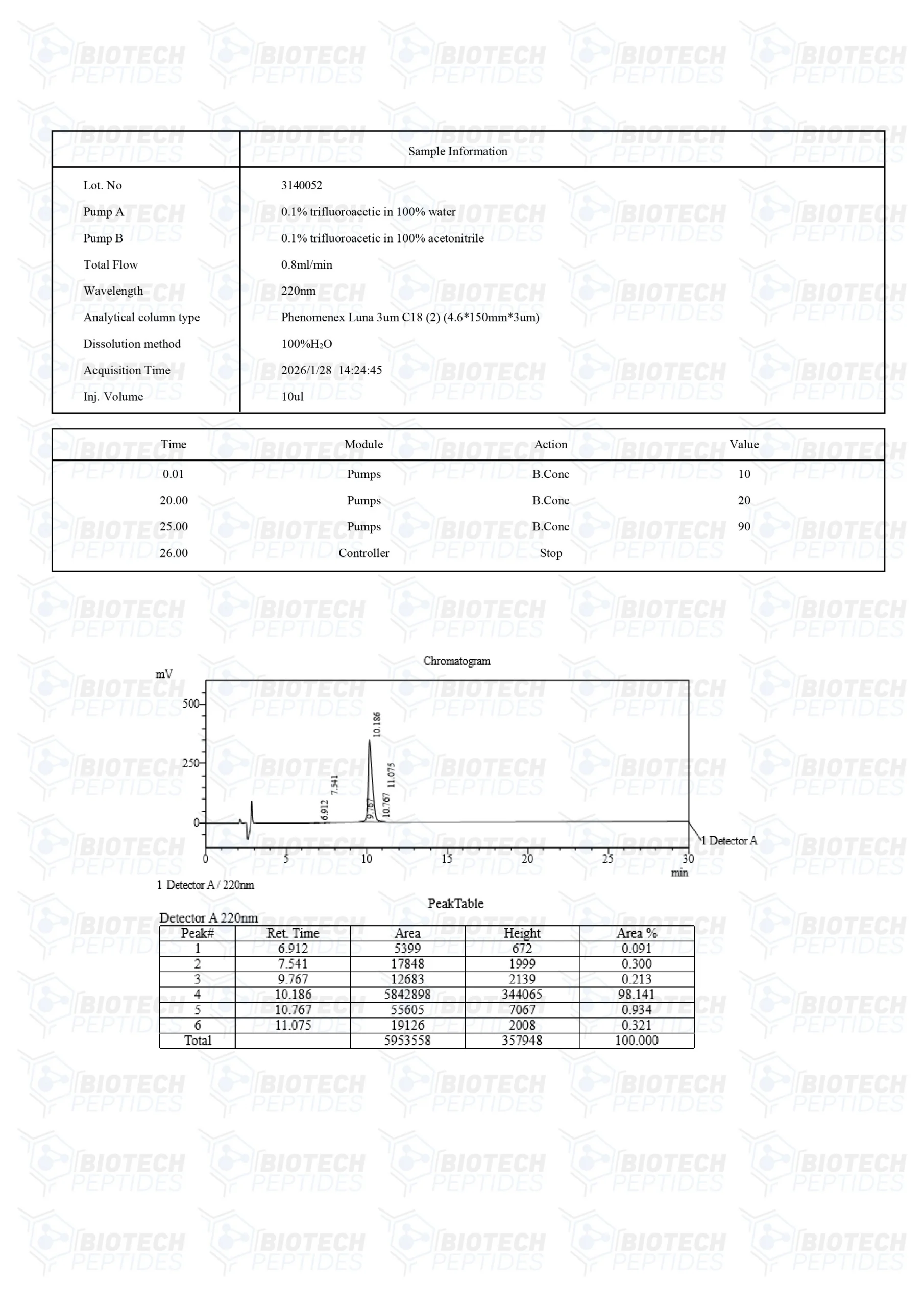
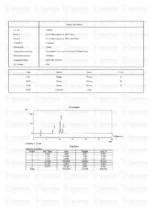
Purity-testing methods and supporting analytical data.
-
Quantity or peptide-content measurements, where required.
-
Product-specific storage and handling instructions.
Match identifiers across the label, specifications, and analytical reports. Obtain clarification if the documentation uses inconsistent names, sequences, or molecular values.
For inquiries, provide “MGF (Mechano-Growth Factor) (5mg),” the batch number where available, and the specific information your laboratory requires.
Storage and Handling
Follow the product-specific instructions supplied with the material and your laboratory’s applicable procedures.
Do not transfer storage temperatures, shelf-life claims, or preparation instructions from another supplier’s formulation or a differently modified peptide. Obtain clarification if documented instructions are unavailable or unclear.
Frequently Asked Questions About MGF (Mechano-Growth Factor) (5mg)
What is MGF?
MGF is mechano growth factor, a synthetic 24-residue peptide derived from the E-domain of IGF-1Ec. 1065
Is MGF the same as IGF-1?
No. MGF is a splice variant of IGF-1 with a unique C-terminal E-domain peptide sequence. It is not the same molecule as IGF-1. 1066
Does MGF improve muscle recovery?
Published research examines cellular proliferation, tissue-repair signaling, and cardiac remodeling in specific cell-based and animal models. It does not establish that a commercial MGF batch improves muscle recovery in humans. 1007
What does the 5mg designation mean?
It is the quantity stated for this listing. It does not describe a concentration or independently establish net peptide content.
Does published research verify this product?
No. Publications describe the materials and conditions used by the investigators. Assess a commercial batch using relevant manufacturer specifications and analytical evidence.
Where can I find delivery information?
Review our shipping information for current order-processing and delivery terms.
Research Use Only
MGF (Mechano-Growth Factor) (5mg) is sold for laboratory and analytical research only. Not for human or animal consumption, personal administration, medical treatment, diagnosis, or veterinary application.
Review our Research-Use-Only Policy before ordering.
| Brand | Biotech Peptides |
|---|
Related products
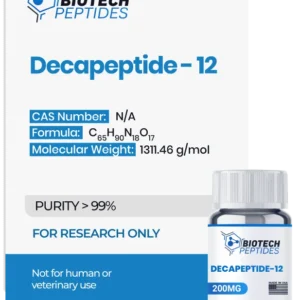
Decapeptide-12 (200mg)
Decapeptide-12 (200mg), also known by its sequence YRSRKYSSWY, is a synthetic ten-amino-acid peptide investigated for its interaction with tyrosinase and its role in experimental melanogenesis research. Published studies have examined its effects on tyrosinase activity and melanin content in laboratory models. Listed for laboratory and analytical research.
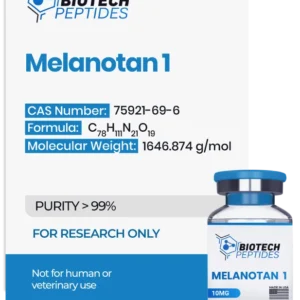
Melanotan 1 (10mg)
Melanotan 1 (10mg) is offered by Biotech Peptides for laboratory and analytical research. Also called afamelanotide, this synthetic 13-residue analogue of alpha-melanocyte-stimulating hormone has been studied in relation to melanocortin receptor signaling and melanin production.pmc.ncbi.nlm.nih+1
-
Product: Melanotan 1
-
Alternative name: Afamelanotide
-
Listed quantity: 10 mg
-
Reference molecular formula: C₇₈H₁₁₁N₂₁O₁₉
-
Intended use: Laboratory and analytical research only
Review the manufacturer specifications and applicable analytical documentation before selecting material for your protocol.
For research use only. Not for human consumption.
Sermorelin (5mg)
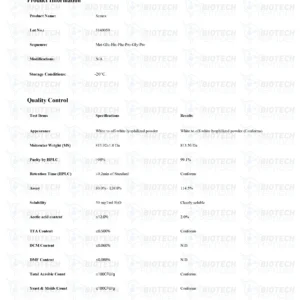
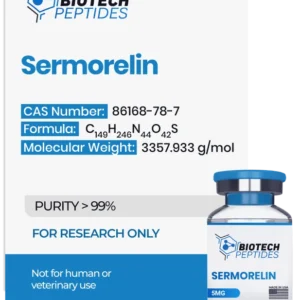
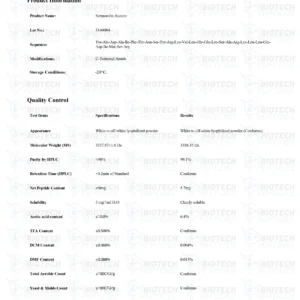
Sermorelin (5mg) is offered by Biotech Peptides for laboratory and analytical research. Sermorelin is a synthetic 29-residue GHRH analogue studied in relation to growth hormone secretion, receptor signaling, and neuroendocrine pathways. 1159
-
Product: Sermorelin
-
Full name: GHRH(1-29)-NH2
-
Listed quantity: 5 mg
-
Reference molecular formula: C₁₄₉H₂₄₆N₄₄O₄₂S
-
Intended use: Laboratory and analytical research only
Review the manufacturer specifications and applicable analytical documentation before selecting material for your protocol.
For research use only. Not for human consumption.


Tesamorelin (5mg & 10mg)
Tesamorelin (5mg & 10mg) is offered by Biotech Peptides for laboratory and analytical research. Tesamorelin is a synthetic 44-residue GHRH analogue studied in relation to growth hormone secretion, visceral adiposity, and metabolic signaling. 1137
-
Product: Tesamorelin
-
Full name: N-(trans-3-hexenoyl)-[Tyr1]-hGRF(1-44)-NH2 acetate
-
Listed quantities: 5 mg and 10 mg
-
Reference molecular formula: C₂₂₁H₃₆₆N₇₂O₆₇S
-
Intended use: Laboratory and analytical research only
Review the manufacturer specifications and applicable analytical documentation before selecting material for your protocol.
For research use only. Not for human consumption.
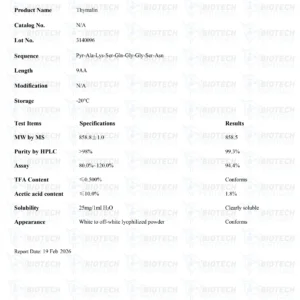
Thymalin (25mg)
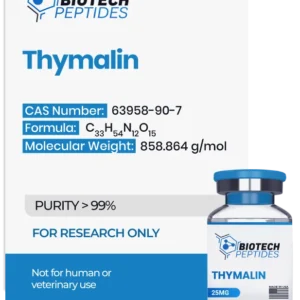
Thymalin (25mg) is offered by Biotech Peptides for laboratory and analytical research. Thymalin is a synthetic 9-residue peptide, also called thymulin, studied in relation to immune modulation, cytokine signaling, and neuroendocrine pathways. 1226
-
Product: Thymalin
-
Alternative name: Thymulin
-
Listed quantity: 25 mg
-
Reference molecular formula: C₃₃H₅₄N₁₂O₁₅
-
Intended use: Laboratory and analytical research only
Review the manufacturer specifications and applicable analytical documentation before selecting material for your protocol.
For research use only. Not for human consumption.
