

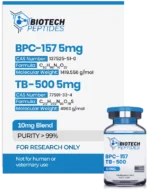
BPC-157 & TB-500 Blend (10mg)
$115.00
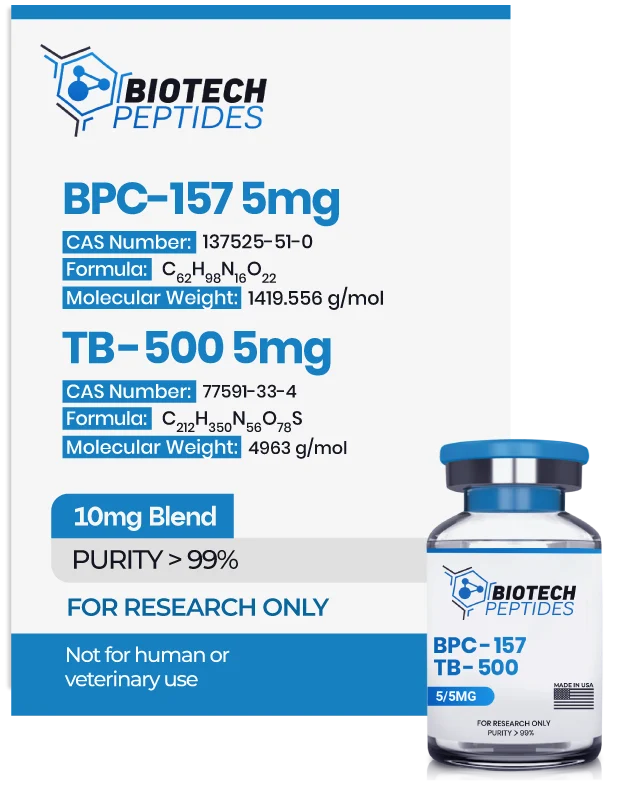
BPC-157 & TB-500 Blend (10mg) is offered by Biotech Peptides for laboratory and analytical research. This blend combines BPC-157, a synthetic 15-residue peptide, with TB-500, a synthetic 43-residue fragment of thymosin beta-4, for studies of cellular migration, wound-repair signaling, and angiogenesis-related pathways.pmc.ncbi.nlm.nih+2
-
Product: BPC-157 & TB-500 Blend
-
Listed quantity: 10 mg
-
Components: BPC-157 and TB-500
-
Intended use: Laboratory and analytical research only
Review the manufacturer specifications and applicable analytical documentation before selecting material for your protocol.
For research use only. Not for human consumption.
BPC-157 & TB-500 Blend (10mg) for Laboratory Research
BPC-157 & TB-500 Blend (10mg) is offered by Biotech Peptides for laboratories investigating tissue-repair signaling, cellular migration, extracellular-matrix remodeling, and angiogenesis-related pathways. BPC-157 is a synthetic 15-amino-acid peptide, while TB-500 is a synthetic 43-residue fragment of thymosin beta-4.pmc.ncbi.nlm.nih+2
For laboratories looking to buy BPC-157 & TB-500 Blend, this listing identifies a 10 mg quantity. Confirm the supplied material’s component ratio, salt state, and analytical characteristics against the requirements of the intended work.
Explore our research peptides for sale to review other laboratory-use listings.
Blend Product Information
| Property | Listing information |
|---|---|
| Product name | BPC-157 & TB-500 Blend |
| Listed quantity | 10 mg |
| Components | BPC-157 and TB-500 |
| Intended application | Laboratory and analytical research |
| Documentation inquiries | Include the product name and batch or lot number, where available |
The 10 mg designation describes the total quantity stated for this listing. It does not independently establish the amount of each component, net peptide content, or confirm that a particular quantity-assay method has been performed.
Reference Molecular Characteristics
The following characteristics describe the reference structures of the two components. They are not analytical confirmation of an individual commercial blend batch.
| Component | Reference molecular formula | Approximate molecular weight | PubChem identifier |
|---|---|---|---|
| BPC-157 | C₆₂H₉₈N₁₆O₂₂ | 1419.5 g/mol | 9941957 |
| TB-500 | C₂₁₂H₃₅₀N₅₆O₇₈S | 4963 g/mol | Not listed |
The BPC-157 molecular formula, molecular weight, and sequence are documented in the PubChem BPC-157 reference record. Confirm the supplied salt state and any counterions against manufacturer specifications before using reference values in analytical calculations.
BPC-157 is a synthetic 15-amino-acid peptide, also called Body Protection Compound-157. The sequence is documented in the PubChem BPC-157 reference record and in the FDA substance record.precision.fda
TB-500 is a synthetic 43-residue fragment of thymosin beta-4. The sequence is documented in the TB-500 research monograph and in the TB-500 research summary.peptideauthority
Cellular Migration Research
Fibroblasts and immune cells migrate to sites of tissue injury, where fibroblasts contribute to extracellular-matrix formation. The movement of these cells depends in part on the protein axin.pmc.ncbi.nlm.nih+1
BPC-157 has been studied for its potential to promote transcription of the axin gene and increase expression of the protein. TB-500 is an actin-binding protein that sequesters actin in areas where it is required for cell movement.pmc.ncbi.nlm.nih+1
Wound-Repair Research
BPC-157 has been studied in murine models of Achilles tendon injury, where elevated levels of the peptide were associated with tendon healing. BPC-157 has also been studied in relation to blood flow, nitric oxide signaling, and gastric and intestinal injury models.pmc.ncbi.nlm.nih+1
A study comparing BPC-157 with becaplermin (PDGF-BB) examined granulation tissue formation in sponge implantation in normoglycemic rats and healing of full-thickness excisional wounds in db/db genetically diabetic mice. The investigators reported that both compounds stimulated granulation tissue in both models, and speculated that BPC-157 may have promoted early collagen organization.pmc.ncbi.nlm.nih+1
Angiogenesis Research
BPC-157 has been studied in chick chorioallantoic membrane and endothelial tube-formation assays, where investigators reported increased vessel density. The same study reported that BPC-157 facilitated recovery of blood flow in ischemic rat hind-limb muscle and increased vascular expression of VEGFR2.pmc.ncbi.nlm.nih+1
TB-500 has been studied in murine models of critical limb ischemia, where investigators reported enhanced viability, angiogenesis, and migratory ability of human umbilical vein endothelial cells. The investigators also reported increased expression of angiopoietin-2, TEK receptor tyrosine kinase 2, VEGFA, and Notch/NF-kappa-B pathway-related factors.pmc.ncbi.nlm.nih+1
Synergy Research Limitations
The idea that BPC-157 and TB-500 produce synergistic effects in tissue repair is based on mechanistic extrapolation from individual peptide studies. No peer-reviewed human trial has tested BPC-157 and TB-500 together.peptideauthority+1
A 2026 exploratory rat Achilles tendon model found that the combination did not outperform either single agent on any measured endpoint. This finding does not prove antagonism, but it does not support additive benefit in that model.
Research Limitations
Published BPC-157 and TB-500 research examines cell-based assays, rodent models, and limited wound-healing contexts. It does not establish that a commercial blend improves tissue repair, reduces inflammation, promotes angiogenesis, or treats any condition.pmc.ncbi.nlm.nih+2
Published research also does not verify the identity, purity, component ratio, quantity, or biological activity of the commercial blend supplied with this listing.
Documentation and Batch Verification
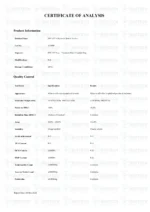
Before selecting BPC-157 & TB-500 Blend (10mg), review the information associated with the exact material being supplied. Depending on your protocol, relevant documentation may include:
-
Product name and batch or lot identifier.
-
Manufacturer specifications and chemical form.
-
Component ratio and total blend quantity.
-
Salt state and counterion information, where applicable.
-
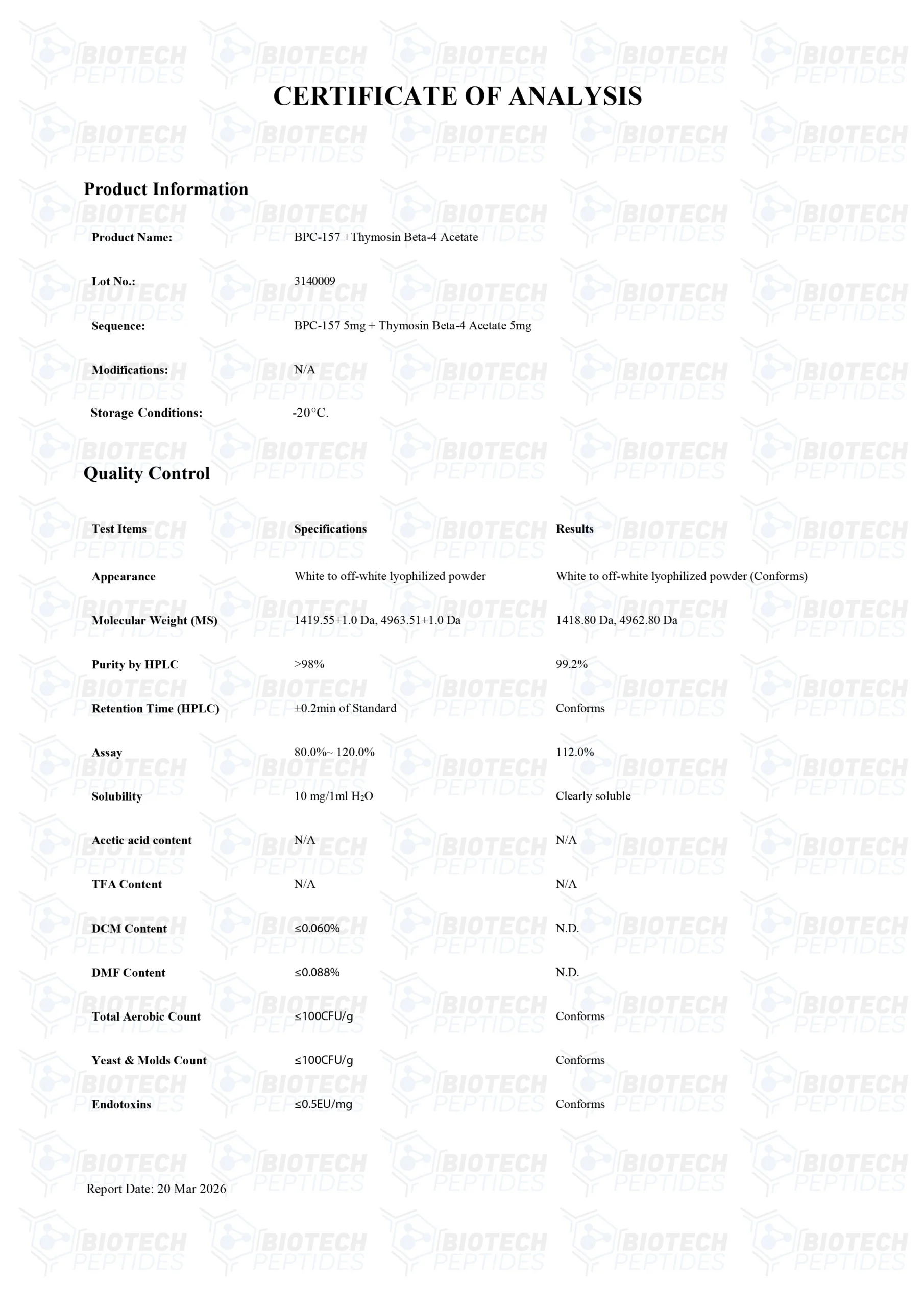
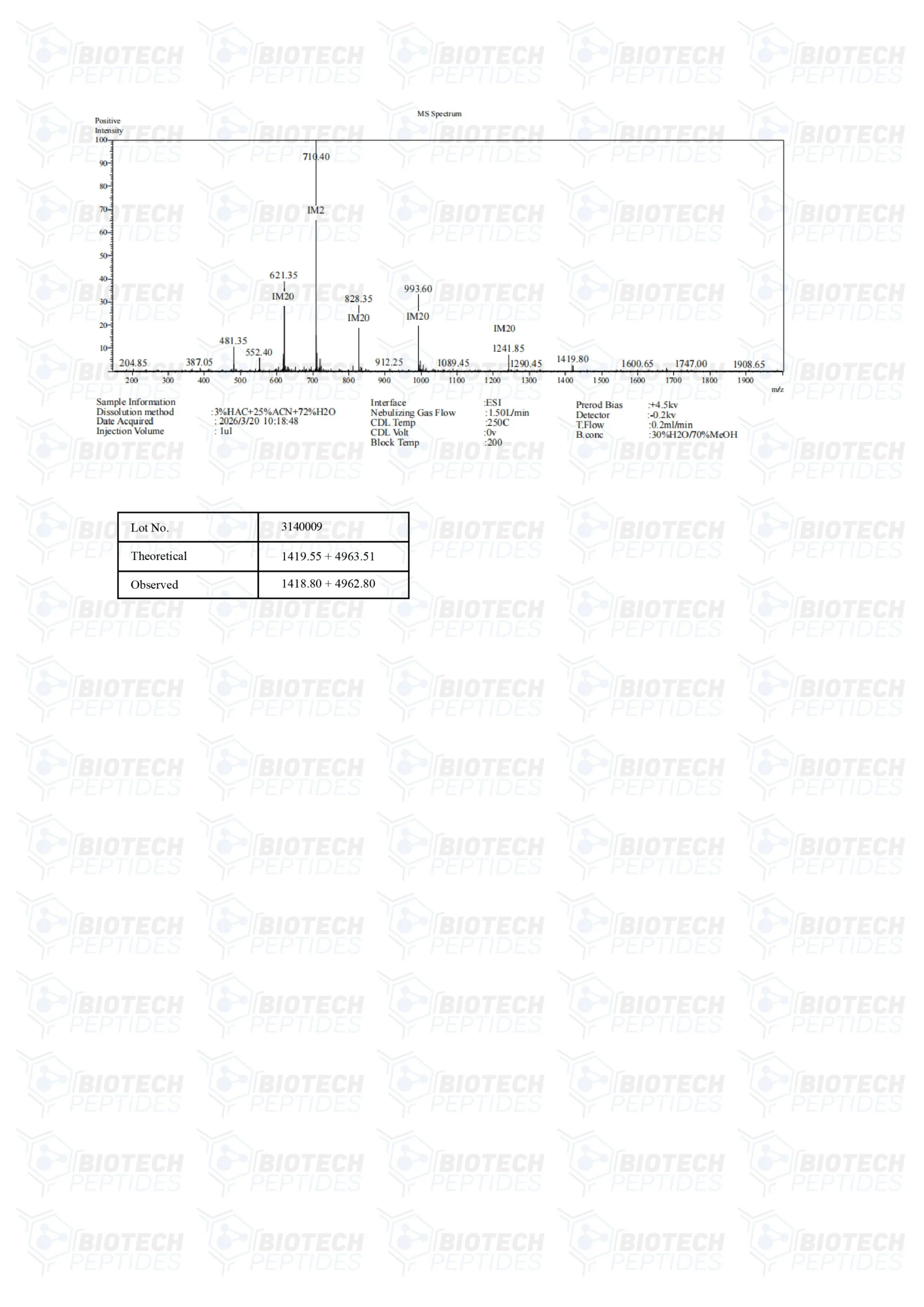
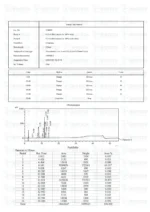
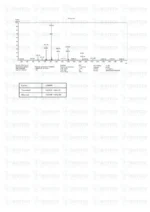
Identity-testing methods and reported results.
-
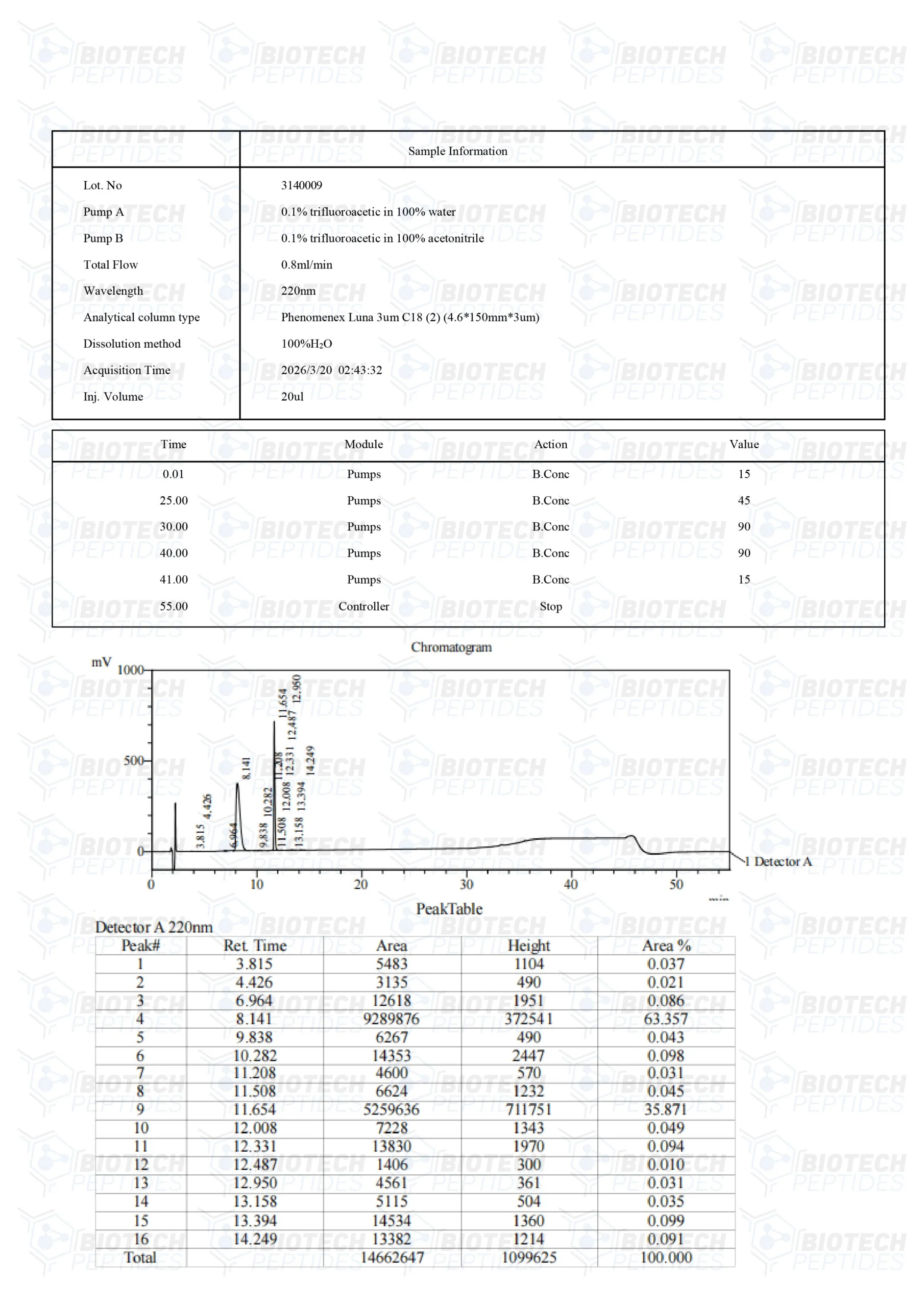
Purity-testing methods and supporting analytical data.
-
Quantity or peptide-content measurements, where required.
-
Product-specific storage and handling instructions.
Match identifiers across the label, specifications, and analytical reports. Obtain clarification if the documentation uses inconsistent component ratios, sequences, or molecular values.
For inquiries, provide “BPC-157 & TB-500 Blend (10mg),” the batch number where available, and the specific information your laboratory requires.
Storage and Handling
Follow the product-specific instructions supplied with the material and your laboratory’s applicable procedures.
Do not transfer storage temperatures, shelf-life claims, or preparation instructions from another supplier’s formulation or a differently modified peptide. Obtain clarification if documented instructions are unavailable or unclear.
Frequently Asked Questions About BPC-157 & TB-500 Blend (10mg)
What is BPC-157 & TB-500 Blend?
It is a research blend combining BPC-157, a synthetic 15-residue peptide, with TB-500, a synthetic 43-residue fragment of thymosin beta-4.pmc.ncbi.nlm.nih+2
What does the 10mg designation mean?
It is the total quantity stated for this listing. It does not describe the amount of each component, a concentration, or independently establish net peptide content.
Does this blend improve tissue repair?
Published research examines cellular migration, wound-repair signaling, and angiogenesis in specific cell-based and animal models. It does not establish that a commercial blend improves tissue repair in humans.pmc.ncbi.nlm.nih+2
Does published research verify this product?
No. Publications describe the materials and conditions used by the investigators. Assess a commercial blend using relevant manufacturer specifications and analytical evidence.
Where can I find delivery information?
Review our shipping information for current order-processing and delivery terms.
Research Use Only
BPC-157 & TB-500 Blend (10mg) is sold for laboratory and analytical research only. Not for human or animal consumption, personal administration, medical treatment, diagnosis, or veterinary application.
Review our Research-Use-Only Policy before ordering.
| Brand | Biotech Peptides |
|---|
Related products
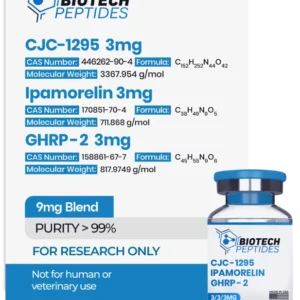
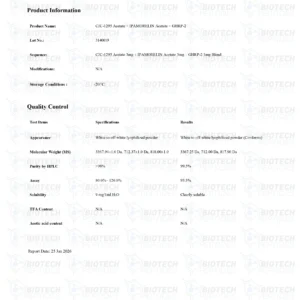
CJC-1295 (Mod GRF 1-29) & Ipamorelin & GHRP-2 Blend (9mg)
CJC-1295 (Mod GRF 1-29) & Ipamorelin & GHRP-2 Blend (9mg) is offered by Biotech Peptides for laboratory and analytical research. This blend combines a 29-residue GHRH analogue, a 5-residue ghrelin mimetic, and a 6-residue ghrelin mimetic for studies of receptor signaling and neuroendocrine pathways. 1096
-
Product: CJC-1295 (Mod GRF 1-29) & Ipamorelin & GHRP-2 Blend
-
Listed quantity: 9 mg
-
Components: CJC-1295, Ipamorelin, and GHRP-2
-
Intended use: Laboratory and analytical research only
Review the manufacturer specifications and applicable analytical documentation before selecting material for your protocol.
For research use only. Not for human consumption.
CJC-1295 & Ipamorelin Blend (10mg)
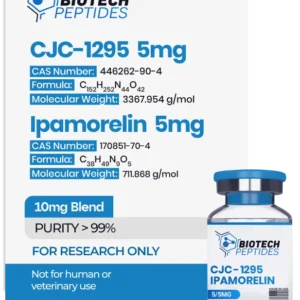
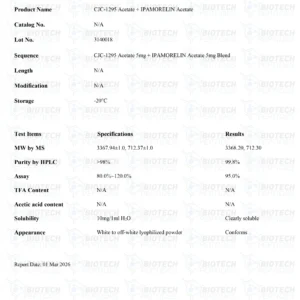
CJC-1295 & Ipamorelin Blend (10mg) is offered by Biotech Peptides for laboratory and analytical research. This blend combines CJC-1295, a 29-residue GHRH analogue, with Ipamorelin, a 5-residue ghrelin mimetic, for studies of receptor signaling and neuroendocrine pathways. 1099
-
Product: CJC-1295 & Ipamorelin Blend
-
Listed quantity: 10 mg
-
Components: CJC-1295 and Ipamorelin
-
Intended use: Laboratory and analytical research only
Review the manufacturer specifications and applicable analytical documentation before selecting material for your protocol.
For research use only. Not for human consumption.
Fragment 176-191 & CJC-1295 & Ipamorelin Blend (12mg)
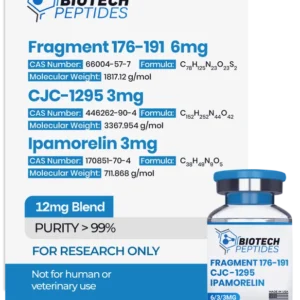
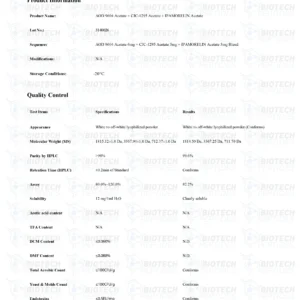
Fragment 176-191 & CJC-1295 & Ipamorelin Blend (12mg) is offered by Biotech Peptides for laboratory and analytical research. This blend combines a 16-residue growth hormone fragment, a 29-residue GHRH analogue, and a 5-residue ghrelin mimetic for studies of receptor signaling and neuroendocrine pathways. 1096
-
Product: Fragment 176-191 & CJC-1295 & Ipamorelin Blend
-
Listed quantity: 12 mg
-
Components: Fragment 176-191, CJC-1295, and Ipamorelin
-
Intended use: Laboratory and analytical research only
Review the manufacturer specifications and applicable analytical documentation before selecting material for your protocol.
For research use only. Not for human consumption.
Fragment 176-191 & Mod GRF 1-29 & Ipamorelin Blend (12mg)
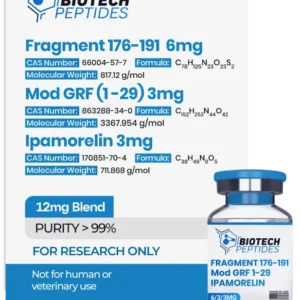
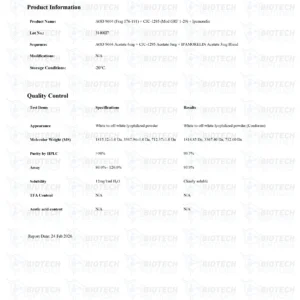
Fragment 176-191 & Mod GRF 1-29 & Ipamorelin Blend (12mg) is offered by Biotech Peptides for laboratory and analytical research. This blend combines a 16-residue growth hormone fragment, a 29-residue GHRH analogue, and a 5-residue ghrelin mimetic for studies of receptor signaling and neuroendocrine pathways.pubchem.ncbi.nlm.nih+1
-
Product: Fragment 176-191 & Mod GRF 1-29 & Ipamorelin Blend
-
Listed quantity: 12 mg
-
Components: Fragment 176-191, Mod GRF 1-29, and Ipamorelin
-
Intended use: Laboratory and analytical research only
Review the manufacturer specifications and applicable analytical documentation before selecting material for your protocol.
For research use only. Not for human consumption.
Mod GRF 1-29 & GHRP-6 (10mg)
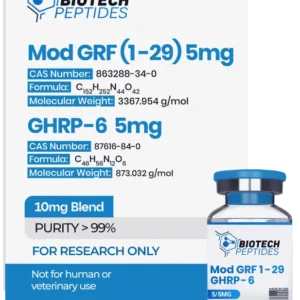
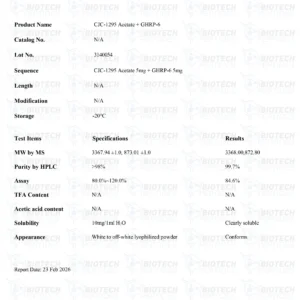
Mod GRF 1-29 & GHRP-6 (10mg) is offered by Biotech Peptides for laboratory and analytical research. This reference blend combines a modified GHRH(1-29) analogue with the synthetic hexapeptide GHRP-6, which has been studied in relation to growth-hormone secretion.pubmed.ncbi.nlm.nih+1
-
Product: Mod GRF 1-29 & GHRP-6
-
Components: Modified GRF(1-29) and GHRP-6
-
Listed quantity: 10 mg
-
Reference sequences: Tyr-D-Ala-Asp-Ala-Ile-Phe-Thr-Gln-Ser-Tyr-Arg-Lys-Val-Leu-Ala-Gln-Leu-Ser-Ala-Arg-Lys-Leu-Leu-Gln-Asp-Ile-Leu-Ser-Arg-NH₂ and His-D-Trp-Ala-Trp-D-Phe-Lys-NH₂
-
Intended use: Laboratory and analytical research only
Review the manufacturer specifications and applicable analytical documentation before selecting material for your protocol.
For research use only. Not for human consumption.
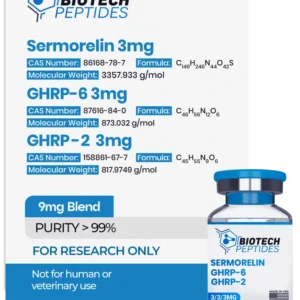
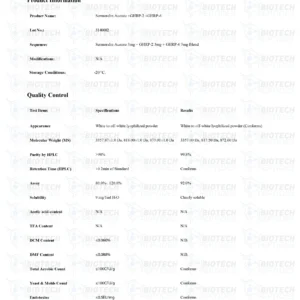
Sermorelin & GHRP-6 & GHRP-2 Blend (9mg)
Sermorelin & GHRP-6 & GHRP-2 Blend (9mg) is offered by Biotech Peptides for laboratory and analytical research. This blend combines a growth hormone-releasing hormone analogue with two growth hormone secretagogue receptor agonists for studies of receptor signaling and neuroendocrine pathways.pubchem.ncbi.nlm.nih
-
Product: Sermorelin & GHRP-6 & GHRP-2 Blend
-
Listed quantity: 9 mg
-
Components: Sermorelin, GHRP-6, and GHRP-2
-
Intended use: Laboratory and analytical research only
Review the manufacturer specifications and applicable analytical documentation before selecting material for your protocol.
For research use only. Not for human consumption.
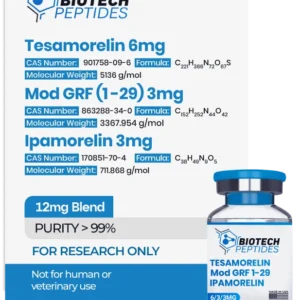
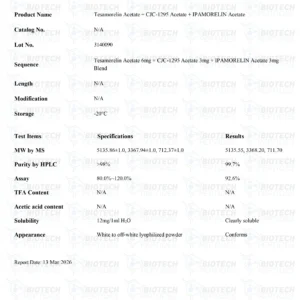
Tesamorelin & CJC-1295 (Mod GRF 1-29) & Ipamorelin Blend (12mg)
Tesamorelin & CJC-1295 (Mod GRF 1-29) & Ipamorelin Blend (12mg) is offered by Biotech Peptides for laboratory and analytical research. This reference blend combines tesamorelin, Mod GRF(1-29), and ipamorelin, three peptides studied in relation to pituitary receptor signaling.accessdata.fda+1
-
Product: Tesamorelin & CJC-1295 (Mod GRF 1-29) & Ipamorelin Blend
-
Components: Tesamorelin, Mod GRF(1-29), and Ipamorelin
-
Listed quantity: 12 mg
-
Intended use: Laboratory and analytical research only
Review the manufacturer specifications and applicable analytical documentation before selecting material for your protocol.
For research use only. Not for human consumption.
Tesamorelin & Ipamorelin Blend (8mg)
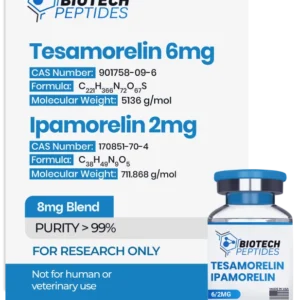
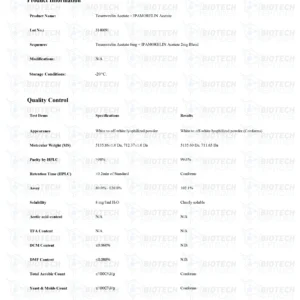
Tesamorelin & Ipamorelin Blend (8mg) is offered by Biotech Peptides for laboratory and analytical research. This reference blend combines tesamorelin, a GHRH analogue, with ipamorelin, a synthetic ghrelin-receptor agonist.
-
Product: Tesamorelin & Ipamorelin Blend
-
Components: Tesamorelin and Ipamorelin
-
Listed quantity: 8 mg
-
Intended use: Laboratory and analytical research only
Review the manufacturer specifications and applicable analytical documentation before selecting material for your protocol.
For research use only. Not for human consumption.