

Sermorelin (5mg)
$43.00
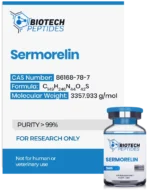
Sermorelin (5mg) is offered by Biotech Peptides for laboratory and analytical research. Sermorelin is a synthetic 29-residue GHRH analogue studied in relation to growth hormone secretion, receptor signaling, and neuroendocrine pathways. 1159
-
Product: Sermorelin
-
Full name: GHRH(1-29)-NH2
-
Listed quantity: 5 mg
-
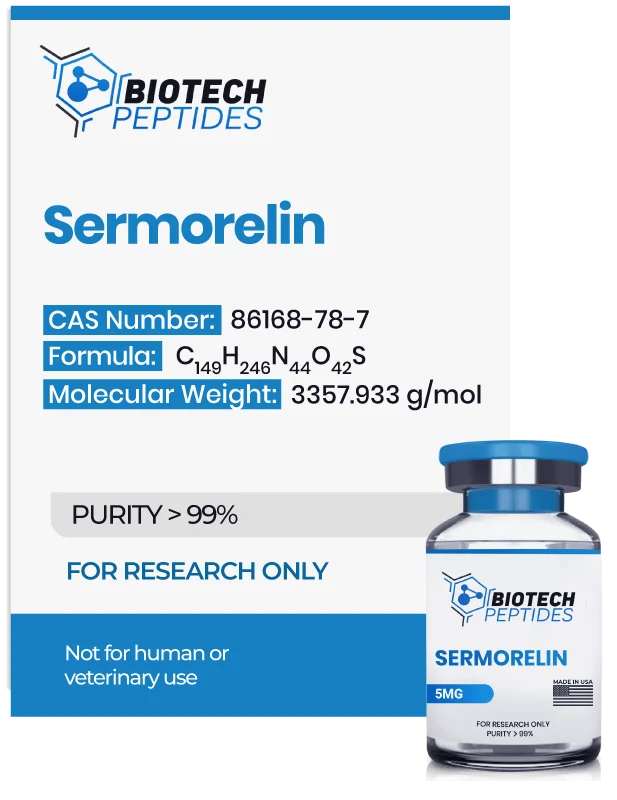
Reference molecular formula: C₁₄₉H₂₄₆N₄₄O₄₂S
-
Intended use: Laboratory and analytical research only
Review the manufacturer specifications and applicable analytical documentation before selecting material for your protocol.
For research use only. Not for human consumption.
Sermorelin (5mg) for Laboratory Research
Sermorelin (5mg) is offered by Biotech Peptides for laboratories investigating growth hormone regulatory signaling, receptor convergence, and neuroendocrine feedback pathways. Sermorelin is a synthetic 29-residue GHRH analogue corresponding to the first 29 residues of the larger 44-amino-acid GHRH sequence. 1159
For laboratories looking to buy Sermorelin, this listing identifies a 5 mg quantity. Confirm the supplied material’s salt state, stereochemistry, and analytical characteristics against the requirements of the intended work.
Explore our research peptides for sale to review other laboratory-use listings.
Sermorelin Product Information
| Property | Listing information |
|---|---|
| Product name | Sermorelin |
| Full name | GHRH(1-29)-NH2 |
| Listed quantity | 5 mg |
| Intended application | Laboratory and analytical research |
| Documentation inquiries | Include the product name and batch or lot number, where available |
The 5 mg designation describes the quantity stated for this listing. It does not independently establish net peptide content or confirm that a particular quantity-assay method has been performed.
Sermorelin Reference Molecular Characteristics
The following characteristics describe the Sermorelin reference structure. They are not analytical confirmation of an individual commercial batch.
| Reference characteristic | Information |
|---|---|
| Peptide length | 29 residues |
| Reference sequence | Tyr-Ala-Asp-Ala-Ile-Phe-Thr-Asn-Ser-Tyr-Arg-Lys-Val-Leu-Gly-Gln-Leu-Ser-Ala-Arg-Lys-Leu-Leu-Gln-Asp-Ile-Met-Ser-Arg-NH2 |
| Molecular formula | C₁₄₉H₂₄₆N₄₄O₄₂S |
| Approximate molecular weight | 3357.9 g/mol |
| CAS number | 86168-78-7 |
| Chemical class | Synthetic GHRH analogue |
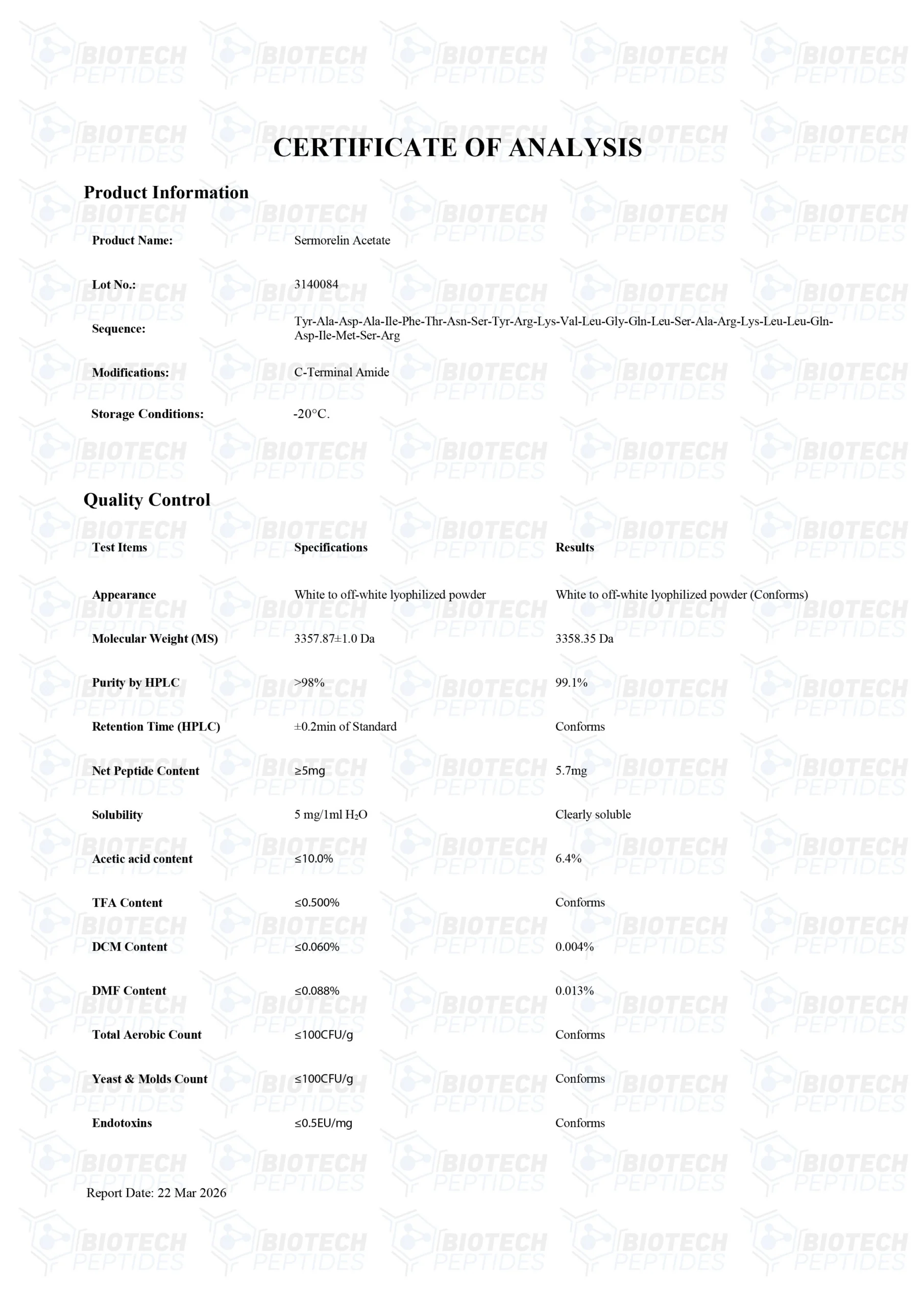
The sequence, molecular formula, molecular weight, and CAS number are documented in the Sermorelin research summary and in the Sermorelin research summary. Confirm the supplied salt state and any counterions against manufacturer specifications before using reference values in analytical calculations. 1162
Sermorelin and GHRH Receptor Research
Sermorelin binds selectively to the GHRH receptor, a class B G-protein-coupled receptor expressed predominantly on somatotroph cells in the anterior pituitary. Receptor engagement activates adenylyl cyclase, increasing intracellular cyclic AMP concentrations. 1159
A review of Sermorelin and GHRH receptor signaling describes Sermorelin as a research peptide that appears to interact with growth hormone-releasing hormone receptors on pituitary cells. The same review notes that Sermorelin is a synthetic peptide composed of 29 amino acids corresponding to the first 29 residues of the larger 44-amino-acid GHRH sequence. 1163
Read the review of Sermorelin and GHRH receptor signaling for the molecular mechanisms and evidence limitations.
Growth Hormone Pulsatility Research
A study evaluating Sermorelin reported that the peptide may increase mean nocturnal GH release by approximately 100%, GH peak amplitude by 33.3%, and 12-hour GH levels by approximately 82.5%, suggesting an immediate response. The investigators also reported that Sermorelin did not change the frequency of GH pulses or levels of IGF-I, IGFBP-3, or GHBP. 1159
A separate study of Sermorelin reported that the peptide may increase mean nocturnal GH release by approximately 100%, GH peak amplitude by 33.3%, and 12-hour GH levels by approximately 82.5%, suggesting an immediate response. 1159
These findings apply to specific experimental protocols and do not establish that a commercial Sermorelin batch increases growth hormone in humans. 1159
Research Limitations
Published Sermorelin research examines receptor signaling, cell-based assays, and animal models. It does not establish that Sermorelin increases growth hormone, improves body composition, supports recovery, or treats any condition. 1159
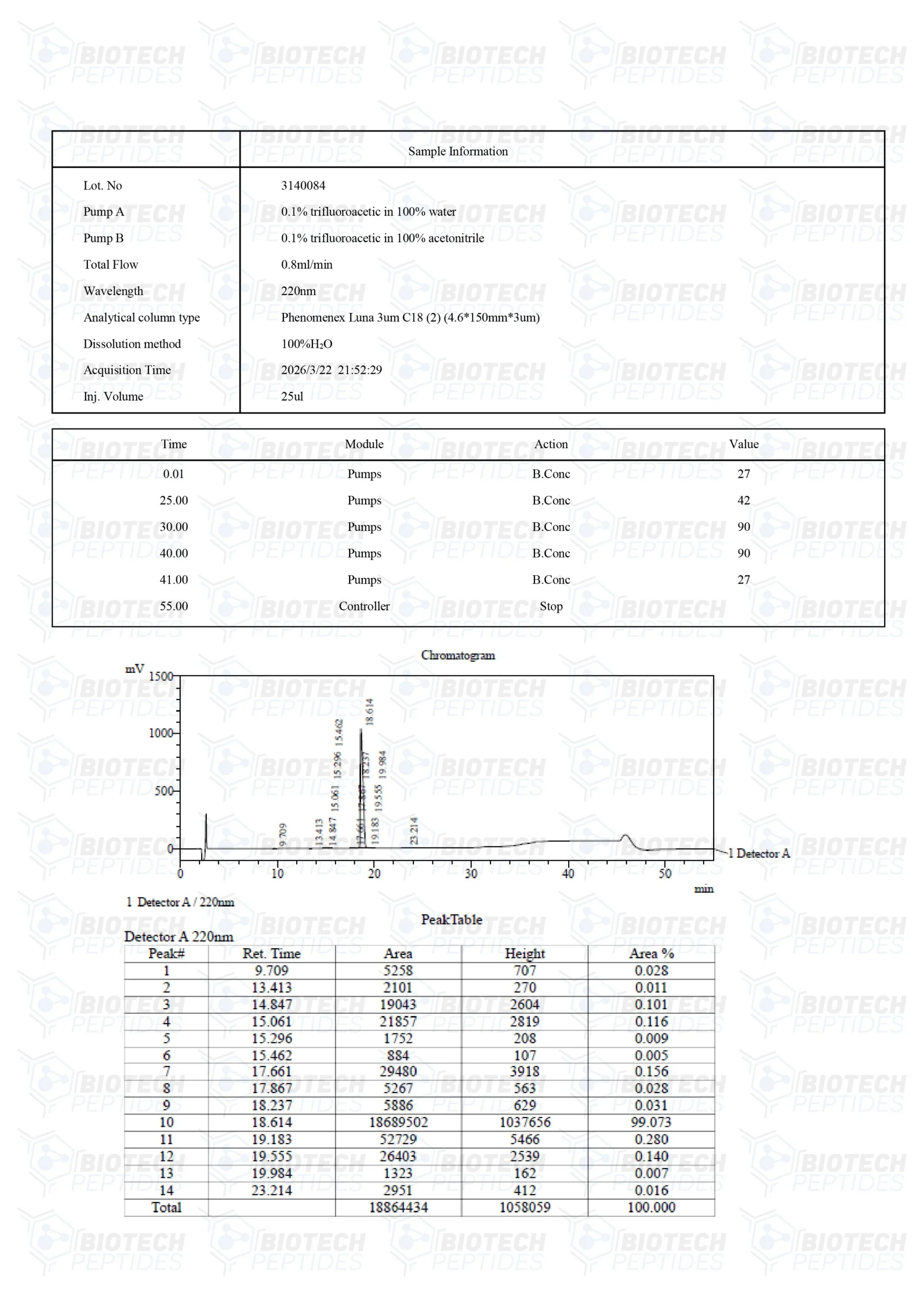
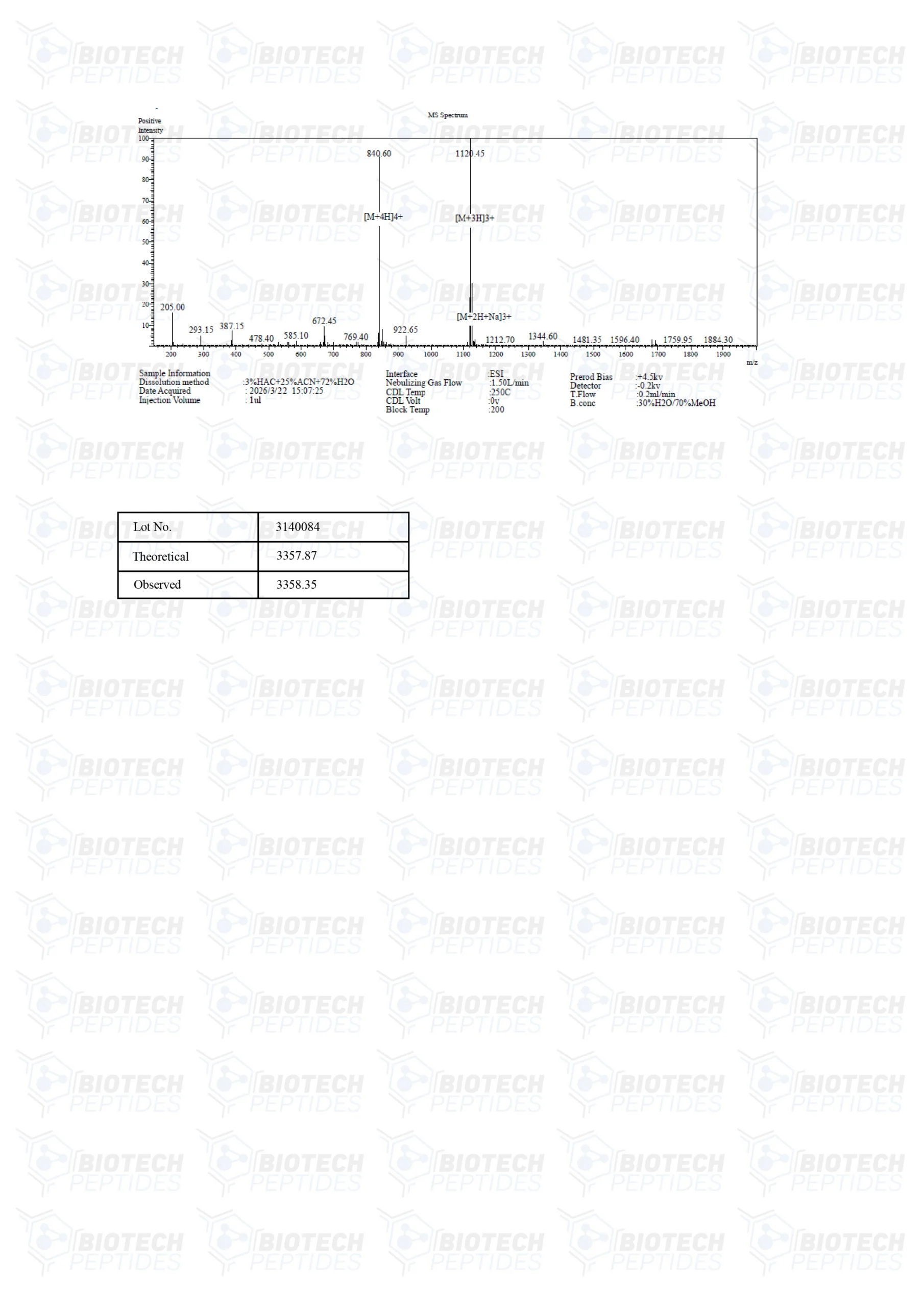
Published research also does not verify the identity, purity, quantity, or biological activity of the commercial batch supplied with this listing.
Documentation and Batch Verification
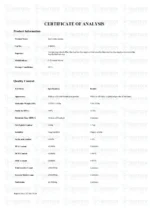
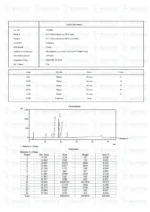
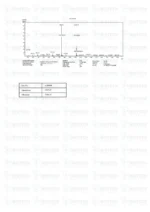
Before selecting Sermorelin (5mg), review the information associated with the exact material being supplied. Depending on your protocol, relevant documentation may include:
-
Product name and batch or lot identifier.
-
Manufacturer specifications and chemical form.
-
Salt state and counterion information, where applicable.
-
Identity-testing methods and reported results.
-
Purity-testing methods and supporting analytical data.
-
Quantity or peptide-content measurements, where required.
-
Product-specific storage and handling instructions.
Match identifiers across the label, specifications, and analytical reports. Obtain clarification if the documentation uses inconsistent names, sequences, or molecular values.
For inquiries, provide “Sermorelin (5mg),” the batch number where available, and the specific information your laboratory requires.
Storage and Handling
Follow the product-specific instructions supplied with the material and your laboratory’s applicable procedures.
Do not transfer storage temperatures, shelf-life claims, or preparation instructions from another supplier’s formulation or a differently modified peptide. Obtain clarification if documented instructions are unavailable or unclear.
Frequently Asked Questions About Sermorelin (5mg)
What is Sermorelin?
Sermorelin is a synthetic 29-residue GHRH analogue corresponding to the first 29 residues of the larger 44-amino-acid GHRH sequence. 1159
Is Sermorelin the same as GHRH?
No. Sermorelin is a synthetic analogue of GHRH. It is not the same molecule as GHRH. 1159
Does Sermorelin increase growth hormone?
A study evaluating Sermorelin reported that the peptide may increase mean nocturnal GH release by approximately 100%, GH peak amplitude by 33.3%, and 12-hour GH levels by approximately 82.5%, suggesting an immediate response. This does not establish that a commercial Sermorelin batch increases growth hormone in humans. 1159
What does the 5mg designation mean?
It is the quantity stated for this listing. It does not describe a concentration or independently establish net peptide content.
Does published research verify this product?
No. Publications describe the materials and conditions used by the investigators. Assess a commercial batch using relevant manufacturer specifications and analytical evidence.
Where can I find delivery information?
Review our shipping information for current order-processing and delivery terms.
Research Use Only
Sermorelin (5mg) is sold for laboratory and analytical research only. Not for human or animal consumption, personal administration, medical treatment, diagnosis, or veterinary application.
Review our Research-Use-Only Policy before ordering.
| Brand | Biotech Peptides |
|---|
Related products

Acetyl Hexapeptide-3 (Argireline) (200mg)
- Product: Acetyl Hexapeptide-3 (Argireline)
- Listed quantity: 200mg
- Alternative name: Acetyl Hexapeptide-8
- Sequence: Ac-Glu-Glu-Met-Gln-Arg-Arg-NH₂
- CAS number: 616204-22-9
- Research area: SNAP-25 and SNARE-complex interactions
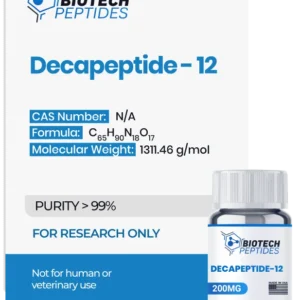
Decapeptide-12 (200mg)
Decapeptide-12 (200mg), also known by its sequence YRSRKYSSWY, is a synthetic ten-amino-acid peptide investigated for its interaction with tyrosinase and its role in experimental melanogenesis research. Published studies have examined its effects on tyrosinase activity and melanin content in laboratory models. Listed for laboratory and analytical research.
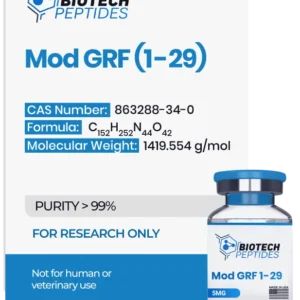
Mod GRF 1-29 (CJC-1295 NO DAC) (5mg)
Mod GRF 1-29 (CJC-1295 NO DAC) (5mg) is offered by Biotech Peptides for laboratory and analytical research. Mod GRF 1-29 is a synthetic 29-residue GHRH analogue studied in relation to growth hormone-releasing hormone receptor signaling and somatotroph cell function. 1056
-
Product: Mod GRF 1-29
-
Alternative name: CJC-1295 without DAC
-
Listed quantity: 5 mg
-
Reference molecular formula: C₁₅₂H₂₅₂N₄₄O₄₂
-
Intended use: Laboratory and analytical research only
Review the manufacturer specifications and applicable analytical documentation before selecting material for your protocol.
For research use only. Not for human consumption.


Pal-AHK (200mg) | Biotech Peptides
Pal-AHK (200mg) is listed as a palmitoylated AHK tripeptide for laboratory and analytical research. The supplied product description identifies the proposed structure as palmitoyl-Ala-His-Lys, combining an alanine-histidine-lysine peptide sequence with an N-terminal palmitoyl group.
Proposed reference characteristics (subject to manufacturer confirmation):- Listed quantity: 200mg
- Proposed peptide sequence: Ala-His-Lys (AHK)
- Proposed modification: N-terminal palmitoyl group
- Proposed molecular formula: C₃₁H₅₆N₆O₅
- Proposed molecular weight: Approximately 592.8 g/mol
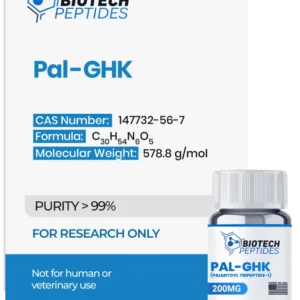
Pal-GHK (Palmitoyl Tripeptide-1) (200mg) | Biotech Peptides
Pal-GHK (Palmitoyl Tripeptide-1) (200mg) is a synthetic, lipid-modified tripeptide listed for laboratory and analytical research involving peptide chemistry and skin-related research models.
Also known as Palmitoyl-Gly-His-Lys, Pal-GHK consists of a palmitoyl group attached to the N-terminus of the GHK tripeptide sequence. It has been investigated in research involving extracellular matrix components and topical cosmetic formulations. Reference molecular information:- Listed quantity: 200mg
- Peptide sequence: Gly-His-Lys (GHK)
- N-terminal modification: Palmitoyl group
- Molecular formula: C₃₀H₅₄N₆O₅
- Molecular weight: 578.8 g/mol
- CAS number: 147732-56-7
- Common name: Palmitoyl Tripeptide-1
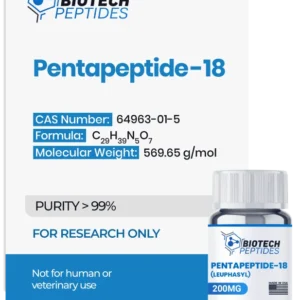
Pentapeptide-18 (Leuphasyl) (200mg) | Biotech Peptides
Pentapeptide-18 (Leuphasyl) (200mg) is a synthetic pentapeptide listed for laboratory and analytical research involving peptide structure and cosmetic-science research models.
Pentapeptide-18 is also known as Leuphasyl and is structurally related to leucine-enkephalin, with a D-alanine residue at position two. Its research background includes investigations into neurotransmitter signaling and topical cosmetic formulations. Reference molecular information:- Listed quantity: 200mg
- Sequence: H-Tyr-D-Ala-Gly-Phe-Leu-OH
- Molecular formula: C₂₉H₃₉N₅O₇
- Molecular weight: Approximately 569.6 g/mol
- CAS number: 64963-01-5
- Alternative name: Leuphasyl
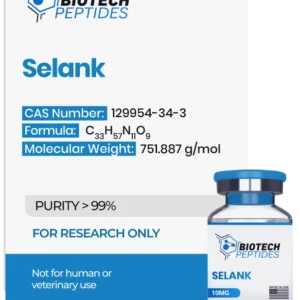
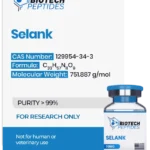
Selank (10mg)
Selank (10mg) is offered by Biotech Peptides for laboratory and analytical research. Selank is a synthetic 7-residue analogue of tuftsin studied in relation to GABAergic signaling, immune modulation, and neurotrophic factor expression. 1166
-
Product: Selank
-
Full name: Tuftsin-Pro-Gly-Pro
-
Listed quantity: 10 mg
-
Reference molecular formula: C₃₃H₅₇N₁₁O₉
-
Intended use: Laboratory and analytical research only
Review the manufacturer specifications and applicable analytical documentation before selecting material for your protocol.
For research use only. Not for human consumption.
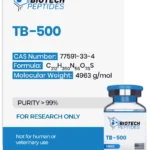
TB-500 (Thymosin Beta-4) (5mg)
TB-500 (Thymosin Beta-4) (5mg) is offered by Biotech Peptides for laboratory and analytical research. TB-500 is a synthetic 43-residue peptide derived from thymosin beta-4, studied in relation to cell migration, angiogenesis, and wound-repair signaling. 1110
-
Product: TB-500
-
Full name: Thymosin Beta-4
-
Listed quantity: 5 mg
-
Reference molecular formula: C₂₁₂H₃₅₀N₅₆O₇₈S
-
Intended use: Laboratory and analytical research only
Review the manufacturer specifications and applicable analytical documentation before selecting material for your protocol.
For research use only. Not for human consumption.