

Vilon 20mg – Lys-Glu Research Peptide | Biotech Peptides
Original price was: $65.00.$61.00Current price is: $61.00.
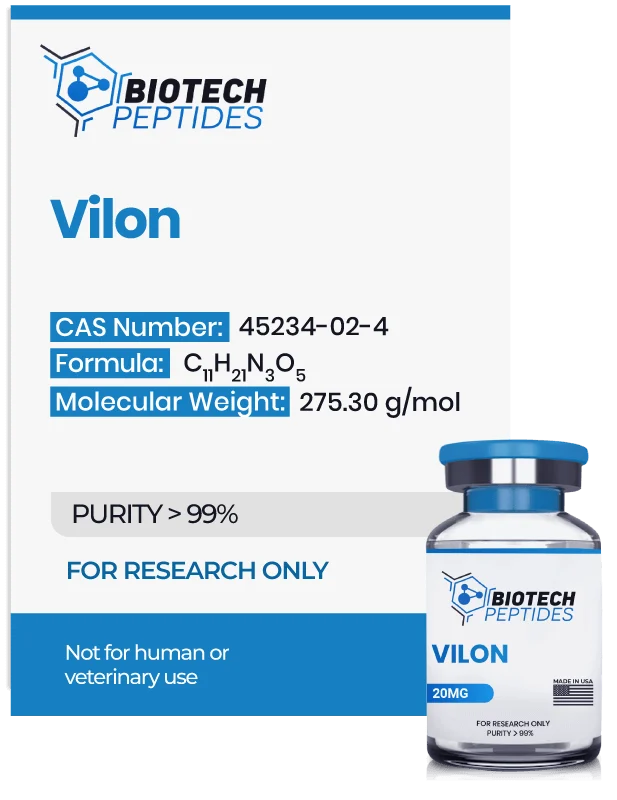
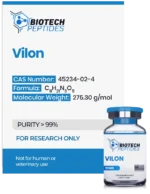
Vilon 20mg is a synthetic dipeptide composed of L-lysine and L-glutamic acid, with the reference sequence Lys-Glu (KE). Also known as lysylglutamic acid, Vilon has been investigated in laboratory research involving lymphocyte chromatin, cellular processes, and animal models of aging and tumour development. Biotech Peptides lists this compound for laboratory and analytical research.
Reference molecular information:
- Listed quantity: 20mg
- Sequence: H-Lys-Glu-OH
- Peptide length: 2 amino-acid residues
- Molecular formula: C₁₁H₂₁N₃O₅
- Molecular weight: 275.30 g/mol
- CAS number: 45234-02-4
Explore our research peptide collection for additional laboratory research materials.
For laboratory and analytical research only. Not for human or animal consumption, personal administration, medical treatment, diagnosis, or veterinary application.
Vilon 20mg – Lys-Glu Research Dipeptide
Vilon 20mg is a synthetic dipeptide consisting of L-lysine followed by L-glutamic acid, represented by the sequence Lys-Glu (KE). Also called lysylglutamic acid, Vilon is one of the short peptide bioregulators investigated in experimental research associated with the thymus, lymphocyte biology, and age-related cellular processes.
Vilon has been examined in cell-culture and animal studies, including research on chromatin organisation in lymphocytes and tumour development in rodent models. These findings provide experimental context for the compound; they do not establish clinical benefits or therapeutic effects in humans.
Biotech Peptides lists Vilon as a 20mg research product for laboratory and analytical use.
Vilon 20mg – Product Information
| Property | Reference information |
|---|---|
| Product name | Vilon |
| Listed quantity | 20mg |
| Alternative name | Lysylglutamic acid |
| Short sequence | KE |
| Amino-acid sequence | L-Lysine–L-glutamic acid |
| Condensed sequence | H-Lys-Glu-OH |
| Peptide length | 2 residues |
| Molecular formula | C₁₁H₂₁N₃O₅ |
| Molecular weight | 275.30 g/mol |
| CAS number | 45234-02-4 |
| Compound class | Dipeptide |
These values describe the reference chemical identity of Vilon. They do not independently confirm the purity, salt or counterion form, or measured peptide content of the supplied product.
Chemical Identity and Structure
Vilon is a linear dipeptide formed by a peptide bond between two L-amino-acid residues:
- L-Lysine (Lys, K): The first amino-acid residue.
- L-Glutamic acid (Glu, E): The second amino-acid residue.
Its sequence is written as Lys-Glu or KE, with the condensed structure represented as H-Lys-Glu-OH. The reference structure has free terminal groups and is not a cyclic peptide or an amidated sequence.
The molecular formula is C₁₁H₂₁N₃O₅, corresponding to an average molecular weight of approximately 275.30 g/mol.
Vilon should also be distinguished from other short peptide bioregulators. Similar research terminology or shared amino-acid residues do not make different peptide sequences chemically interchangeable.
Scientific Research on Vilon
Published studies have investigated Vilon in several experimental contexts. Much of the reported evidence comes from research groups studying short peptide bioregulators, and findings should be interpreted according to the specific compound, model, and experimental conditions.
Lymphocyte Chromatin Research
A 2004 study by Lezhava and colleagues examined Vilon in cultured lymphocytes obtained from older human donors. The researchers reported changes in chromatin organisation, including deheterochromatinisation of certain regions and reactivation of ribosomal gene activity.
The study also reported that Vilon did not induce decondensation of pericentromeric structural heterochromatin. This distinction is important: the reported observations concerned specific chromatin regions and cultured cells, not a demonstrated reversal of biological aging in people.
Vilon and Animal Lifespan Research
Khavinson and colleagues published a 2000 study investigating Vilon in female CBA mice. The research examined biological-age-related measures, physical activity, lifespan, and spontaneous neoplasm development.
The authors reported increased physical activity and a reduction in spontaneous lung adenoma incidence in the Vilon-treated animals. This was an animal study and does not demonstrate an anti-aging or anti-cancer effect in humans.
Read the 2000 study: Effect of Vilon on biological age and lifespan in mice.
Research on Chemically Induced Bladder Tumours
A 2001 study by Pliss and colleagues investigated Vilon in rats exposed to N-butyl-N-(4-hydroxybutyl)nitrosamine, a chemical used to induce urinary bladder tumours in experimental models.
The researchers reported tumour development in 56% of Vilon-treated animals compared with 75.5% of controls, alongside reductions in certain early neoplastic changes in the bladder mucosa.
These findings are specific to a chemically induced rat model. They do not establish that Vilon prevents or treats cancer in humans.
Vilon and Cyclophosphamide: An Important Experimental Finding
Research has also examined Vilon in combination with cyclophosphamide, an established cytotoxic research compound. In one mouse study, simultaneous administration of Vilon and cyclophosphamide was associated with reduced survival compared with the relevant experimental conditions. The researchers also reported that Vilon abolished cyclophosphamide’s inhibitory effect in rat spleen tissue culture.
This is an important limitation when interpreting the literature. It shows that experimental interactions may be complex and that findings from one research setting should not be generalised to another.
Research Interpretation and Limitations
Vilon research includes cell-culture experiments, animal studies, and investigations of isolated tissues. These experimental settings are not equivalent to controlled human clinical trials.
In particular:
- Chromatin observations in cultured lymphocytes do not demonstrate reversal of aging in people.
- Tumour findings in chemically treated rodents do not establish cancer prevention or treatment in humans.
- Experimental immune-cell changes do not establish improved immune function or prevention of autoimmune disease.
- Findings involving Vilon in combination with another compound must be interpreted separately from studies of Vilon alone.
The published evidence provides research context rather than proof of a clinical outcome.
Product Documentation and Batch Information
The listed quantity for this product is 20mg. The molecular formula, sequence, molecular weight, and CAS number above are reference information for Vilon, not batch-specific analytical results.
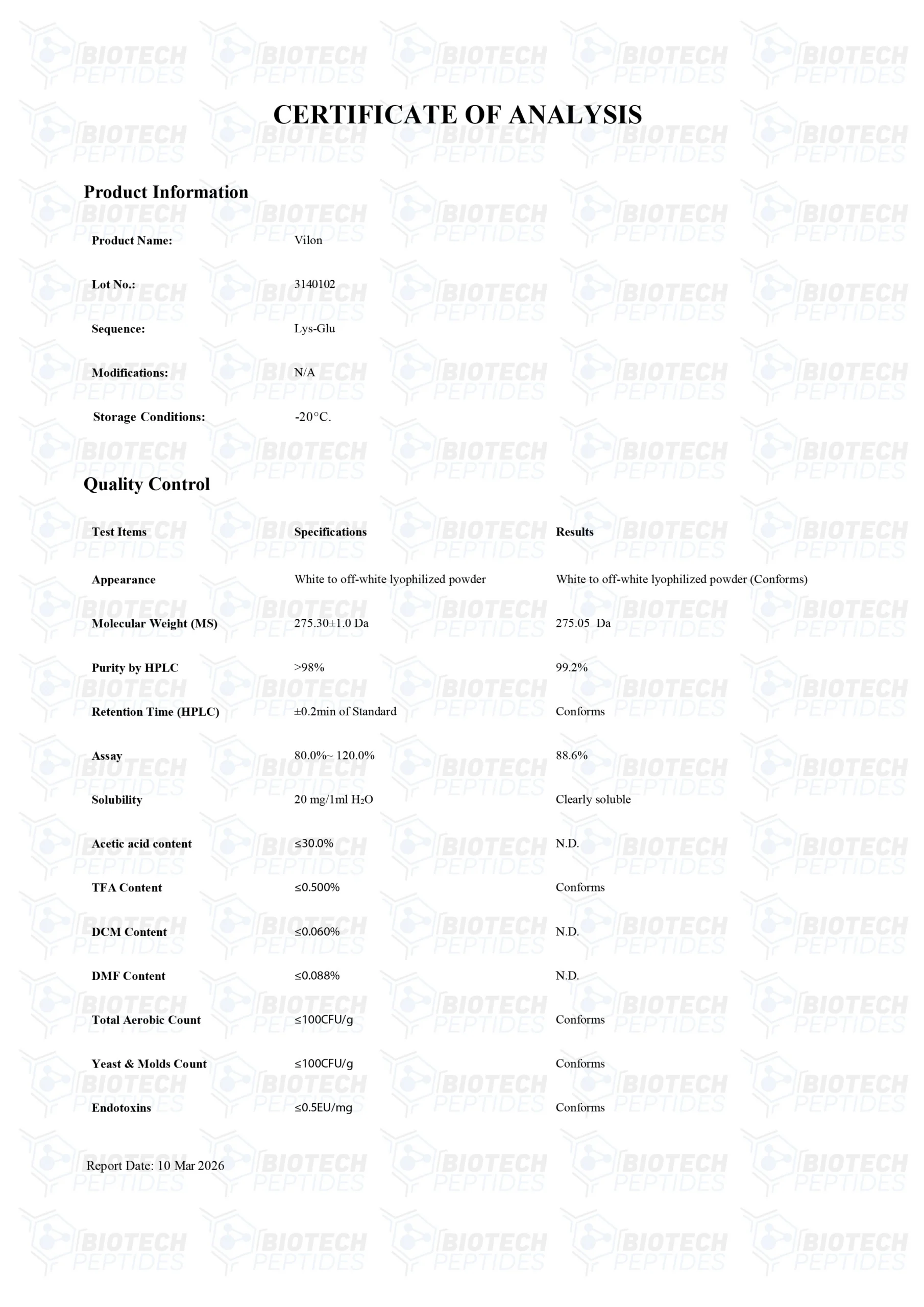
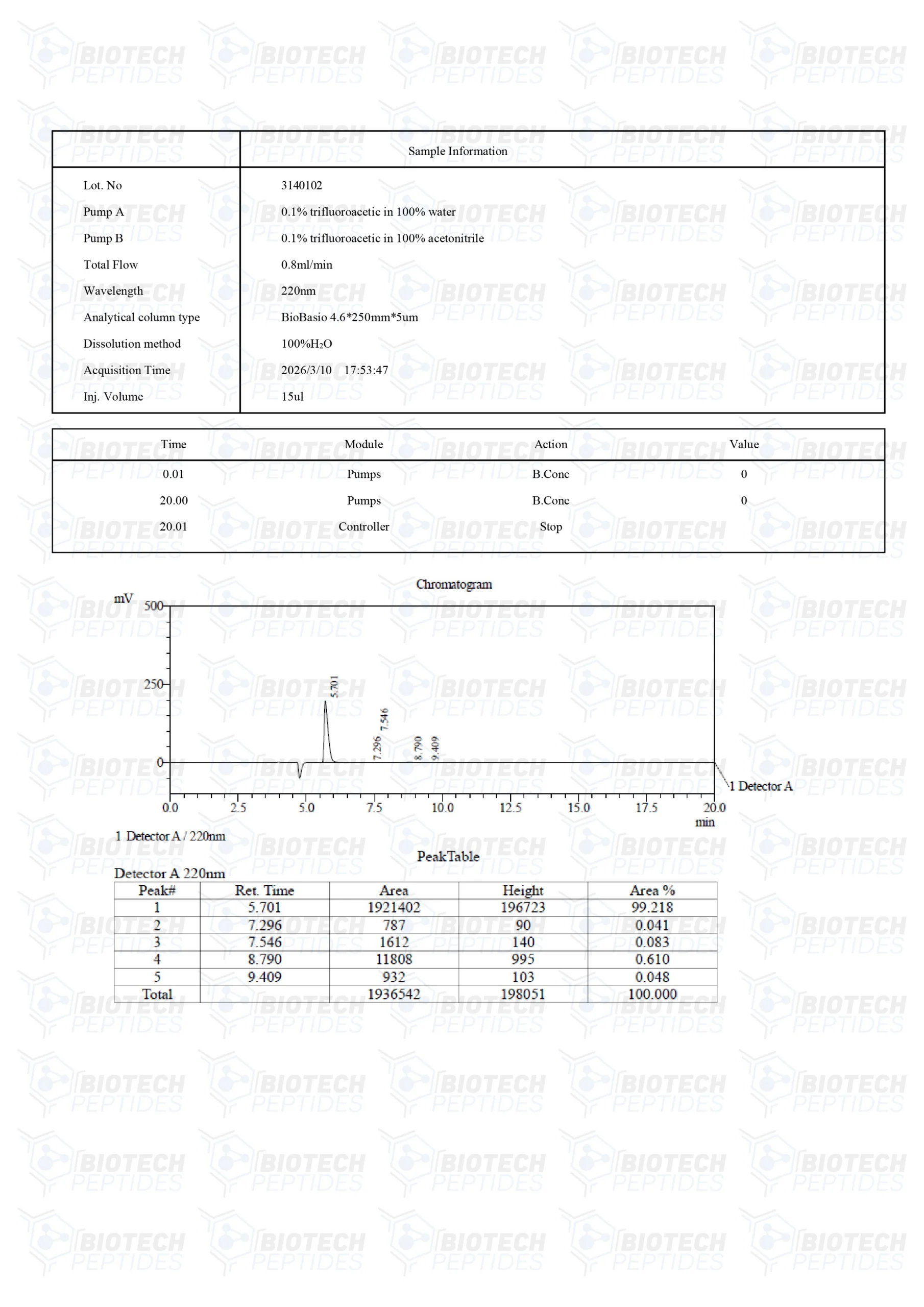
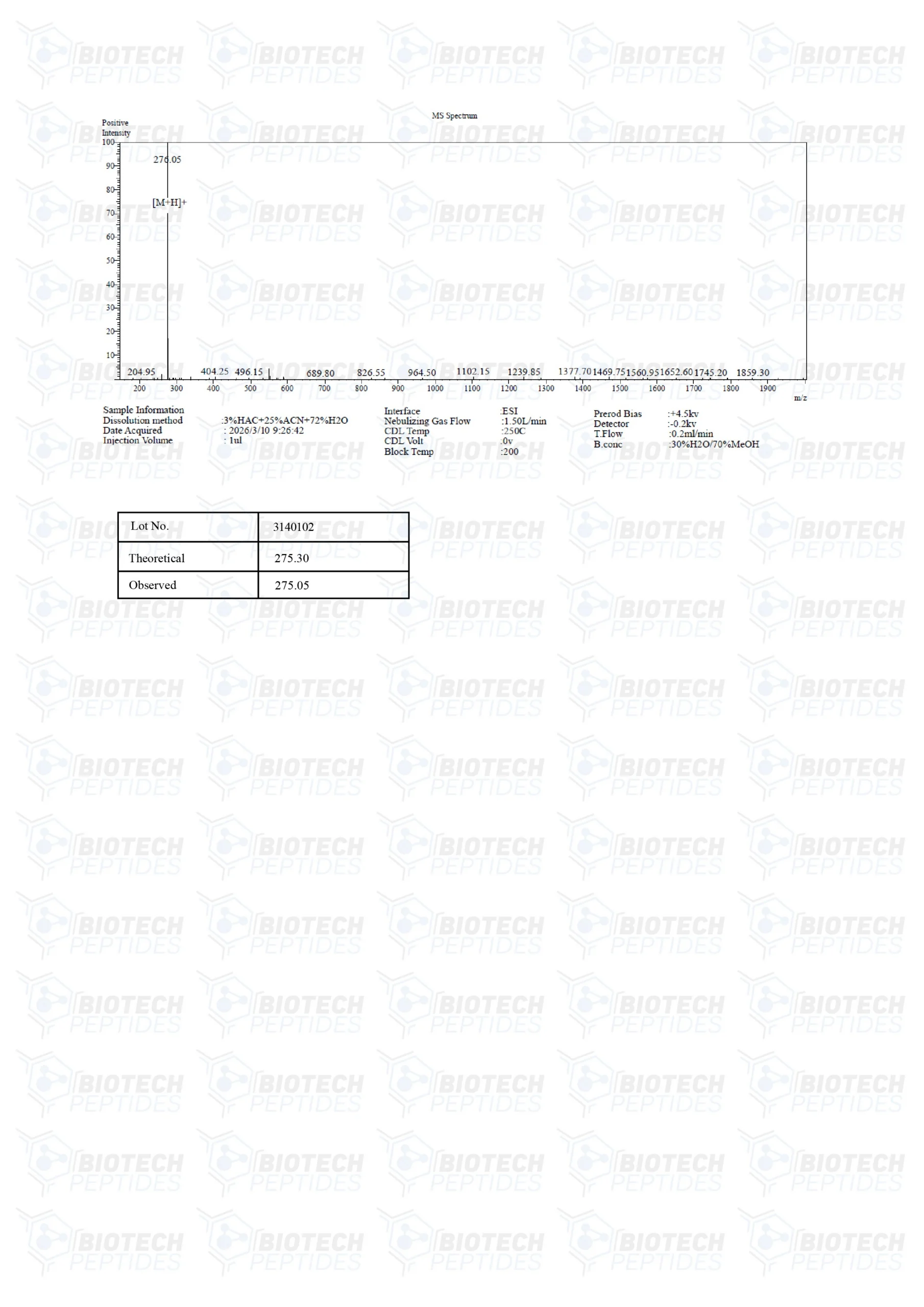
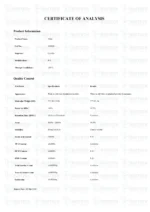
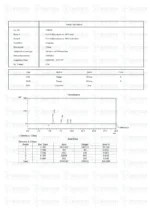
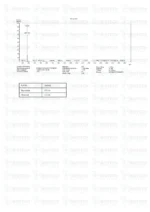
Manufacturer specifications and batch documentation should be reviewed separately when evaluating a research material. Where available, a certificate of analysis can provide batch-specific information about identity, assay, and analytical testing.
No batch-specific COA, purity percentage, HPLC result, mass-spectrometry result, sterility result, or endotoxin result is established by the reference chemistry presented here.
Frequently Asked Questions
What is Vilon?
Vilon is a short synthetic dipeptide composed of L-lysine and L-glutamic acid. Its sequence is Lys-Glu (KE), and it is also known as lysylglutamic acid.
What is the molecular weight of Vilon?
The reference molecular weight of Vilon is approximately 275.30 g/mol. Its molecular formula is C₁₁H₂₁N₃O₅.
What is the amino-acid sequence of Vilon?
The sequence is L-Lys-L-Glu, commonly written as Lys-Glu or KE. Its condensed notation is H-Lys-Glu-OH.
What has Vilon been studied for?
Published experimental research has examined Vilon in lymphocyte chromatin studies, animal models of aging, and chemically induced tumour models. These findings are preclinical or laboratory-based and should not be interpreted as established human health effects.
Is Vilon the same as other thymic peptide bioregulators?
No. Vilon is specifically the Lys-Glu dipeptide. Other short peptide bioregulators have different amino-acid sequences and chemical identities.
Research Use Only
Vilon 20mg is listed for laboratory and analytical research. Researchers should verify the chemical identity and applicable batch documentation when selecting materials for scientific investigations.
For further information, review the Biotech Peptides laboratory and analytical use policy and shipping policy.
For laboratory and analytical research only. Not for human or animal consumption, personal administration, medical treatment, diagnosis, or veterinary application.
| Brand | Biotech Peptides |
|---|
Related products


ACE-031 (1mg)
ACE-031 (1mg) is offered by Biotech Peptides for laboratory and analytical research. ACE-031 is a soluble fusion protein comprising the extracellular domain of activin receptor type IIB fused to the Fc portion of human IgG1, studied in relation to myostatin signaling and muscle-mass regulation. 1198
-
Product: ACE-031
-
Alternative name: Ramatercept
-
Listed quantity: 1 mg
-
Reference molecular weight: 77.24 kDa
-
Intended use: Laboratory and analytical research only
Review the manufacturer specifications and applicable analytical documentation before selecting material for your protocol.
For research use only. Not for human consumption.
Nonapeptide-1 (200mg)
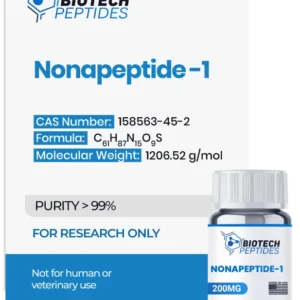
- Product: Nonapeptide-1
- Alternative name: Melanostatine-5
- Listed quantity: 200mg
- Peptide length: 9 amino acids
- Reference sequence: Met-Pro-D-Phe-Arg-D-Trp-Phe-Lys-Pro-Val-NH₂
- CAS number: 158563-45-2
Pal-GHK (Palmitoyl Tripeptide-1) (200mg) | Biotech Peptides
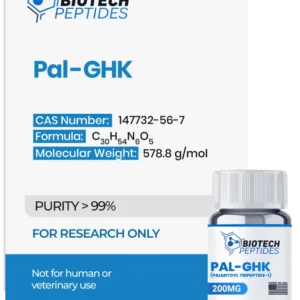
Pal-GHK (Palmitoyl Tripeptide-1) (200mg) is a synthetic, lipid-modified tripeptide listed for laboratory and analytical research involving peptide chemistry and skin-related research models.
Also known as Palmitoyl-Gly-His-Lys, Pal-GHK consists of a palmitoyl group attached to the N-terminus of the GHK tripeptide sequence. It has been investigated in research involving extracellular matrix components and topical cosmetic formulations. Reference molecular information:- Listed quantity: 200mg
- Peptide sequence: Gly-His-Lys (GHK)
- N-terminal modification: Palmitoyl group
- Molecular formula: C₃₀H₅₄N₆O₅
- Molecular weight: 578.8 g/mol
- CAS number: 147732-56-7
- Common name: Palmitoyl Tripeptide-1


PEG-MGF (Pegylated MGF) (5mg)
PEG-MGF (Pegylated MGF) (5mg) is offered by Biotech Peptides for laboratory and analytical research. PEG-MGF is a pegylated form of mechano growth factor, a synthetic 24-residue peptide derived from the E-domain of IGF-1Ec. 1002
-
Product: PEG-MGF
-
Full name: Pegylated Mechano Growth Factor
-
Listed quantity: 5 mg
-
Reference molecular formula: C₁₂₁H₂₀₀N₄₂O₃₉
-
Intended use: Laboratory and analytical research only
Review the manufacturer specifications and applicable analytical documentation before selecting material for your protocol.
For research use only. Not for human consumption.
Thymalin (25mg)
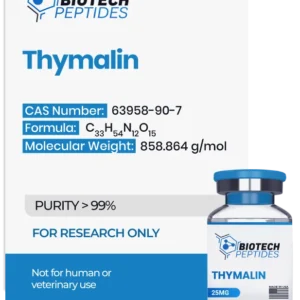
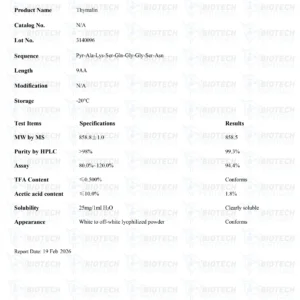
Thymalin (25mg) is offered by Biotech Peptides for laboratory and analytical research. Thymalin is a synthetic 9-residue peptide, also called thymulin, studied in relation to immune modulation, cytokine signaling, and neuroendocrine pathways. 1226
-
Product: Thymalin
-
Alternative name: Thymulin
-
Listed quantity: 25 mg
-
Reference molecular formula: C₃₃H₅₄N₁₂O₁₅
-
Intended use: Laboratory and analytical research only
Review the manufacturer specifications and applicable analytical documentation before selecting material for your protocol.
For research use only. Not for human consumption.
Thymosin Alpha-1 (10mg)
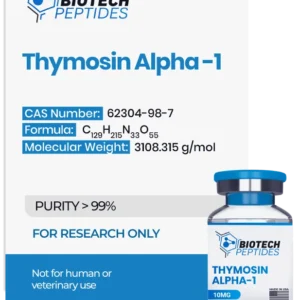
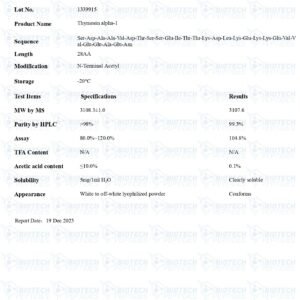
Thymosin Alpha-1 (10mg) is offered by Biotech Peptides for laboratory and analytical research. Thymosin Alpha-1 is a synthetic 28-residue peptide, also called thymalfasin, studied in relation to immune modulation, toll-like receptor signaling, and antiviral research. 1213
-
Product: Thymosin Alpha-1
-
Alternative name: Thymalfasin
-
Listed quantity: 10 mg
-
Reference molecular formula: C₁₂₉H₂₁₅N₃₃O₅₅
-
Intended use: Laboratory and analytical research only
Review the manufacturer specifications and applicable analytical documentation before selecting material for your protocol.
For research use only. Not for human consumption.