
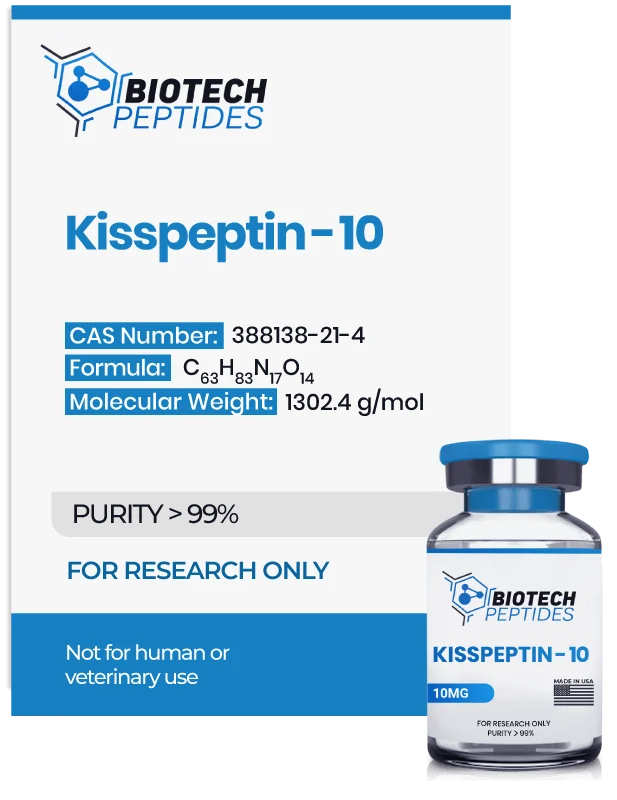
Kisspeptin-10 (10mg)
$52.00
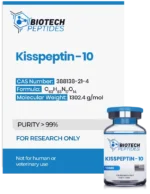
Kisspeptin-10 (10mg) is offered by Biotech Peptides for laboratory and analytical research. Also called KP-10, this ten-amino-acid peptide is a C-terminal fragment of kisspeptin-54 and an agonist of the kisspeptin receptor, KISS1R, formerly known as GPR54.ncbi.nlm.nih+1
-
Product: Kisspeptin-10
-
Alternative name: KP-10
-
Listed quantity: 10 mg
-
Reference sequence: Tyr-Asn-Trp-Asn-Ser-Phe-Gly-Leu-Arg-Phe-NH₂
-
Intended use: Laboratory and analytical research only
Review the manufacturer specifications and applicable analytical documentation before selecting material for your protocol.
For research use only. Not for human consumption.
Kisspeptin-10 (10mg) for Laboratory Research
Kisspeptin-10 (10mg) is offered by Biotech Peptides for laboratories investigating kisspeptin-receptor signaling and reproductive neuroendocrinology. The reference peptide contains ten amino acids and corresponds to the C-terminal region of kisspeptin-54.ncbi.nlm.nih+1
For laboratories looking to buy Kisspeptin-10, this listing identifies a 10 mg quantity. Confirm the supplied material’s sequence, terminal groups, chemical form, and analytical characteristics against the requirements of the intended work.
Explore our research peptides for sale to review other laboratory-use listings.
Kisspeptin-10 Product Information
| Property | Listing information |
|---|---|
| Product name | Kisspeptin-10 |
| Alternative name | KP-10 |
| Listed quantity | 10 mg |
| Intended application | Laboratory and analytical research |
| Documentation inquiries | Include the product name and batch identifier, where available |
The 10 mg designation describes the quantity stated for this listing. It does not independently establish net peptide content or confirm that a particular quantity-assay method has been performed.
Reference Molecular Characteristics
The following information describes the human Kisspeptin-10 reference structure. It is not analytical confirmation of an individual commercial batch.
| Reference characteristic | Information |
|---|---|
| Peptide length | Ten amino acids |
| Amino-acid sequence | Tyr-Asn-Trp-Asn-Ser-Phe-Gly-Leu-Arg-Phe-NH₂ |
| One-letter sequence | YNWNSFGLRF-NH₂ |
| C-terminal group | Amide |
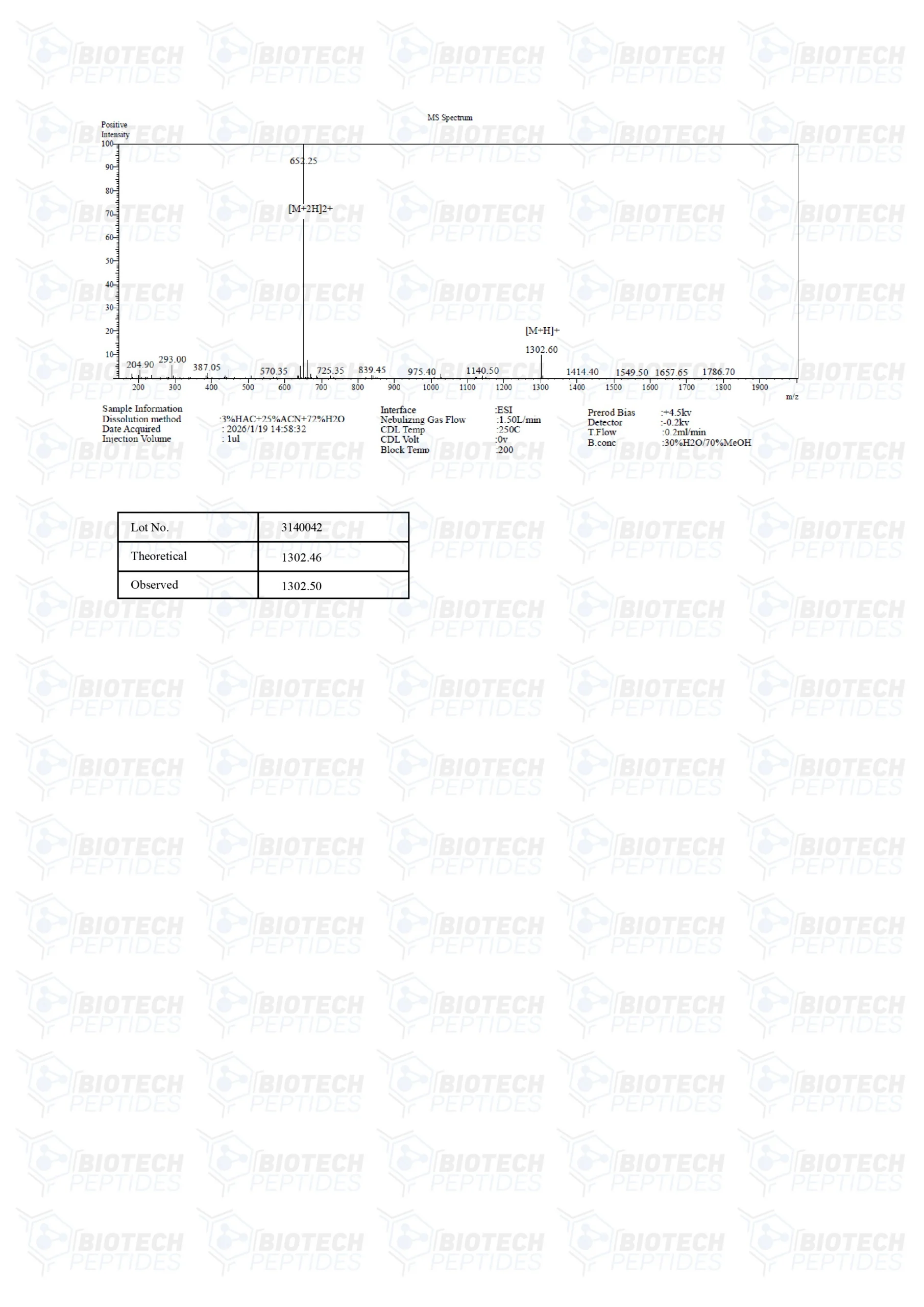
| Molecular formula | C₆₃H₈₃N₁₇O₁₄ |
| Approximate molecular weight | 1,302.4 g/mol |
| PubChem compound identifier | 25240297 |
The sequence, amidated C-terminus, molecular formula, and molecular weight are documented in the PubChem Kisspeptin-10 reference record. Confirm the supplied chemical form and any counterions against manufacturer specifications before using reference values in analytical calculations.
Kisspeptin-10 and KISS1R Signaling
Kisspeptins are derived from the precursor encoded by the KISS1 gene. Processing produces peptides of different lengths, including kisspeptin-54, kisspeptin-14, kisspeptin-13, and kisspeptin-10. These related peptides should be distinguished when reviewing experimental findings.
Kisspeptin-10 retains activity at KISS1R, the receptor historically called GPR54. The receptor-signaling system has been investigated in relation to gonadotropin-releasing hormone—GnRH—and the regulation of reproductive hormone secretion.ncbi.nlm.nih+1
Read the scientific review of kisspeptin-receptor pharmacology for receptor nomenclature, peptide processing, and experimental context.
KISS1 is the gene name, while KISS1R identifies the receptor. Neither should be used as an exact chemical synonym for the isolated KP-10 peptide.
Human Neuroendocrine Research
A 2011 study by George and colleagues evaluated Kisspeptin-10 in healthy men. The investigators reported increases in luteinizing hormone—LH—following acute exposure. Under the infusion conditions examined, they also observed changes in LH pulse frequency, pulse size, and testosterone concentrations.
Read the primary study of Kisspeptin-10 and LH secretion for the methods, participant numbers, and findings.
These were experimental endocrine responses, not proof of improved fertility, sexual function, athletic performance, or general health. The results do not establish a universal response across sexes, physiological states, or exposure patterns.
Distinguishing Kisspeptin Research Findings
Research involving kisspeptin-54, the KISS1 gene, or receptor expression should not automatically be presented as direct evidence for an administered Kisspeptin-10 preparation.
This distinction is particularly important in cancer-related research. Reviews describe context-dependent and sometimes conflicting findings for KISS1/KISS1R signaling across tumor types. The historical identification of KISS1 as a metastasis-suppressor gene does not establish Kisspeptin-10 as a cancer treatment.
Likewise, laboratory observations involving receptor signaling or hormone release do not establish clinical safety or effectiveness for personal administration.
Selecting Kisspeptin-10 for an Assay
When comparing Kisspeptin-10 products, consider the exact identity and analytical evidence required by your protocol. Relevant distinctions include peptide length, sequence, C-terminal amidation, chemical form, and any assay-specific acceptance criteria.
Do not assume that all products using “kisspeptin” in their name describe the same molecular species. Similarly, a larger listed quantity or lower advertised price does not establish equivalent composition, purity, or biological activity.
Published research provides scientific context, but it does not verify the properties of the commercial batch supplied with this listing.
Documentation and Batch Verification
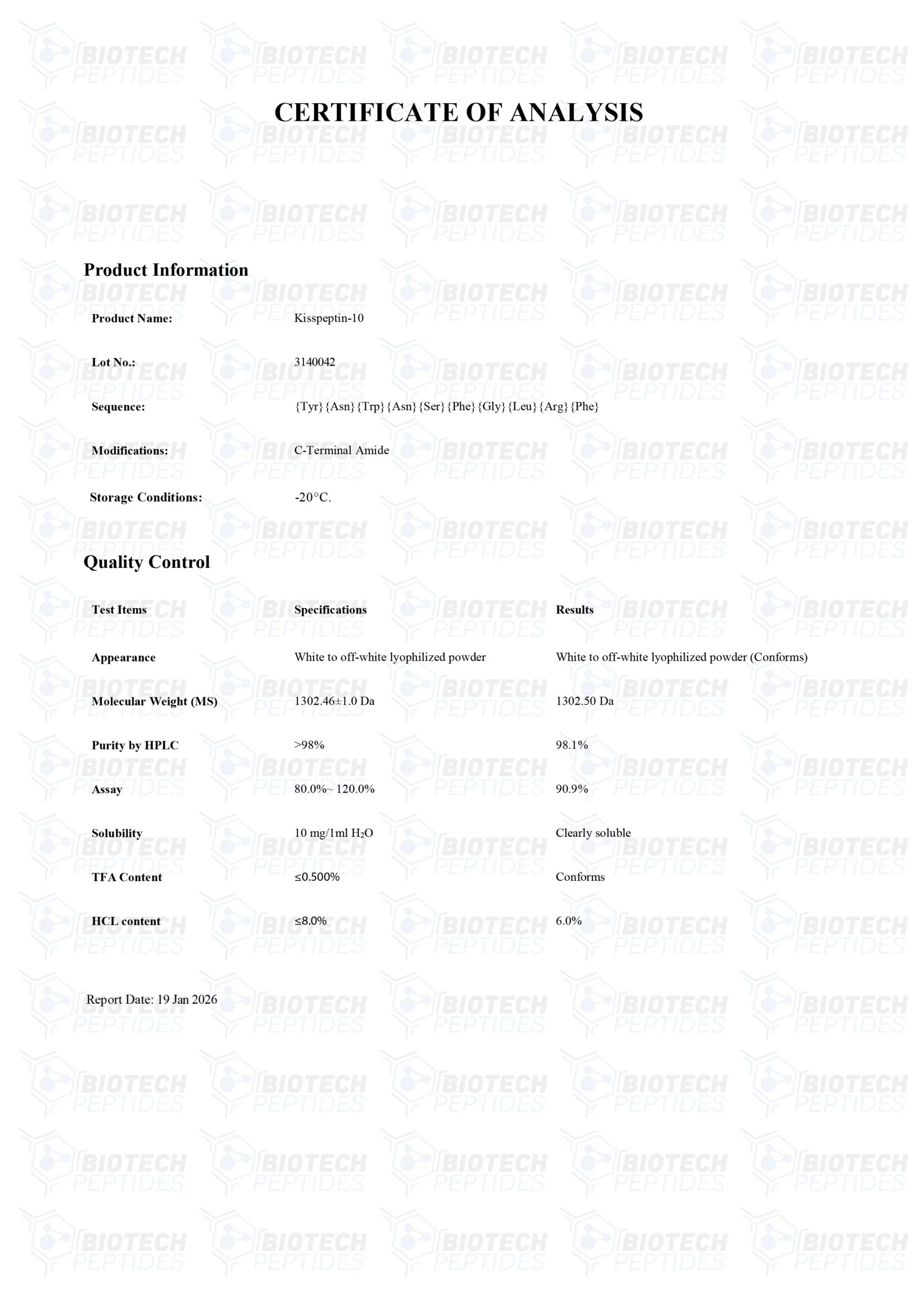
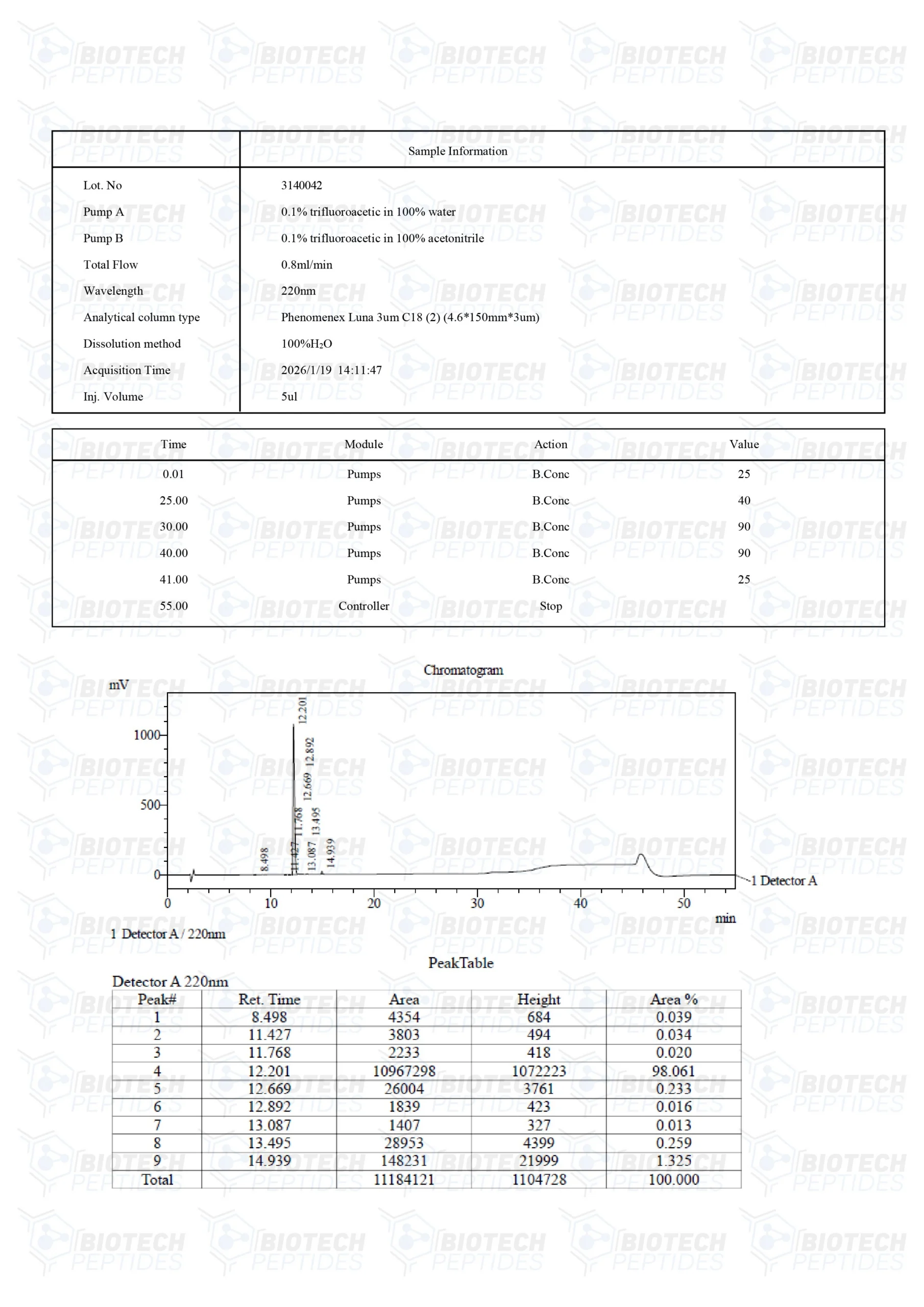
Before selecting Kisspeptin-10 (10mg), review the information associated with the exact material being supplied. Depending on your laboratory’s requirements, relevant documentation may include:
-
Product name and batch or lot identifier.
-
Manufacturer specifications and chemical form.
-
Complete sequence and terminal-group information.
-
Counterion information, where applicable.
-
Identity-testing methods and reported results.
-
Purity-testing methods and supporting analytical data.
-
Quantity or peptide-content measurements, where required.
-
Receptor-based or cell-based activity results, if required.
-
Product-specific storage and handling instructions.
Do not assume that biological-activity testing has been performed unless the applicable documentation confirms it.
Match identifiers across the label, specifications, and analytical reports. For inquiries, provide “Kisspeptin-10 (10mg),” the batch number where available, and the specific information your laboratory requires.
Storage and Handling
Follow the product-specific instructions supplied with the material and your laboratory’s applicable procedures.
Do not transfer storage temperatures, shelf-life claims, or preparation instructions from another manufacturer’s formulation to this product. Obtain clarification if documented instructions are unavailable or unclear.
Frequently Asked Questions About Kisspeptin-10 (10mg)
What does the “10” in Kisspeptin-10 mean?
It identifies the peptide’s length: ten amino-acid residues. It is separate from the listed 10 mg quantity.
Is Kisspeptin-10 the same as kisspeptin-54?
No. They are related peptides of different lengths. Kisspeptin-10 is the C-terminal decapeptide, while kisspeptin-54 contains 54 amino acids.ncbi.nlm.nih+1
Is Metastin an exact synonym for Kisspeptin-10?
Not usually. “Metastin” was originally assigned to the 54-amino-acid peptide isolated from human placenta. Use the exact peptide length and sequence when comparing materials.
Does 10mg describe a concentration?
No. It states the listed mass quantity. A concentration requires additional information, such as a defined volume.
Does increased LH establish a fertility benefit?
No. A measured hormonal response is not the same as a demonstrated fertility outcome. The cited human study evaluated endocrine responses under defined experimental conditions.
Where can I find delivery information?
Review our shipping information for current order-processing and delivery terms.
Research Use Only
Kisspeptin-10 (10mg) is sold for laboratory and analytical research only. Not for human or animal consumption, personal administration, medical treatment, diagnosis, or veterinary application.
Review our Research-Use-Only Policy before ordering.
| Brand | Biotech Peptides |
|---|
Related products
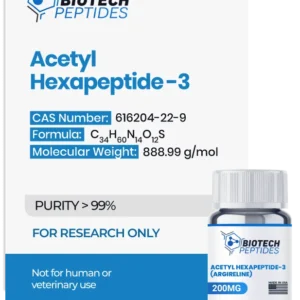
Acetyl Hexapeptide-3 (Argireline) (200mg)
- Product: Acetyl Hexapeptide-3 (Argireline)
- Listed quantity: 200mg
- Alternative name: Acetyl Hexapeptide-8
- Sequence: Ac-Glu-Glu-Met-Gln-Arg-Arg-NH₂
- CAS number: 616204-22-9
- Research area: SNAP-25 and SNARE-complex interactions
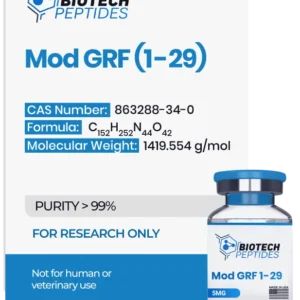
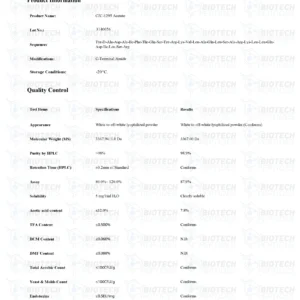
Mod GRF 1-29 (CJC-1295 NO DAC) (5mg)
Mod GRF 1-29 (CJC-1295 NO DAC) (5mg) is offered by Biotech Peptides for laboratory and analytical research. Mod GRF 1-29 is a synthetic 29-residue GHRH analogue studied in relation to growth hormone-releasing hormone receptor signaling and somatotroph cell function. 1056
-
Product: Mod GRF 1-29
-
Alternative name: CJC-1295 without DAC
-
Listed quantity: 5 mg
-
Reference molecular formula: C₁₅₂H₂₅₂N₄₄O₄₂
-
Intended use: Laboratory and analytical research only
Review the manufacturer specifications and applicable analytical documentation before selecting material for your protocol.
For research use only. Not for human consumption.
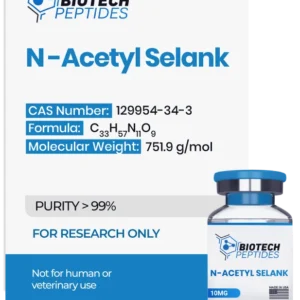
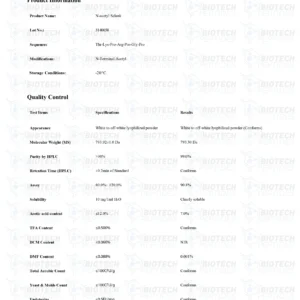
Semax (25mg)
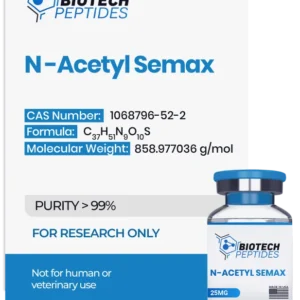
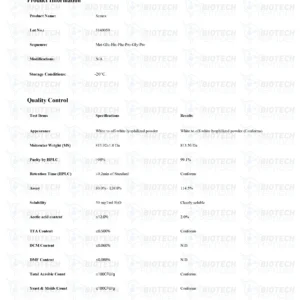
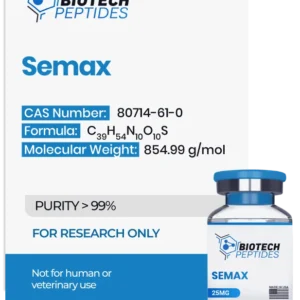
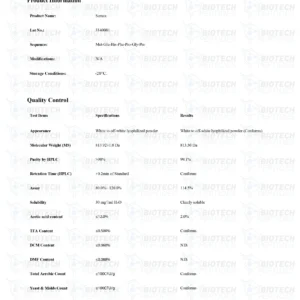
Semax (25mg) is offered by Biotech Peptides for laboratory and analytical research. Semax is a synthetic heptapeptide analogue of ACTH(4-10) studied in relation to neurotrophin gene expression and ischemic injury models. 1041
-
Product: Semax
-
Full name: ACTH(4-7)-Pro-Gly-Pro
-
Listed quantity: 25 mg
-
Reference molecular formula: C₃₉H₅₄N₁₀O₁₀S
-
Intended use: Laboratory and analytical research only
Review the manufacturer specifications and applicable analytical documentation before selecting material for your protocol.
For research use only. Not for human consumption.
Sermorelin (5mg)
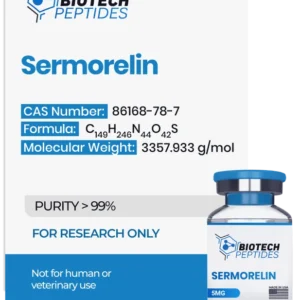
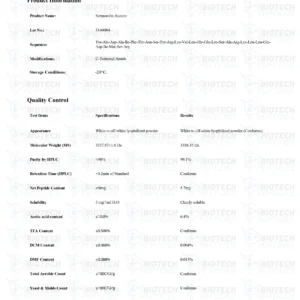
Sermorelin (5mg) is offered by Biotech Peptides for laboratory and analytical research. Sermorelin is a synthetic 29-residue GHRH analogue studied in relation to growth hormone secretion, receptor signaling, and neuroendocrine pathways. 1159
-
Product: Sermorelin
-
Full name: GHRH(1-29)-NH2
-
Listed quantity: 5 mg
-
Reference molecular formula: C₁₄₉H₂₄₆N₄₄O₄₂S
-
Intended use: Laboratory and analytical research only
Review the manufacturer specifications and applicable analytical documentation before selecting material for your protocol.
For research use only. Not for human consumption.
Tesamorelin (5mg & 10mg)
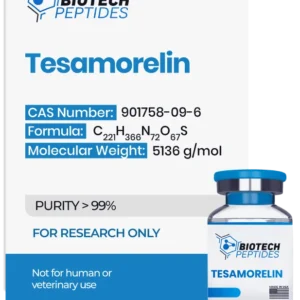
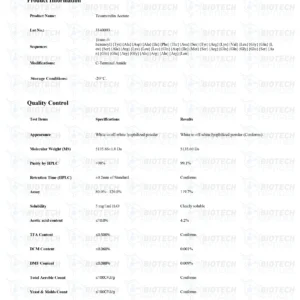
Tesamorelin (5mg & 10mg) is offered by Biotech Peptides for laboratory and analytical research. Tesamorelin is a synthetic 44-residue GHRH analogue studied in relation to growth hormone secretion, visceral adiposity, and metabolic signaling. 1137
-
Product: Tesamorelin
-
Full name: N-(trans-3-hexenoyl)-[Tyr1]-hGRF(1-44)-NH2 acetate
-
Listed quantities: 5 mg and 10 mg
-
Reference molecular formula: C₂₂₁H₃₆₆N₇₂O₆₇S
-
Intended use: Laboratory and analytical research only
Review the manufacturer specifications and applicable analytical documentation before selecting material for your protocol.
For research use only. Not for human consumption.