

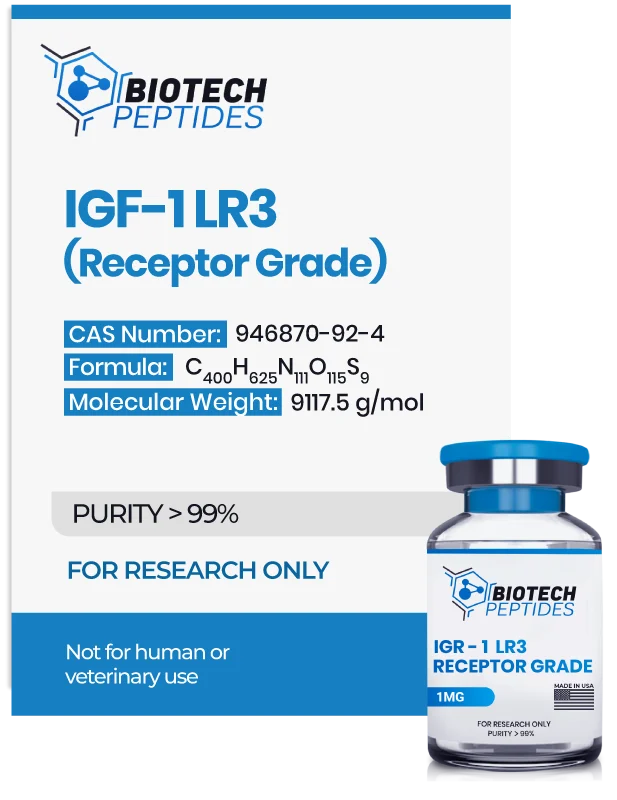
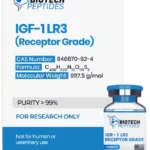
Receptor Grade IGF-1 LR3 (1mg)
$145.00
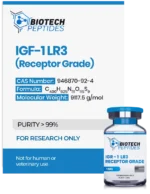
Receptor Grade IGF-1 LR3 (1mg) is listed by Biotech Peptides for laboratory and analytical research. IGF-1 LR3 is an 83-amino-acid analogue of human insulin-like growth factor I, investigated in cell-culture systems and studies of IGF-binding protein interactions.pubmed.ncbi.nlm.nih+1
-
Product: IGF-1 LR3
-
Listed grade designation: Receptor Grade
-
Listed quantity: 1 mg
-
Reference polypeptide length: 83 amino acids
-
Intended use: Laboratory and analytical research only
Review the manufacturer’s grade definition, structural specifications, and applicable analytical documentation before selecting material for your assay.
For research use only. Not for human consumption.
IGF-1 LR3 (1mg) for Laboratory Research
IGF-1 LR3 (1mg) is listed by Biotech Peptides under the product designation Receptor Grade IGF-1 LR3. The reference compound is a modified analogue of human insulin-like growth factor I, investigated for its activity in cell-culture systems and its reduced affinity for IGF-binding proteins.pubmed.ncbi.nlm.nih+1
For laboratories looking to buy IGF-1 LR3, this listing identifies a 1 mg quantity. Evaluate the material’s documented identity, chemical form, structural integrity, and analytical characteristics against the requirements of the intended work.
Explore our research peptides for sale to review other laboratory-use listings.
Product Information
| Property | Listing information |
|---|---|
| Product name | IGF-1 LR3 |
| Listed grade designation | Receptor Grade |
| Alternative research name | Long R3 IGF-I |
| Listed quantity | 1 mg |
| Intended application | Laboratory and analytical research |
| Documentation inquiries | Include the product name and batch identifier, where available |
The 1 mg designation describes the quantity stated for this listing. It does not independently establish protein content, concentration, receptor-binding activity, or biological potency.
IGF-1 LR3 Reference Structure
The reference analogue contains the complete 70-amino-acid human IGF-I sequence with two modifications: replacement of glutamic acid by arginine at position 3 of mature IGF-I and addition of a 13-amino-acid N-terminal extension. The resulting polypeptide contains 83 amino acids.
| Reference characteristic | Information |
|---|---|
| Polypeptide length | 83 amino acids |
| Modification within mature IGF-I | Glu3 → Arg |
| N-terminal extension | 13 additional amino acids |
| Approximate molecular size | 9.1 kDa |
These characteristics describe the research analogue, not verified results for the commercial batch supplied with this listing. Exact molecular specifications should correspond to the manufacturer’s stated structure and chemical form.
IGF-Binding Protein Research
IGF-binding proteins, abbreviated IGFBPs, regulate the availability and biological effects of IGF ligands. Reduced affinity for these proteins is a distinguishing characteristic of the LR3 analogue.
A primary study comparing human IGF-I and Long R3 IGF-I in bovine embryo cultures reported that the LR3 analogue’s affinity for IGFBPs was at least three orders of magnitude lower under the measurement conditions used. The compounds also affected development differently: LR3 most strongly supported early cleavage, while IGF-I more effectively supported later development.
Read the primary study comparing IGF-I and Long R3 IGF-I for the experimental context.
These findings demonstrate why “more potent” should not be presented as a universal property across all assays. Lower binding-protein affinity does not, by itself, establish stronger receptor binding, longer activity, or better performance for every endpoint.
Serum-Free Cell-Culture Research
Morris and Schmid compared insulin with Long R3 IGF-I in two serum-free Chinese hamster ovary—CHO—cell lines expressing recombinant proteins. Both growth factors supported cell growth and viability, but their performance depended on the cell line and production conditions.
In that study, Long R3 IGF-I better sustained the viability of both cell lines under production conditions. The investigators concluded that it was the preferred growth factor for the two specific lines examined. This was an assay-specific result, not a guarantee of improved productivity in every culture system.
Read the primary study of Long R3 IGF-I in CHO cultures for the methods and findings.
Understanding the Receptor Grade Designation
“Receptor Grade” is the designation supplied for this product listing. Its practical meaning must be established through the manufacturer’s specifications and applicable batch documentation.
Depending on your protocol, relevant acceptance criteria may include:
-
Identity and structural integrity.
-
Purity measured by a stated analytical method.
-
Receptor-binding activity.
-
Cell-based biological activity.
-
Aggregation characteristics.
-
Endotoxin levels, where relevant to the assay.
-
Protein-content or quantity measurements.
Do not assume that the grade name establishes a particular purity percentage, superior receptor affinity, or suitability for every experimental model. Likewise, it should not be used to dismiss other grades without comparing their documented specifications.
Research Limitations
Studies of native IGF-I cannot automatically be presented as direct evidence for IGF-1 LR3. The analogue’s structural modifications and reduced IGFBP affinity can change its experimental effects. Even within one study, different endpoints may respond differently.
Findings involving cell proliferation or culture viability do not establish benefits for muscle growth, fat loss, diabetes management, longevity, or disease treatment.
Published research also does not verify the identity, purity, quantity, or biological activity of an individual commercial batch. This listing provides no human dosing, administration instructions, or treatment recommendations.
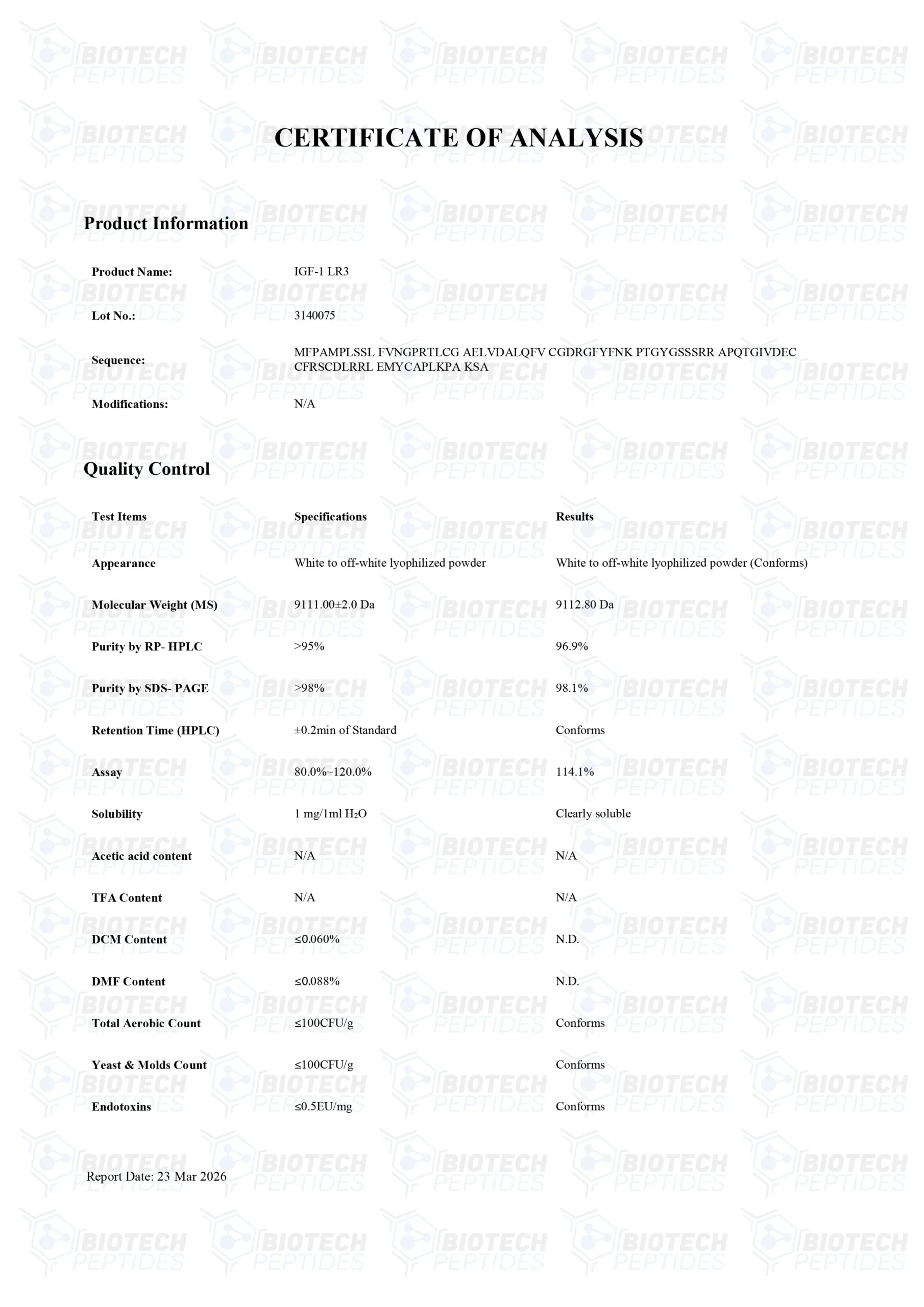
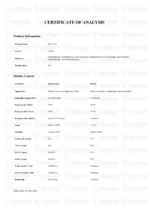
Documentation and Batch Verification
Before selecting IGF-1 LR3 (1mg), review the information associated with the exact material being supplied. Relevant documentation may include:
-
Product name and batch or lot identifier.
-
Manufacturer’s definition of Receptor Grade.
-
Sequence, terminal groups, and chemical form.
-
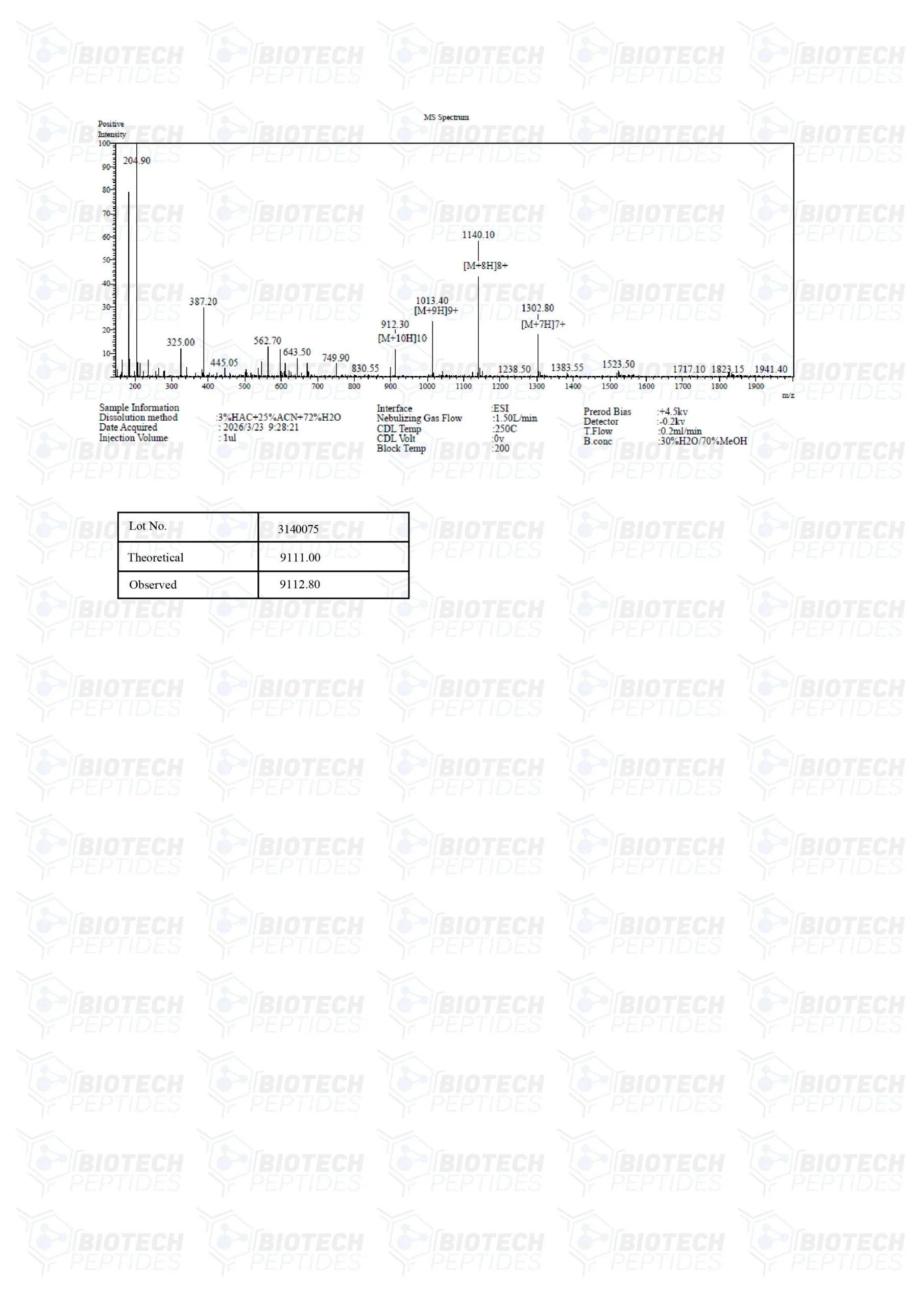
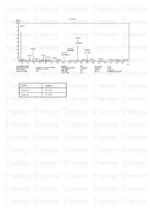
Identity-testing methods and reported results.
-
Structural-integrity and aggregation information.
-
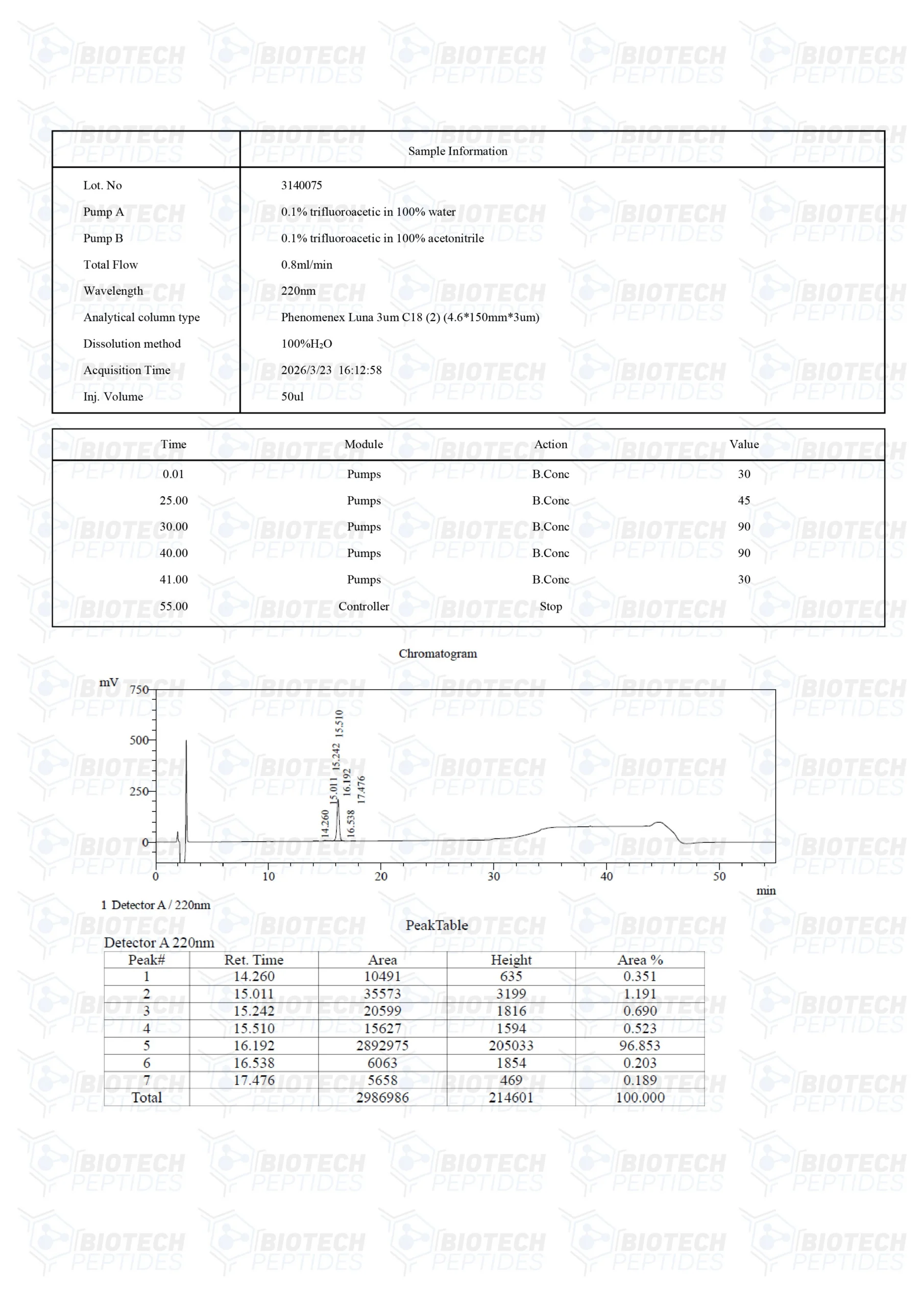
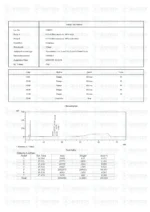
Purity-testing methods and supporting analytical data.
-
Protein-content or quantity measurements.
-
Receptor-binding or cell-based activity results, where required.
-
Endotoxin results, where relevant.
-
Product-specific storage and handling instructions.
Do not assume that these tests have been performed unless the applicable documentation confirms them.
Match identifiers across the label, manufacturer specifications, and analytical reports. For documentation inquiries, provide the product name, batch number where available, and the specific information your laboratory requires.
Storage and Handling
Follow the product-specific instructions supplied with the material and your laboratory’s applicable procedures.
Do not transfer storage temperatures, shelf-life claims, or preparation instructions from another manufacturer’s formulation to this product. Obtain clarification if documented instructions are unavailable or unclear.
Frequently Asked Questions About IGF-1 LR3 (1mg)
What does LR3 mean?
“Long” identifies the N-terminal extension, while “R3” refers to the arginine substitution at position 3 of mature IGF-I. The reference analogue contains 83 amino acids.
Does Receptor Grade guarantee higher biological activity?
Not without supporting specifications and assay results. Purity, receptor binding, structural integrity, and cell-based activity are distinct characteristics that require appropriate evidence.
Is reduced IGFBP binding the same as increased receptor affinity?
No. Binding to IGFBPs and binding to the IGF-I receptor are separate interactions. Evidence for one should not be substituted for a measurement of the other.
Does 1mg describe a concentration?
No. It states the listed mass quantity. A concentration requires additional information, such as a defined volume.
Does published research verify this product’s performance?
No. Publications describe the experimental materials and conditions used by the investigators. A commercial batch requires its own relevant specifications and analytical evidence.
Where can I find delivery information?
Review our shipping information for current order-processing and delivery terms.
Research Use Only
Receptor Grade IGF-1 LR3 (1mg) is sold for laboratory and analytical research only. Not for human or animal consumption, personal administration, medical treatment, diagnosis, or veterinary application.
Review our Research-Use-Only Policy before ordering.
| Brand | Biotech Peptides |
|---|
Related products
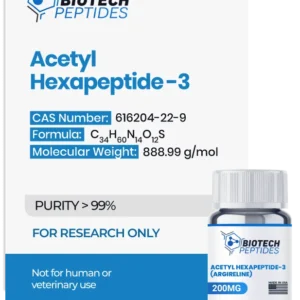
Acetyl Hexapeptide-3 (Argireline) (200mg)
- Product: Acetyl Hexapeptide-3 (Argireline)
- Listed quantity: 200mg
- Alternative name: Acetyl Hexapeptide-8
- Sequence: Ac-Glu-Glu-Met-Gln-Arg-Arg-NH₂
- CAS number: 616204-22-9
- Research area: SNAP-25 and SNARE-complex interactions
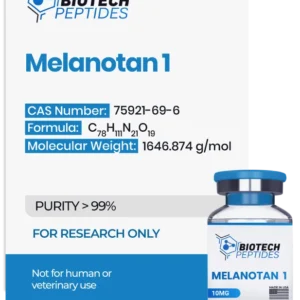
Melanotan 1 (10mg)
Melanotan 1 (10mg) is offered by Biotech Peptides for laboratory and analytical research. Also called afamelanotide, this synthetic 13-residue analogue of alpha-melanocyte-stimulating hormone has been studied in relation to melanocortin receptor signaling and melanin production.pmc.ncbi.nlm.nih+1
-
Product: Melanotan 1
-
Alternative name: Afamelanotide
-
Listed quantity: 10 mg
-
Reference molecular formula: C₇₈H₁₁₁N₂₁O₁₉
-
Intended use: Laboratory and analytical research only
Review the manufacturer specifications and applicable analytical documentation before selecting material for your protocol.
For research use only. Not for human consumption.
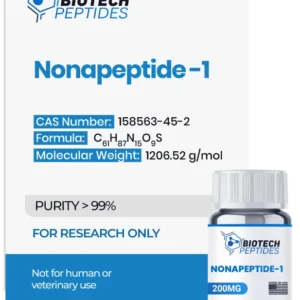
Nonapeptide-1 (200mg)
- Product: Nonapeptide-1
- Alternative name: Melanostatine-5
- Listed quantity: 200mg
- Peptide length: 9 amino acids
- Reference sequence: Met-Pro-D-Phe-Arg-D-Trp-Phe-Lys-Pro-Val-NH₂
- CAS number: 158563-45-2
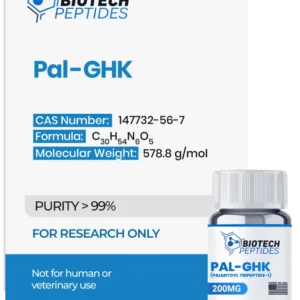
Pal-GHK (Palmitoyl Tripeptide-1) (200mg) | Biotech Peptides
Pal-GHK (Palmitoyl Tripeptide-1) (200mg) is a synthetic, lipid-modified tripeptide listed for laboratory and analytical research involving peptide chemistry and skin-related research models.
Also known as Palmitoyl-Gly-His-Lys, Pal-GHK consists of a palmitoyl group attached to the N-terminus of the GHK tripeptide sequence. It has been investigated in research involving extracellular matrix components and topical cosmetic formulations. Reference molecular information:- Listed quantity: 200mg
- Peptide sequence: Gly-His-Lys (GHK)
- N-terminal modification: Palmitoyl group
- Molecular formula: C₃₀H₅₄N₆O₅
- Molecular weight: 578.8 g/mol
- CAS number: 147732-56-7
- Common name: Palmitoyl Tripeptide-1
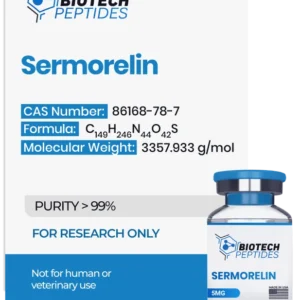
Sermorelin (5mg)
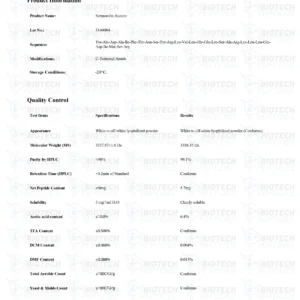
Sermorelin (5mg) is offered by Biotech Peptides for laboratory and analytical research. Sermorelin is a synthetic 29-residue GHRH analogue studied in relation to growth hormone secretion, receptor signaling, and neuroendocrine pathways. 1159
-
Product: Sermorelin
-
Full name: GHRH(1-29)-NH2
-
Listed quantity: 5 mg
-
Reference molecular formula: C₁₄₉H₂₄₆N₄₄O₄₂S
-
Intended use: Laboratory and analytical research only
Review the manufacturer specifications and applicable analytical documentation before selecting material for your protocol.
For research use only. Not for human consumption.
TB-500 (Thymosin Beta-4) (5mg)
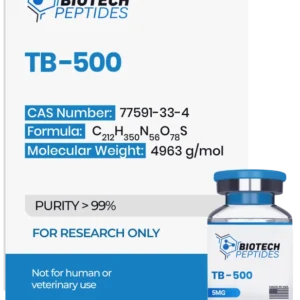
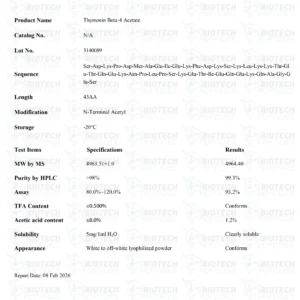
TB-500 (Thymosin Beta-4) (5mg) is offered by Biotech Peptides for laboratory and analytical research. TB-500 is a synthetic 43-residue peptide derived from thymosin beta-4, studied in relation to cell migration, angiogenesis, and wound-repair signaling. 1110
-
Product: TB-500
-
Full name: Thymosin Beta-4
-
Listed quantity: 5 mg
-
Reference molecular formula: C₂₁₂H₃₅₀N₅₆O₇₈S
-
Intended use: Laboratory and analytical research only
Review the manufacturer specifications and applicable analytical documentation before selecting material for your protocol.
For research use only. Not for human consumption.